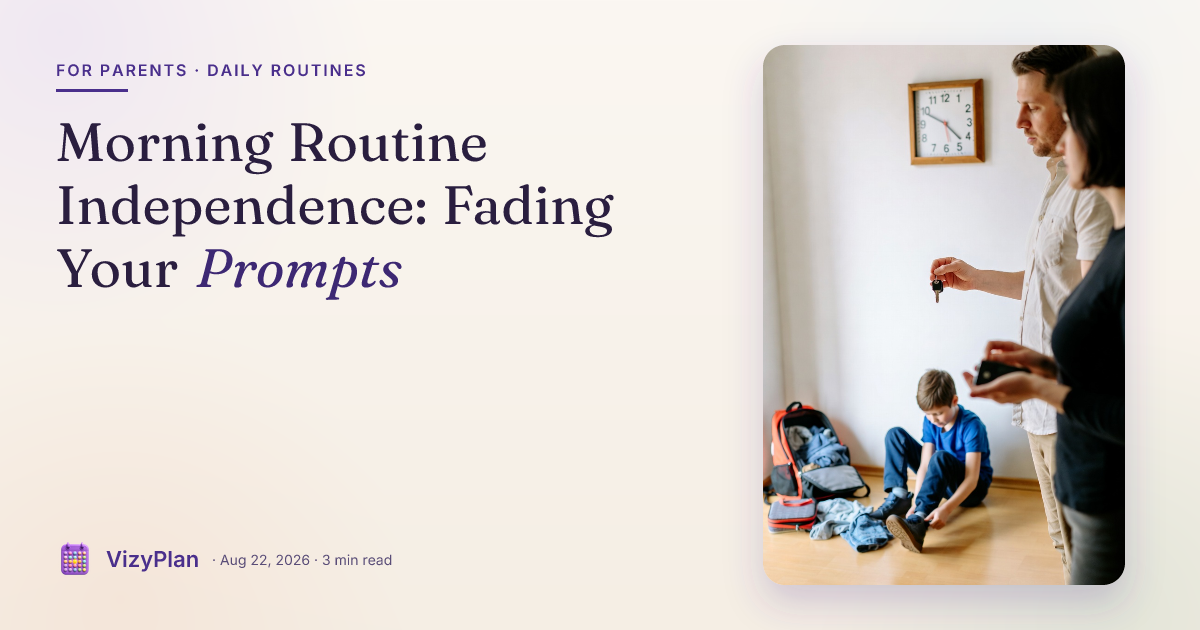
Morning Routine Independence: Fading Your Prompts
3 min read
The routine works, and it only works when you are standing there. You have swapped verbal prompting for visual prompting and kept yourself firmly in the middle of it.
Free 7-day trial · No email or credit card to start · Built by an autism dad and an autism mom SLP
Prompts are supposed to be temporary, and they very rarely get removed on purpose. Fading them one layer at a time is the difference between a child who follows a routine and a child who follows you while a routine happens nearby.
What the research saysSupport delivered without a fading plan drifts toward doing things for a child rather than building independence, a pattern well documented in paraprofessional support at school.
VizyPlan, Paraprofessional support and prompt dependency
Takes about five minutes. Use it as written, or keep only the steps your family needs. A short setup that gets used beats a complete one that gets abandoned in week two.
Removing all support at once usually collapses the routine and gets read as evidence your child is not ready, when the actual problem was the size of the jump.
The Visual Routines lives inside the same routine your child already follows, so fading prompts from a routine is a step with a visible length rather than a separate tool somebody has to remember to open.
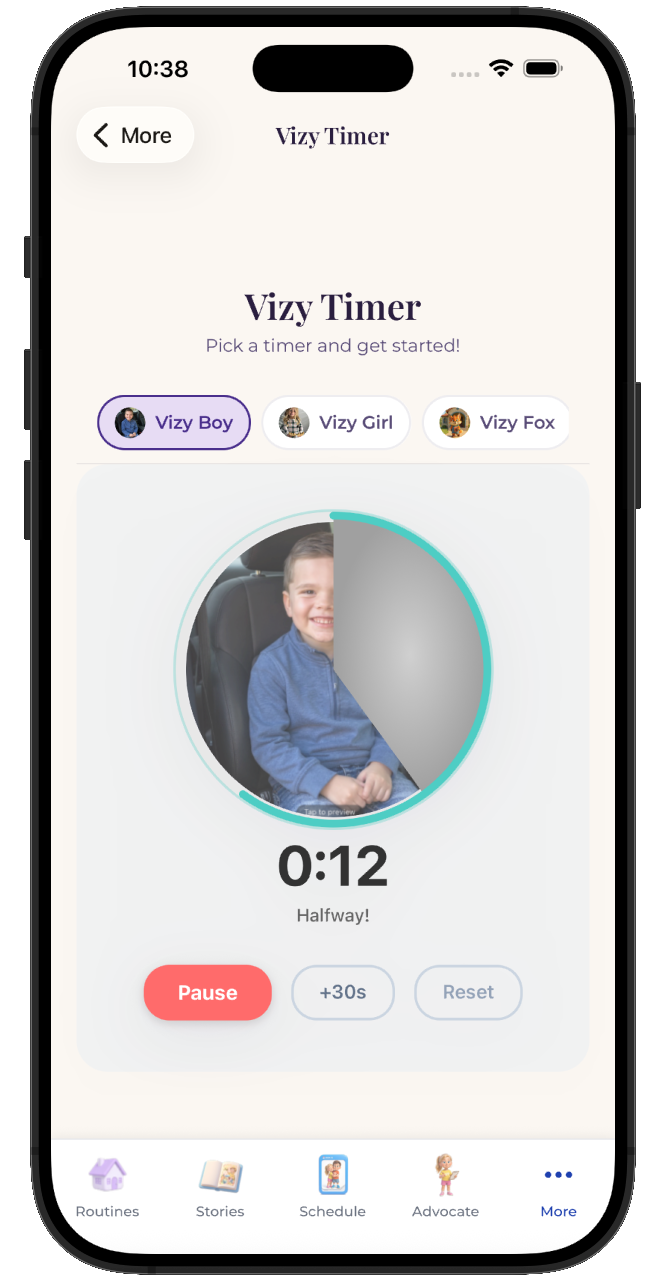
Five minutes to build, and your child sees it every time fading prompts from a routine comes around.
$6.99/month after the free trial · Cancel anytime · Also at app.vizyplan.com
VizyPlan supports routines and communication at home and school. It is not a medical device and does not diagnose or treat any condition. Talk to your child's care team about clinical questions.