Visual Routines

Routines for a Teenager that do not read as a chore chart.

Your fourteen-year-old needs the structure and would rather do almost anything than use something with stickers on it. The support is right and the packaging is wrong.

Free 7-day trial · No email or credit card to start · Built by an autism dad and a licensed SLP

Why it works here

Why a visual routine helps with routines for a teenager

Executive demands rise through adolescence exactly as visible supports get withdrawn, which is backward. A routine built to look like a tool rather than a chart keeps the scaffolding without asking a teenager to accept something designed for a small child.

You will recognize this if

  • Your teenager clearly struggles with organization and refuses visible help.
  • What worked at nine now causes embarrassment.
  • You have reverted to verbal prompting because nothing else is accepted.
The setup

How to set it up for building routines for a teenager

Takes about five minutes. Use it as written, or keep only the steps your family needs. A short setup that gets used beats a complete one that gets abandoned in week two.

  1. 1 Let your teenager build it entirely themselves
  2. 2 Remove anything that reads as childlike, including rewards and characters
  3. 3 Frame it as planning rather than routine
  4. 4 Keep it on their own device rather than a shared family screen
  5. 5 Start with something they want organized, not something you do
  6. 6 Stop checking it, visibly, and mean it
The mistake most families make

Continuing to monitor a teenager's routine is the fastest way to make them abandon it. Handing over ownership completely is the price of it being used at all.

In the app

Built into the routine, not bolted onto it.

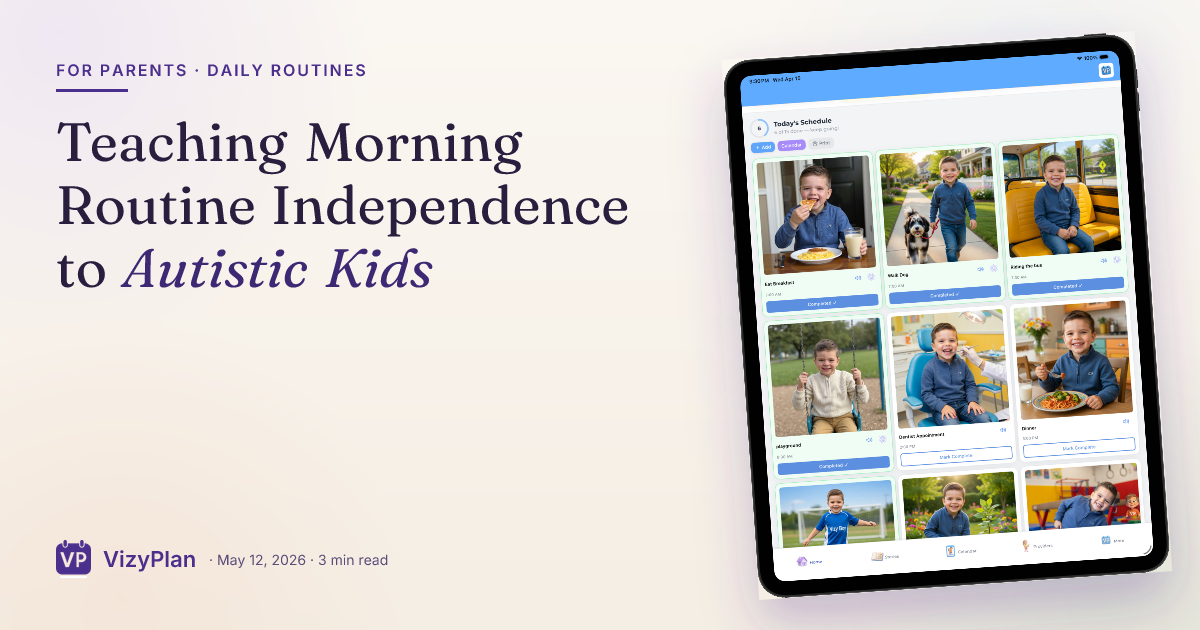
The Visual Routines lives inside the same routine your child already follows, so building routines for a teenager is a step with a visible length rather than a separate tool somebody has to remember to open.
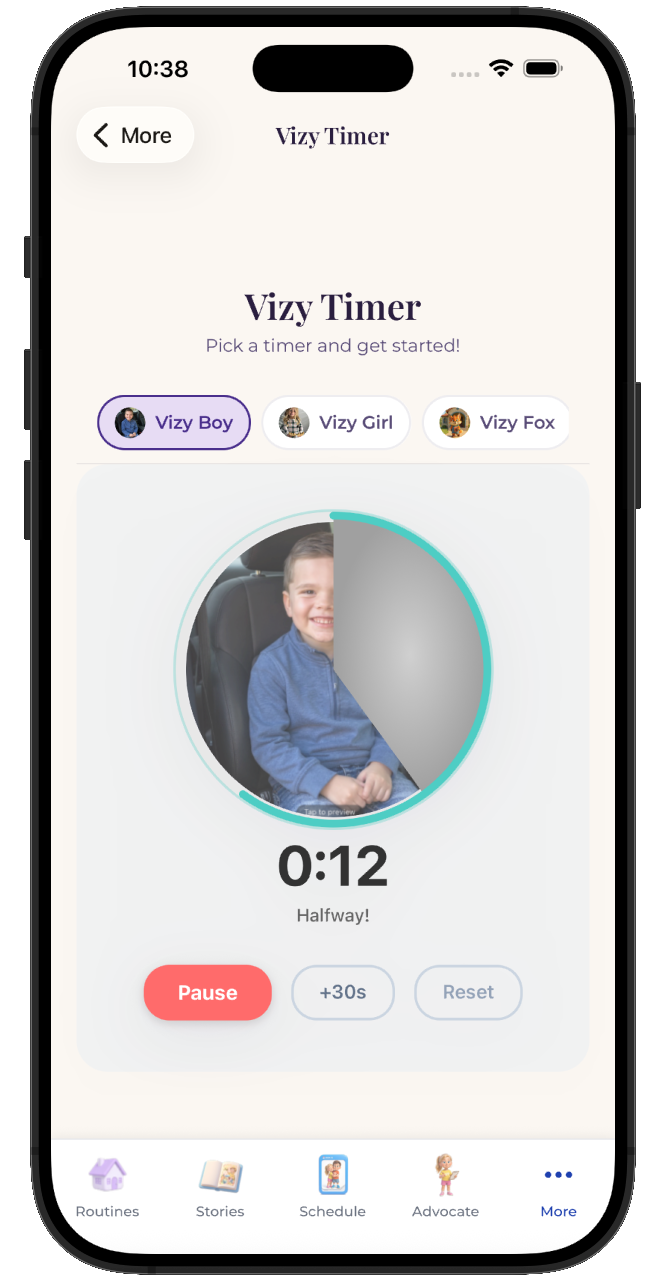
  • Attach it to any step in any routine
  • Works for pre-readers, gestalt language processors, and AAC users
  • Same setup at home, at school, and in therapy
See the step-by-step guide →
The VizyPlan Visual Routines set up for building routines for a teenager

Set this up for your child.

Five minutes to build, and your child sees it every time building routines for a teenager comes around.

$6.99/month after the free trial · Cancel anytime · Also at app.vizyplan.com

Common questions

About building routines for a teenager

Are visual routines only for young children?
Not at all. Plenty of autistic and ADHD adults rely on visible planning. What changes with age is the presentation, not the need.
What if my teenager refuses any system?
Start with something they care about organizing, such as a hobby or a social plan. Usefulness earns acceptance faster than persuasion.
Should I be able to see it?
Only if they want you to. Ownership is what makes it work at this age, and shared visibility usually costs more than it gains.

VizyPlan supports routines and communication at home and school. It is not a medical device and does not diagnose or treat any condition. Talk to your child's care team about clinical questions.