

Most classrooms already have a job chart. It usually gets filled in on Monday, rotated by name, and forgotten by Wednesday. Classroom jobs for autistic students can do far more than that, because the right job at the right moment is a predictable role, a movement break and a small daily proof of belonging, all in one.
The chart is not the problem. The problem is treating every job as interchangeable and every student as ready for any of them.
Why classroom jobs for autistic students matter
Start with independence. A systematic review of self-determination in autistic children and youth, co-authored by Karrie Shogren, found that autistic students report lower self-determination than their peers and get fewer chances to practice it. A 2025 observational study in the Journal of Autism and Developmental Disorders watched autistic adolescents in secondary classrooms and found they received plenty of structure but very little support for autonomy. Classroom jobs for autistic students are one of the few places in the day where a student makes something happen for the group without an adult directing each step.
The long view matters too. A University of Kansas study of 779 students with disabilities found that those who left school with higher self-determination were more likely to be employed afterward. Delivering the attendance folder is not a career, but it is practice at the same skills: knowing the task, starting it, finishing it, and being counted on.
Then there is movement. A 2018 meta-analysis by Healy and colleagues pooled 29 studies of physical activity programs for autistic children and found a moderate overall benefit across a range of outcomes. The classroom evidence is more mixed: a 2011 study in Pediatric Physical Therapy found that 15 minutes of exercise before seated work improved correct responses but did not significantly change on-task behavior. The honest summary is that movement helps some students a lot and others less, which is exactly why matching the job to the student matters.
Occupational therapists often recommend heavy work, meaning tasks that push, pull or carry weight, for students who seek that kind of body input. Stacking chairs, carrying the library book bin and wiping tables are heavy work that looks like ordinary helpfulness. That is the quiet advantage of classroom jobs for autistic students: no special equipment and no one singled out.
How to set up classroom jobs for autistic students
- Match the job to the student, not the rotation. A student who craves movement gets the book bin. A student who loves order gets the materials shelf. A student who finds the hallway loud gets the job that stays in the room.
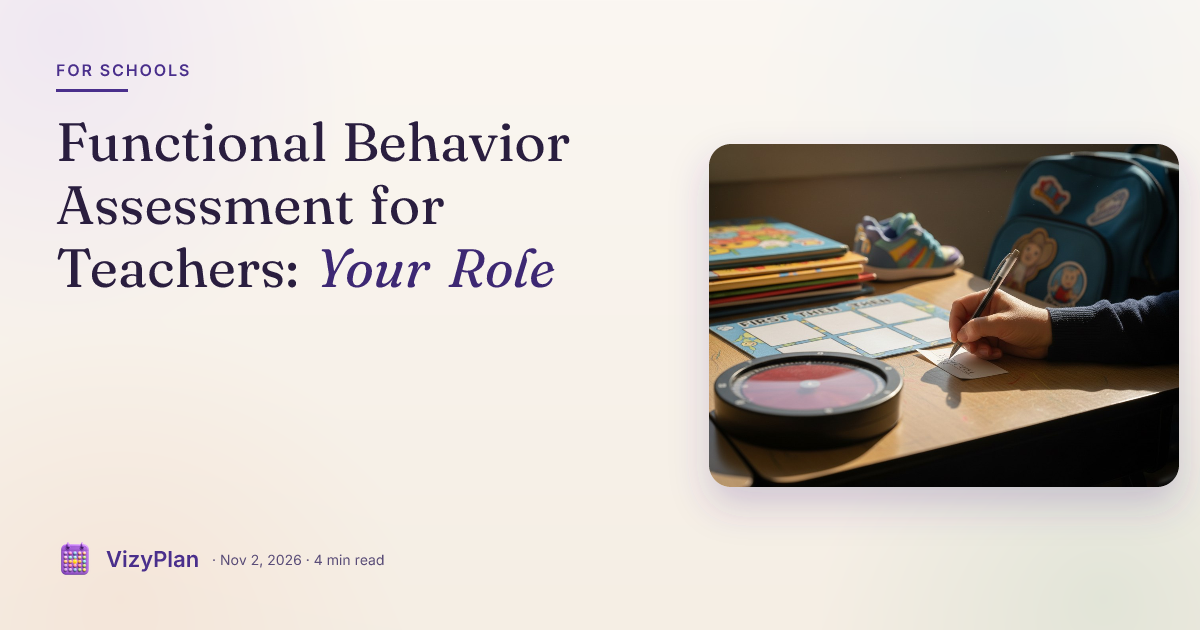
- Make every job a visual card with steps. Three to five pictured steps on a card, with a clear finish line, turns "be the line leader" into something a student can do without asking. Visual supports are named an evidence-based practice in the 2021 national review of autism interventions by Hume and colleagues.
- Publish the rotation in advance. Post the next two weeks of jobs where students can see them. A job change that arrives as a surprise on Monday morning undoes the predictability the job was supposed to provide.
- Use jobs at the hard transitions on purpose. Line leader at dismissal, materials manager during cleanup, attendance runner first thing in the morning. A job gives a student something to do with their body during the part of the day that usually goes wrong.
- Give a sensory out that is also a real job. The errand to the office, the recycling run or the plant watering can be a planned break that never needs to be named as one. The student leaves the room with a purpose and comes back with a finished task.
- Let the student keep a job that is working. Rotation is fair to the class, but a job that has become a regulation anchor can stay put for a season. Peers rarely object when the classroom runs better.
- Name the contribution out loud. A short thank you in front of the group is what turns a task into belonging.
Enjoying this article?
Get practical tips and insights delivered to your inbox — no spam, ever.
What staff should watch for
A job that a student consistently avoids is information, not defiance. It may involve a sound, a crowd or a social demand the card did not capture. Adjust the job before you adjust the student.
Our classroom visual schedule guide covers the schedule the job cards plug into, and classroom transition warnings covers the moments where jobs help most.
Classroom jobs for autistic students work when the job is chosen, pictured and predictable. Once those three are in place, the job chart stops being decoration and becomes part of how the day holds together.
VizyPlan was built by an autism dad and an autism mom who is a licensed speech-language pathologist so the steps of a classroom job can be practiced at home as a picture routine the student already knows.
Share VizyPlan with your families so the job a student does at school can become a routine they own at home too. The 7-day free trial lets a family try it first. If it helps, keep going for $6.99/month or $59.99/year.
VizyPlan was built by an autism dad and an autism mom who is a licensed speech-language pathologist who needed something that did not exist. Explore VizyPlan.