Few goals carry more weight for a family than this one, and few get handed to a clinician with less of a plan. Toilet training autism referrals often arrive after a family has tried twice at home, lost a week each time, and quietly decided it is not going to happen. A BCBA, OT or SLP can change that outcome, but only if the plan is shared across every room the child spends time in.
What the research says about toilet training autism timelines
The delay is real and it is long. A study of 583 autistic children from the Simons Simplex Collection, published in Consultant in 2017, found that only 35% had achieved daytime dryness by 36 months. By age five the figure was about 79%, compared with 95% of typically developing peers, and roughly 5% were still not dry at twelve.
Resistance is part of the picture too. A 2022 CDC study of preschoolers in the Journal of Developmental and Behavioral Pediatrics found toileting resistance in about 49% of autistic children, against roughly 24% of children with other developmental delays and 8% of the general population. In the autism group, resistance was linked to constipation, expressive language delays and low social motivation. Telling families that a later timeline is common, and that resistance has identifiable drivers, is often the most useful thing a provider says first.
The toilet training autism intervention evidence is promising but thin. A 2022 systematic review of 26 studies described small samples and inconsistent outcome reporting. Most protocols descend from Azrin and Foxx's 1971 rapid toilet training method, and a 2014 adaptation by Ardıç and Cavkaytar, which kept extra fluids and a fixed schedule but dropped overcorrection, taught three autistic children dryness and voiding in the toilet.
The body signal underneath the behavior
Some children feel bladder pressure without connecting it to the toilet. Interoception, the sense of what is happening inside the body, is where OTs earn their place on a toilet training autism team. Our guide to interoception visual cues for body awareness covers how to make a vague internal signal visible enough to act on.
Enjoying this article?
Get practical tips and insights delivered to your inbox — no spam, ever.
A toilet training autism plan for the next eight weeks
- Check readiness and medical factors first. Rule out constipation with the pediatrician before starting, since withholding and a painful stool can undo any protocol. Look for dry intervals of an hour or more, interest in the bathroom, and the ability to sit for a short period.
- Collect three to five days of baseline data. Record wet and dry checks on a schedule, voids, and any signals the child gives. The baseline sets the sit schedule and shows the family progress they would otherwise miss.
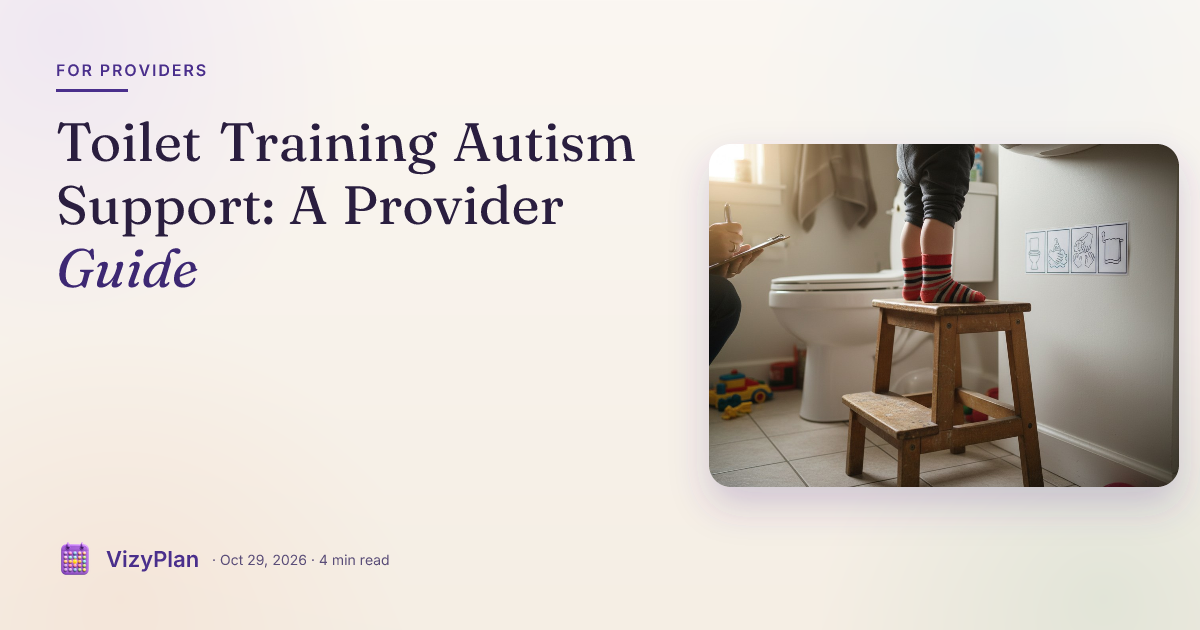
- Build one visual sequence for the whole bathroom routine. Pants down, sit, wait, wipe, flush, pants up, wash, dry. The same pictures in the same order at home, at school and in the clinic remove the guesswork from each step.
- Fix the sensory barriers before blaming motivation. The flush noise, a cold seat, an echoing room and dangling feet each stop a child for reasons that have nothing to do with compliance. Try a padded seat, a footstool, delayed flushing after the child leaves, and headphones for public restrooms.
- Coach parents on the schedule, not just the reinforcer. Families usually understand rewards. The timed sits, the fluids and the calm, brief handling of accidents are the parts that drift by day four.
- Agree on words and pictures across every setting. One phrase for asking to go, one picture card, one reinforcer. A child who learns three different systems in three rooms is learning none of them.
- Time the intensive phase around winter break. Two weeks at home with fewer transitions is a real window for families who can protect it. Start the visual sequence and data now, so the routine is familiar before the break and school can keep it going in January.
What to hand families
Most parents have read the general advice and want the toilet training autism version that fits their child. Our article on potty training with visual supports is a good parent-facing companion to the plan you build in session. The honest message is that later is common, progress is measurable, and consistency matters more than speed.
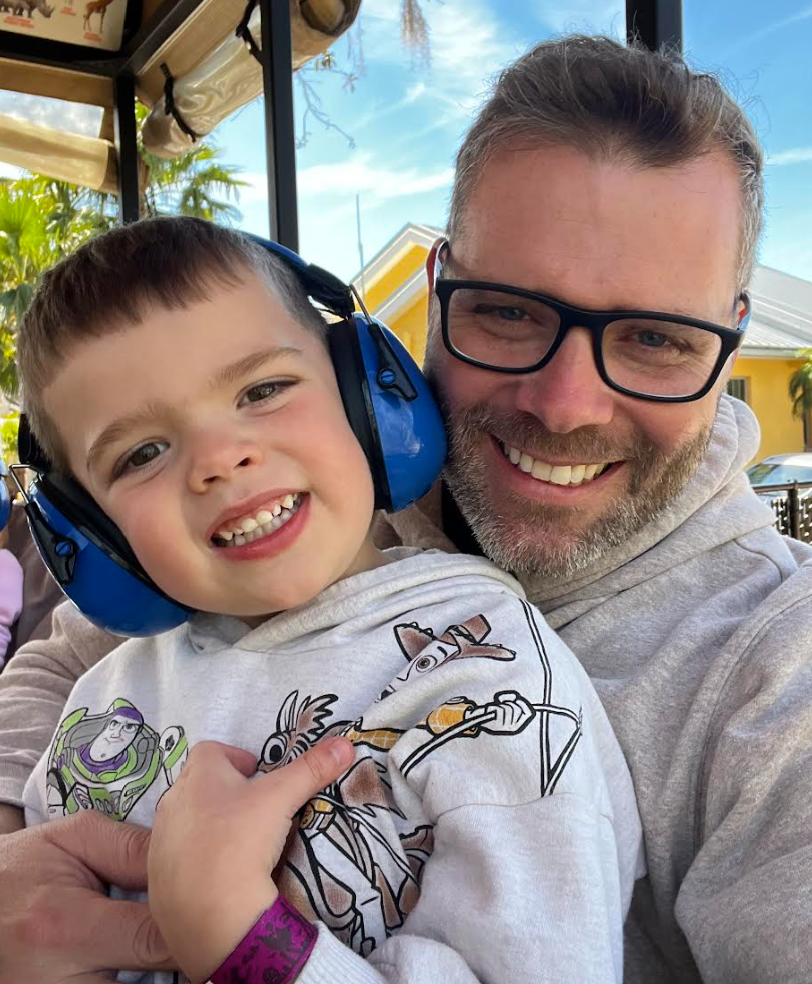
VizyPlan was built by an autism dad and an autism mom who is a licensed speech-language pathologist so the bathroom sequence a child sees in your clinic can be the same one on the phone at home and at school.
Share VizyPlan with your families so the bathroom routine looks the same in every room the child uses. The 7-day free trial lets a family try it first. If it helps, keep going for $6.99/month or $59.99/year.
VizyPlan was built by an autism dad and an autism mom who is a licensed speech-language pathologist who needed something that did not exist. Explore VizyPlan.