If you are an OT, interoception is the sense your families are not naming when they describe meltdowns, toileting accidents, picky eating, and the kid who runs herself into exhaustion before she notices she is tired. Interoception visual cues are the scaffolding that makes the eighth sense teachable in a way a sensory diet alone cannot. The literature on autistic interoception has gotten tighter in the last decade, and OT scope of practice is squarely in this lane.
What the literature says about interoception in autism
Schauder and colleagues' 2015 study found measurable differences in interoceptive accuracy between autistic and neurotypical children. DuBois and colleagues' 2016 review cataloged the same disruption across studies and proposed it as a foundation under emotion regulation difficulties. Murphy and colleagues' 2017 lifespan paper frames interoception as a learned pattern recognition skill, not a fixed capacity. Kelly Mahler's interoception curriculum translates this into the clinical scaffold most OTs working in this space already use. The AOTA Practice Framework lists interoception within OT scope.
Why "notice your body" does not work on its own
Three failure points:
- The cue is internal and invisible. Asking a child to notice a signal he cannot reliably perceive is asking him to perform the missing skill, not build it.
- The teaching window is fleeting. Interoceptive moments come and go in seconds. By the time the parent says "are you hungry?" the meltdown is already underway.
- The pattern needs density. Pattern recognition requires repeated, anchored exposures across days. A clinic hour a week cannot supply that.
Enjoying this article?
Get practical tips and insights delivered to your inbox — no spam, ever.
Where interoception visual cues earn their keep
Pair the body signal with a visible, recurring anchor in the day. The 10:30 snack card on a daily planner doubles as a check-in cue: "look at your stomach. Are you hungry?" Over weeks, the snack image, the time of day, and the body signal start to associate. The same logic applies to hydration, bathroom routines, regulation breaks, and bedtime fatigue cues. The planner becomes the moment by moment interoception trainer your in-clinic work points toward.
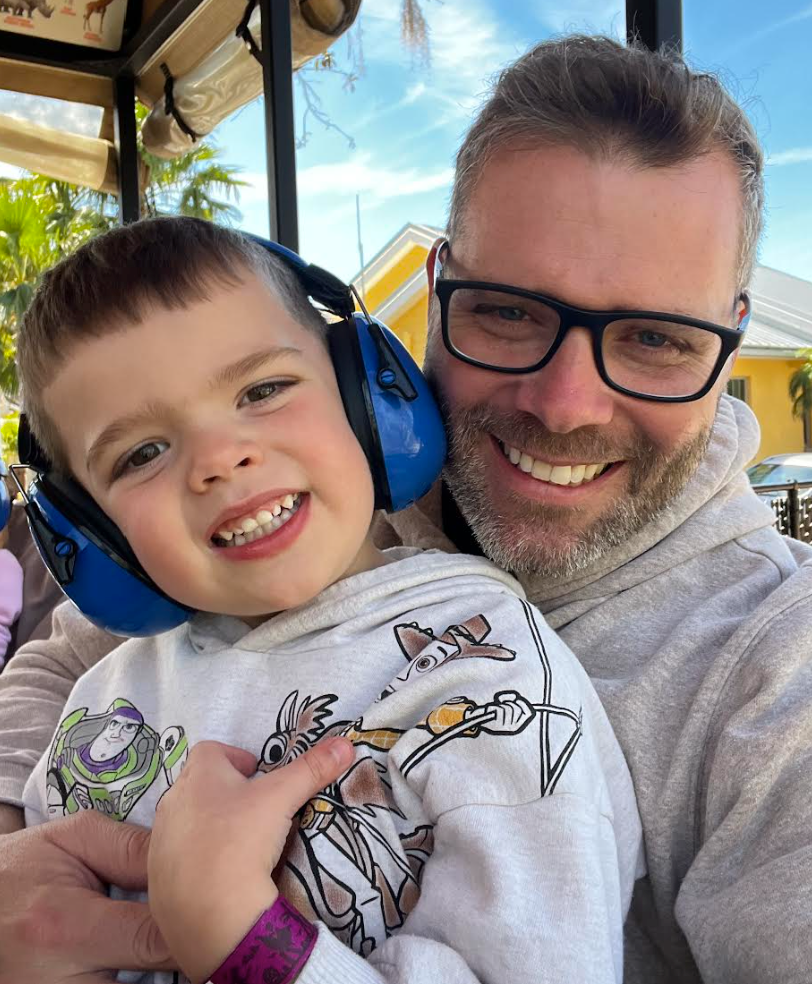
VizyPlan was built by an autism dad and an autism mom SLP for the carryover problem. Each anchor lives inside the day view, the photos are of the actual child in the actual environment, and the family runs the rhythm you designed. The clinical work stays yours. The interoception practice gets the density it needs to lay down.
Download VizyPlan and start your 7-day free trial today. See what your families would experience between visits. If it helps, keep going for $6.99/month or $59.99/year.
VizyPlan was built by an autism dad and an autism mom who is a licensed speech-language pathologist who needed something that did not exist. Start your free trial.