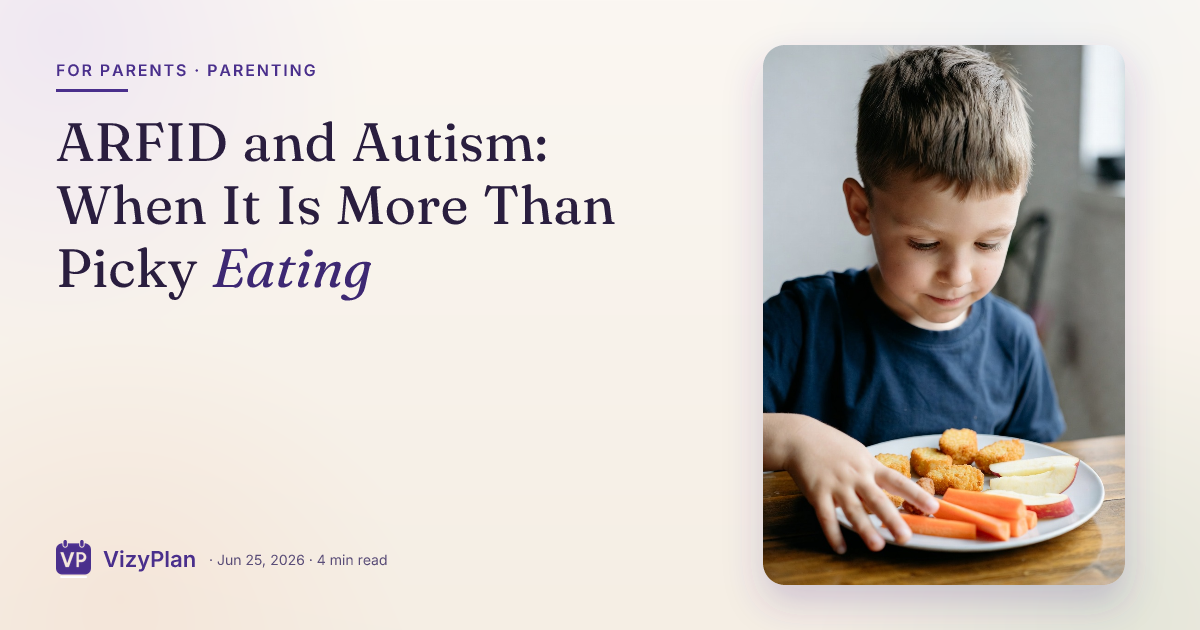
ARFID and Autism: When It Is More Than Picky Eating
4 min read
Every meal is a negotiation about what is on the plate, how long to sit, and whether any of it will be eaten. The routine around eating has never been agreed, so all of it is up for discussion nightly.
Free 7-day trial · No email or credit card to start · Built by an autism dad and an autism mom SLP
Separating the routine of a meal from the content of a meal makes both easier. When arriving, sitting, and leaving are fixed, the only remaining variable is the food, and one variable is much more manageable than four.
What the research saysA meta-analysis reported a mean prevalence of food selectivity in autism of around 63 percent, substantially higher than in typically developing comparison groups.
Prevalence of food selectivity and eating disorders in autism, 2025
Takes about five minutes. Use it as written, or keep only the steps your family needs. A short setup that gets used beats a complete one that gets abandoned in week two.
Making the sitting length conditional on how much was eaten merges two problems into one, and children then resist sitting in order to avoid eating.
The Visual Routines lives inside the same routine your child already follows, so building a mealtime routine is a step with a visible length rather than a separate tool somebody has to remember to open.
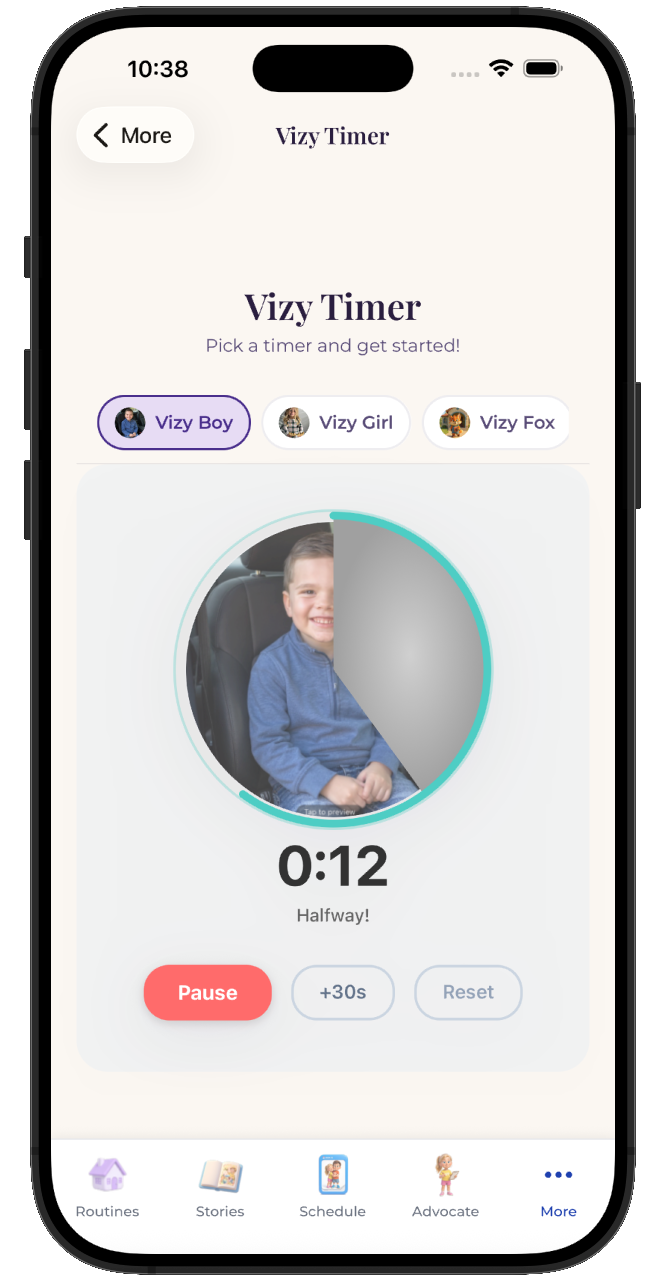
Five minutes to build, and your child sees it every time building a mealtime routine comes around.
$6.99/month after the free trial · Cancel anytime · Also at app.vizyplan.com
VizyPlan supports routines and communication at home and school. It is not a medical device and does not diagnose or treat any condition. Talk to your child's care team about clinical questions.