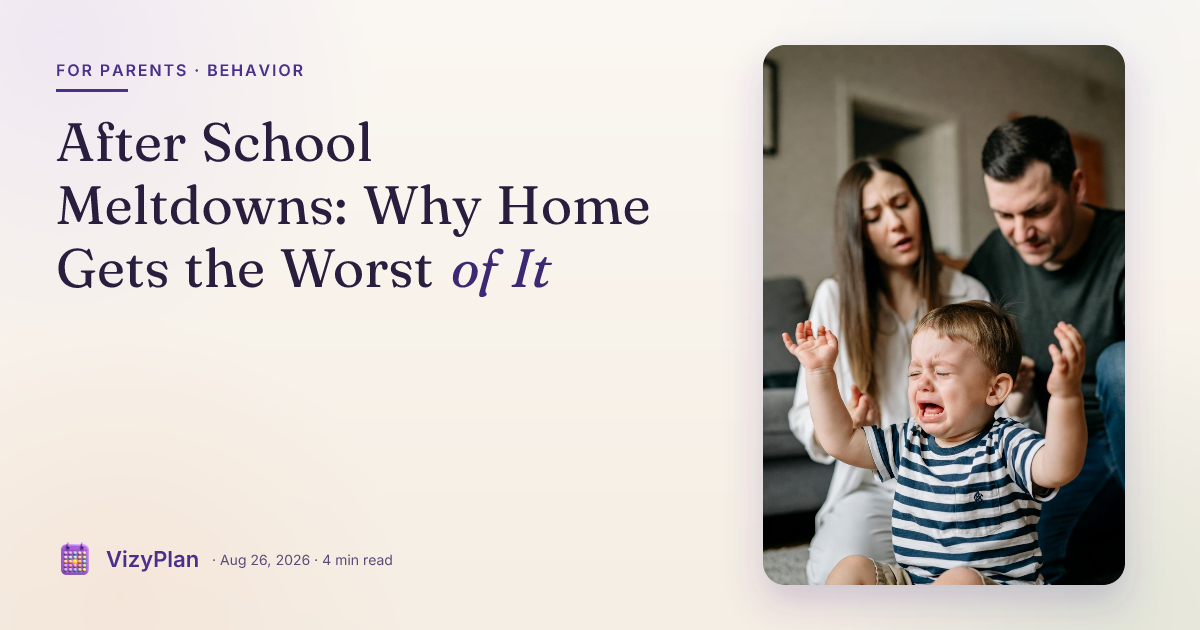
After School Meltdowns: Why Home Gets the Worst of It
4 min read
You built a calm down plan and the first time you tried to use it, your child was already too far gone to hear any of it. A strategy first attempted mid-meltdown is not a strategy.
Free 7-day trial · No email or credit card to start · Built by an autism dad and an autism mom SLP
Regulation strategies have to be learned in a calm state to be available in a dysregulated one. A calm down routine that gets run daily when nothing is wrong is the only version that is actually accessible when something is.
What the research saysDistinguishing a shutdown from a meltdown matters because they need different responses, and neither responds well to a strategy introduced for the first time mid-episode.
VizyPlan, Shutdown versus meltdown
Takes about five minutes. Use it as written, or keep only the steps your family needs. A short setup that gets used beats a complete one that gets abandoned in week two.
A calm down routine that only appears during a meltdown becomes associated with the worst moments of the week, and children reasonably start refusing it.
The Visual Routines lives inside the same routine your child already follows, so building a calm down routine is a step with a visible length rather than a separate tool somebody has to remember to open.
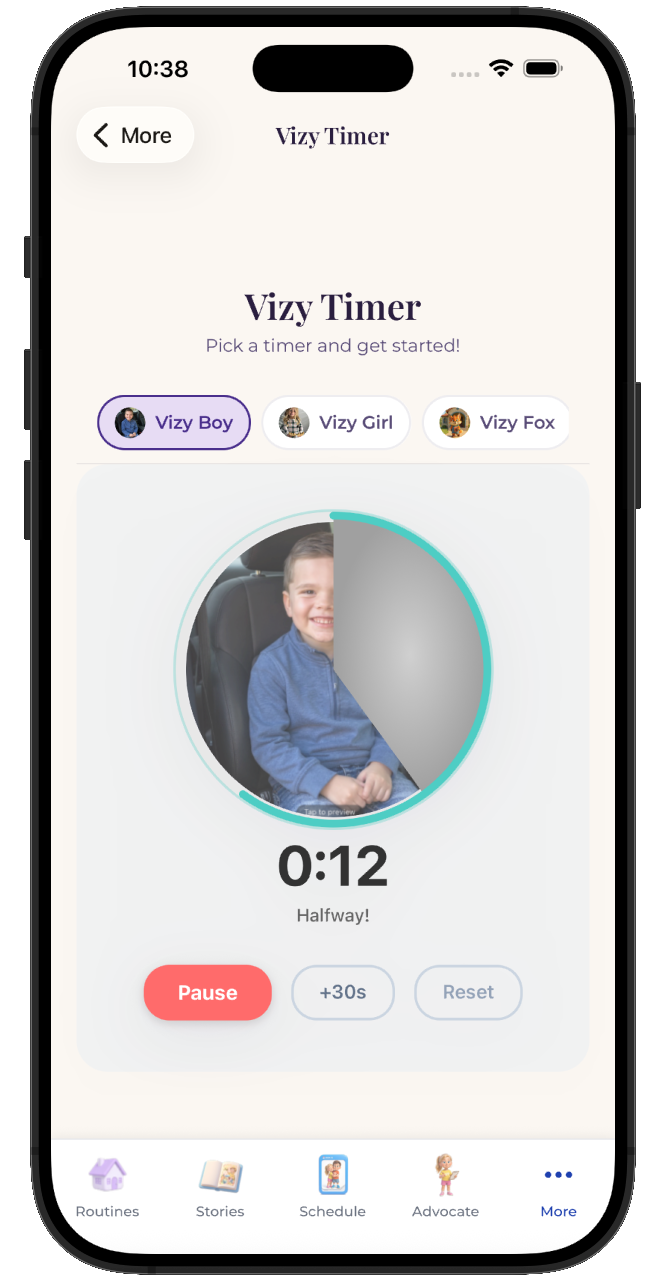
Five minutes to build, and your child sees it every time building a calm down routine comes around.
$6.99/month after the free trial · Cancel anytime · Also at app.vizyplan.com
VizyPlan supports routines and communication at home and school. It is not a medical device and does not diagnose or treat any condition. Talk to your child's care team about clinical questions.