
Most providers meet transition planning for autistic teens as a page in someone else's IEP. The school writes the postsecondary goals, the family signs, and therapy keeps working on what it was already working on. The gap matters, because the skills that predict how a young adult does after high school are skills SLPs, OTs and BCBAs already teach every week.
The window is short. A client who is 14 today has two IEP cycles before transition services become a federal requirement, and four or five years before school-based services end altogether.
What IDEA requires for transition planning for autistic teens
Under 34 CFR 300.320(b), transition content must be in the first IEP in effect when the student turns 16, or earlier if the IEP team decides it is appropriate, and it must be updated every year after that. The IEP needs measurable postsecondary goals based on age-appropriate transition assessments, covering training, education, employment and, where appropriate, independent living skills. The IEP also has to name the transition services, including courses of study, that will help the student reach those goals.
Some states start sooner. Georgia, for example, requires transition services by entry into ninth grade or age 16, whichever comes first. Check your own state before assuming 16 is the starting line. The regulations at 34 CFR 300.321 also require the school to invite the student to the meeting where postsecondary goals are discussed, which means transition planning for autistic teens is meant to happen with the teen in the room.
What the outcome research shows
The numbers explain why providers should care. A 2012 study in Pediatrics by Shattuck and colleagues, drawing on the National Longitudinal Transition Study-2, found that about 35% of young adults with autism had attended college and about 55% had held a paid job in the first six years after high school. Autistic youth had the lowest rate of employment participation among the disability groups compared.
Drexel University's 2015 National Autism Indicators Report on the transition into young adulthood, led by Anne Roux, found that more than a third of young adults on the spectrum were disconnected from both work and school in their early 20s, and that roughly a quarter received no services at all after high school (PhillyVoice summary). Both datasets are now more than a decade old, but the pattern they describe, a steep services cliff at graduation, is still the landscape families describe.
Skills that predict life after high school
The National Technical Assistance Center on Transition tracks in-school predictors of post-school success, building on a 2009 review by Test, Mazzotti and colleagues. The list includes self-care and independent living skills, self-advocacy and self-determination, paid work experience, social skills, goal setting and parent expectations. NTACT's summary for students with autism notes that goal setting, social skills, parent expectations, career and technical education, and inclusion in general education have support from autism-only samples.
Self-determination deserves extra attention. A 2015 study in the Journal of Special Education by Shogren and colleagues found that self-determination at school exit predicted employment and community access one year later, in a sample of students with intellectual and learning disabilities. ASHA's practice portal lists building self-advocacy among the responsibilities of school professionals in transition.
Enjoying this article?
Get practical tips and insights delivered to your inbox — no spam, ever.
A provider plan for the next IEP cycle
Transition planning for autistic teens works best when therapy goals point at the postsecondary goal instead of running beside it.
- Ask for the postsecondary goals. Request a copy of the transition page, or ask the family what the teen wants after high school. Every therapy goal for a client 14 and older should connect to one of those goals in a sentence.
- Target self-care routines the teen will own. Showering, laundry, packing a bag, and a morning routine that runs without an adult calling each step. OTs can break each routine into a visual sequence; our guide to executive function visual sequences shows how.
- Teach scheduling as a skill, not a support. Moving from an adult-managed visual schedule to one the teen builds and checks is a measurable goal. Start with one block of the day and expand.
- Practice workplace communication. Asking a supervisor a question, saying "I do not understand the task," requesting a break, and calling in sick. SLPs can script and rehearse each one, with options rather than one correct answer.
- Build self-advocacy into the IEP meeting itself. Help the teen prepare a short statement of strengths, needs and what helps, then present it. The parent-facing guide to teaching self-advocacy skills is a good resource to share with families.
- Fade adult prompts on purpose. Every year, the target should be fewer prompts from a person and more from a tool the teen controls. Our guide to IEP goals at home covers how to hand practice off to the family.
Coordinate with the school team and the family
Providers outside the school can share written recommendations, attend the IEP meeting with family consent, and offer progress data tied to the transition goals. Inside the school, an SLP or OT can make sure related services goals appear in the transition section rather than only in their own corner of the document.
Families carry this work past graduation. High expectations from parents are one of the predictors with autism-specific support, so tell families what the teen is ready for, not only what is hard. Transition planning for autistic teens is also a family conversation about the teen's own preferences, which may not match what the adults pictured.
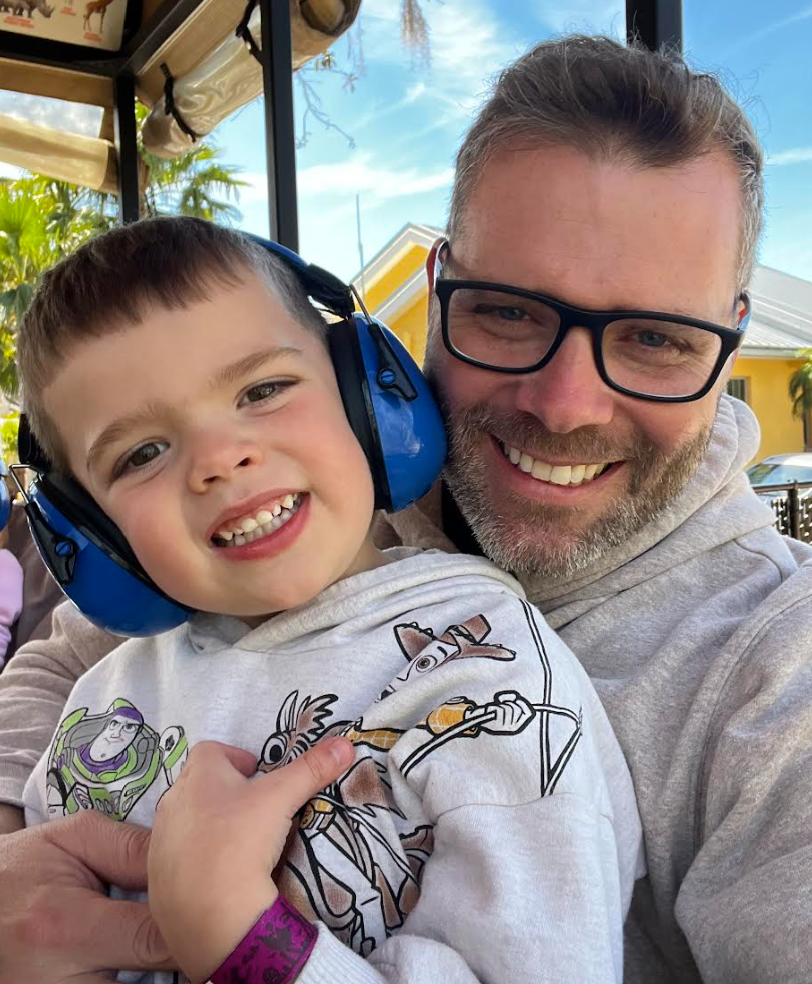
VizyPlan was built by an autism dad and an autism mom who is a licensed speech-language pathologist so a teen can carry the morning routine, the work schedule and the scripts practiced in session on their own phone.
Share VizyPlan with your families so the transition planning for autistic teens you start in session keeps going at home. The 7-day free trial lets a family try it first. If it helps, keep going for $6.99/month or $59.99/year.
VizyPlan was built by an autism dad and an autism mom who is a licensed speech-language pathologist who needed something that did not exist. Explore VizyPlan.