

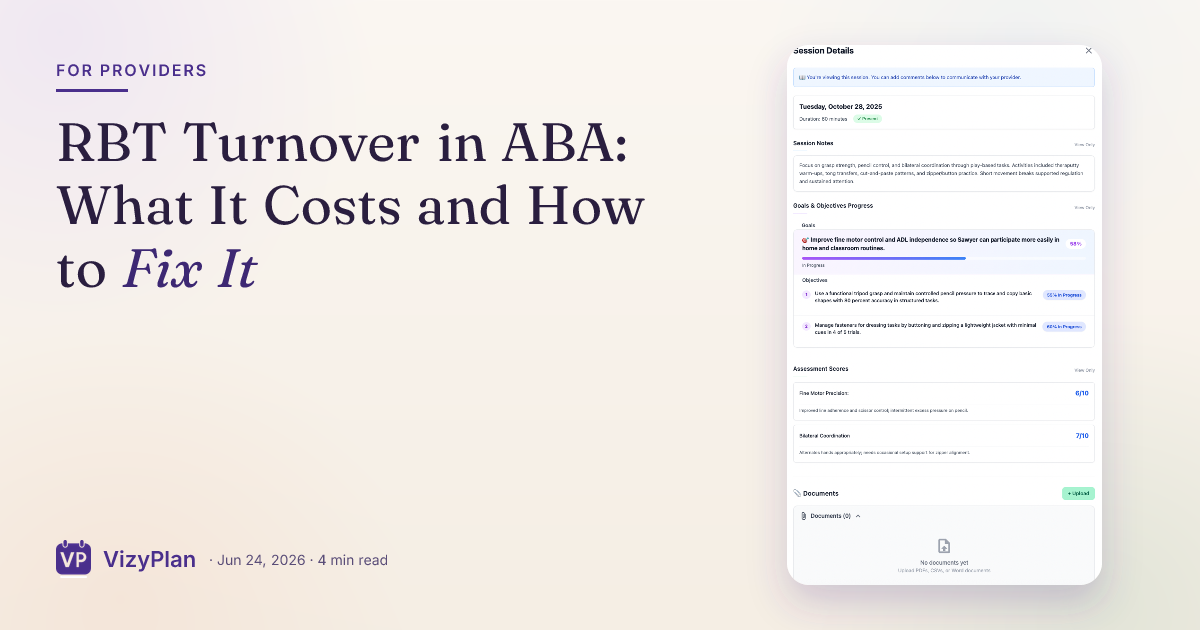
RBT turnover is one of the most persistent challenges in ABA, and the registered behavior technician role is widely reported as having high turnover across the field. When an RBT leaves, the cost is rarely just a recruiting fee. The cost shows up in broken rapport with a child who took months to trust their technician, and in lost carryover when a new RBT has to relearn a client's plan from scratch.
What RBT Turnover Actually Costs Clinics and Clients
RBT turnover breaks the rapport that makes therapy work. A child on the spectrum often needs weeks to feel safe with a new adult, and every departure restarts that clock. Families feel the churn too, because consistency is the thing parents notice first.
Carryover suffers when RBT turnover is high. Progress that lived in one technician's head walks out the door with them, and the next RBT inherits incomplete notes instead of a clear plan. The result is slower gains for clients and more rework for supervisors, which feeds the cycle that drives more turnover.
Retention Strategies That Reduce RBT Turnover
Reducing RBT turnover starts with the daily experience of the job. The strategies below address the reasons technicians most often cite for leaving.
- Invest in real onboarding. A structured first month with shadowing, clear expectations, and early wins helps new RBTs feel competent instead of overwhelmed.
- Make supervision supportive, not just compliant. RBTs stay when BCBAs coach them, answer questions, and treat supervision as mentorship rather than a checkbox.
- Build a career path. Tuition support, BCBA candidacy tracks, and pay tied to growth give RBTs a reason to picture a future at your clinic.
- Cut the documentation load. Excessive paperwork burns out technicians and supervisors alike. Streamlining notes protects time for actual therapy.
Culture ties these strategies together. RBTs leave managers and broken systems more than they leave the work itself, so listening to feedback and acting on it matters.
Tools help too. VizyPlan gives teams shared visual plans that travel with the client, so a new RBT inherits a clear routine instead of guesswork, and carryover stays sticky between sessions and home. Less busywork makes an RBT's day saner. For more on the paperwork side, see our guide on documentation burden and BCBA burnout, and for protecting progress beyond the clinic, read about the in-clinic to home generalization gap.
Enjoying this article?
Get practical tips and insights delivered to your inbox — no spam, ever.
Download VizyPlan and start your 7-day free trial today. Give your team less busywork and clearer plans. If it helps, keep going for $6.99/month or $59.99/year.
VizyPlan was built by an autism dad and an autism mom who is a licensed speech-language pathologist who needed something that did not exist. Start your free trial.