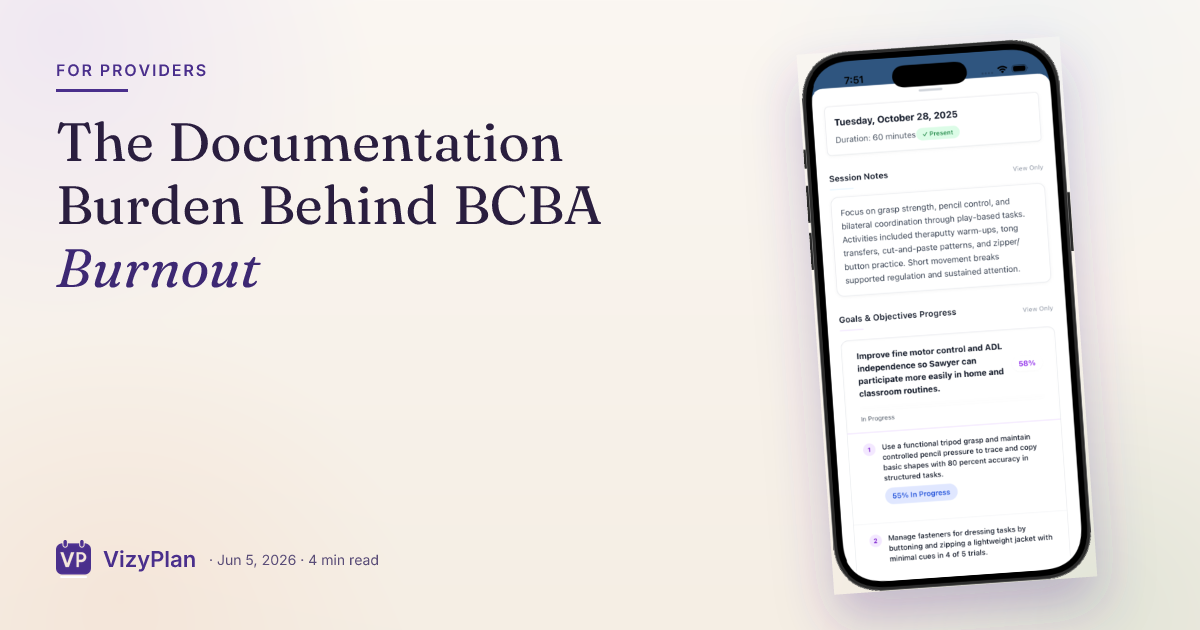
BCBA burnout is no longer a quiet problem whispered about at conferences. It is a workforce crisis with numbers attached. In a recent industry survey, 58 percent of BCBAs said they had considered leaving the profession because of stress, and the biggest culprit was not the children or the families. It was the paperwork. For practice owners trying to hold a team together while payers tighten the screws, understanding where the hours actually go is the first step toward keeping the clinicians you have.
What the documentation burden is doing to your team
The same survey, summarized in a 2026 review of ABA trends, found that 61 percent of BCBAs say administrative burden interferes with direct care, and that BCBAs spend only about 25 percent of their time working directly with clients. The rest disappears into non-clinical work, with session notes and reports eating the largest share. One in three reported extreme stress for two years or longer. Frontline turnover compounds the strain, with RBT turnover running anywhere from roughly 77 percent to over 100 percent at larger organizations.
The pattern is brutal and clear. The people who entered the field to work with children spend three of every four hours not working with children, and many of them are deciding the trade is not worth it.
The levers that actually give time back
Burnout fixes that ask clinicians to simply be more resilient miss the point. The fix is structural. Reduce the volume of low-value documentation, build templates that make required notes faster, and cut the re-teaching that happens when skills do not hold between sessions.
That last lever is the one most practices overlook. Every skill that fails to carry over to home becomes a session spent re-teaching, which becomes another note, another data point, another report. When carryover improves, clinical time gets more productive and the paperwork per unit of progress drops. We have written for families about what to do when therapy does not transfer home, and the provider side of that equation is the same. Better generalization means less rework.
VizyPlan gives families a visual routine pulled from the active goal, so practice continues between sessions and the clinician is not rebuilding ground every week. The home tool produces carryover data without adding clinician hours. Your team spends less time re-teaching and more time on the work that drew them in.
Enjoying this article?
Get practical tips and insights delivered to your inbox — no spam, ever.
Download VizyPlan and start your 7-day free trial today. Cut the re-teaching loop that drains your team. Just $6.99/month after your trial, no credit card required upfront.
VizyPlan was built by an autism dad and an autism mom who is a licensed speech-language pathologist who needed something that did not exist. Start your free trial.