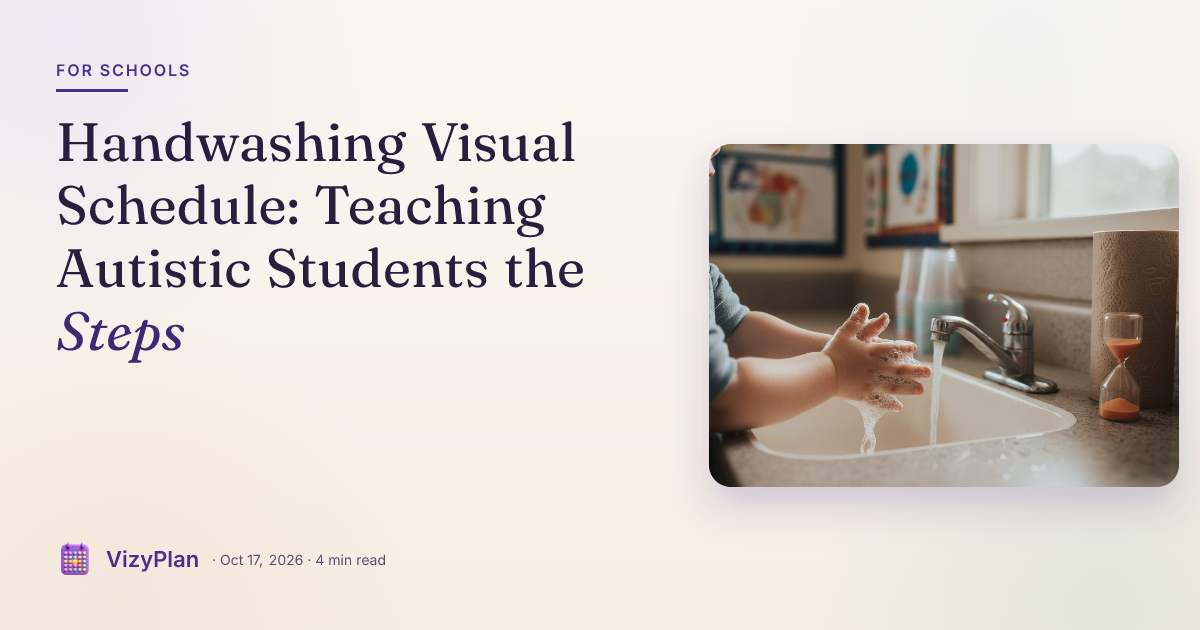
Cold and flu season turns handwashing into a routine that happens a dozen times a school day: after recess, before lunch, after a sneeze, after the bathroom. For many autistic students, a handwashing visual schedule is the difference between a skill that only happens with an adult talking them through it and a skill they can do alone at the sink.
Adults think of handwashing as one action. For a student, handwashing is a chain of small steps, plus a faucet that runs too hot or too cold, a soap that feels slimy, and in many school bathrooms, a hand dryer that roars without warning.
Why handwashing is worth teaching on purpose
The payoff is real. According to the CDC, handwashing education reduces absenteeism due to gastrointestinal illness in schoolchildren by 29 to 57 percent, and reduces respiratory illnesses like colds in the general population by 16 to 21 percent. Those numbers depend on students actually washing well, not just running their fingers under the tap.
Why a handwashing visual schedule works
The 2020 report from the National Clearinghouse on Autism Evidence and Practice reviewed research published from 1990 to 2017 and identified 28 evidence-based practices for autistic children and youth. Two of them fit handwashing exactly. Task analysis is breaking a chained skill into smaller steps and teaching them in order. Visual supports are concrete cues, including visual schedules, that show a student what comes next.
A handwashing visual schedule combines both practices. The task analysis is the list of steps. The visual support is a picture of each step, posted where the student needs it.
Start with the CDC steps
The CDC handwashing steps are a ready-made task analysis:
- Wet hands with clean, running water, warm or cold, turn off the tap, and apply soap.
- Lather the backs of the hands, between the fingers, and under the nails.
- Scrub for at least 20 seconds.
- Rinse well under clean, running water.
- Dry with a clean towel or an air dryer.
Enjoying this article?
Get practical tips and insights delivered to your inbox — no spam, ever.
Seven steps to teach a handwashing visual schedule
- Split the CDC steps into student-sized pictures. Some students need one picture per action: water on, wet hands, soap, scrub, rinse, water off, dry.
- Post the schedule at eye level beside the sink. A laminated strip at the student's height, next to the faucet, gets used.
- Make the 20 seconds visible. Twenty seconds is abstract. A small sand timer, a picture count to 20, or the CDC tip of humming "Happy Birthday" twice gives scrubbing a clear end.
- Use the same words and order with every adult. Teachers, paraprofessionals and lunch aides should all prompt the same sequence. Our guide to visual schedules in the classroom covers building a shared system across staff.
- Choose forward or backward chaining. The NCAEP report describes both. With backward chaining, the adult helps with every step except the last, so the student finishes by drying their own hands and ends each attempt with success.
- Fade the talking before the pictures. Point to the picture instead of naming the step, then wait. The goal is a student who checks the schedule without an adult at the sink.
- Send the same pictures home. Practicing the same sequence at the kitchen sink doubles the repetitions.
Fix the sensory barriers at the sink
A student who avoids handwashing is often avoiding the sink, not the skill.
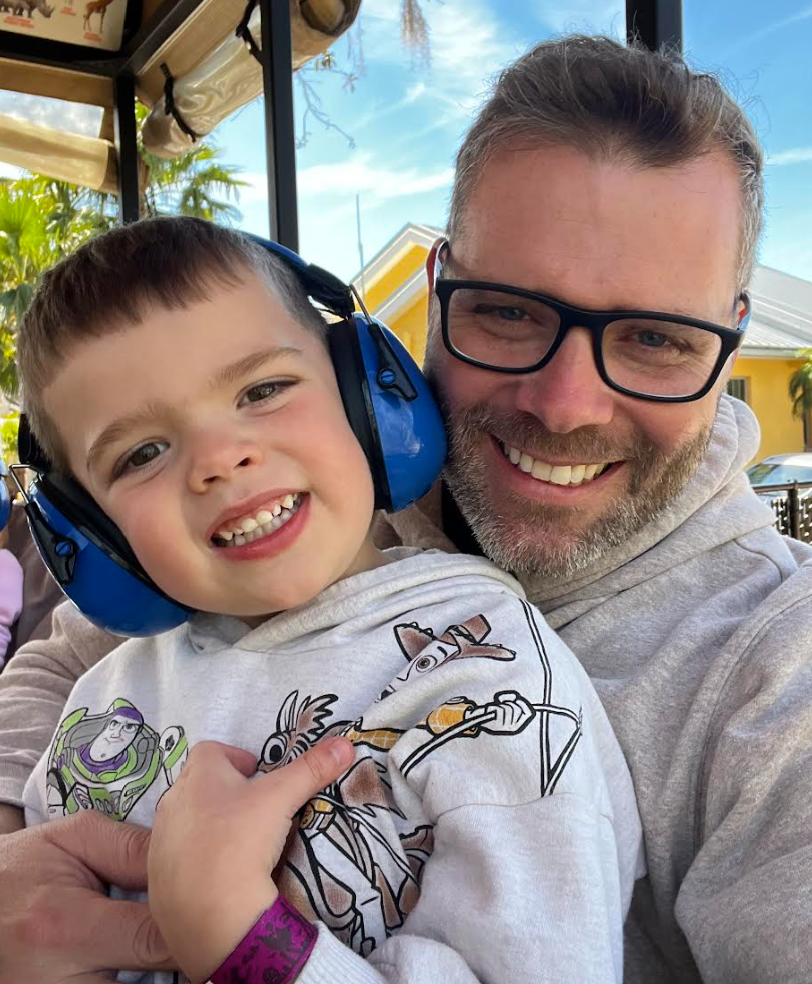
- Hand dryers. In a study published in Paediatrics & Child Health, Calgary student Nora Keegan measured 44 public hand dryers and recorded a peak of 121 decibels, with readings often higher at a child's ear height. Keep paper towels available, let students dry before anyone starts a dryer, and allow headphones. The same noise drives many students to avoid the school bathroom altogether.
- Water temperature. The CDC says warm or cold water both work, so the student can pick. A classroom sink with a fixed setting is more predictable than a hallway faucet.
- Soap texture. Try foam, liquid and unscented options. Foam soap is often easier for students who dislike the slippery feel of gel.
- Automatic faucets. Sensors that start and stop on their own surprise students. Add a picture showing where to hold hands, or use a manual tap when one is available.
Changes like these belong in any sensory friendly classroom plan.
VizyPlan was built by an autism dad and an autism mom who is a licensed speech-language pathologist so a handwashing visual schedule can be a set of pictures a student sees at home and at school.
Share VizyPlan with your families so the routine at the classroom sink gets practiced at home. Families can try it free for a week. If it helps, they can keep going for $6.99/month or $59.99/year.
VizyPlan was built by an autism dad and an autism mom who is a licensed speech-language pathologist who needed something that did not exist. Explore VizyPlan.