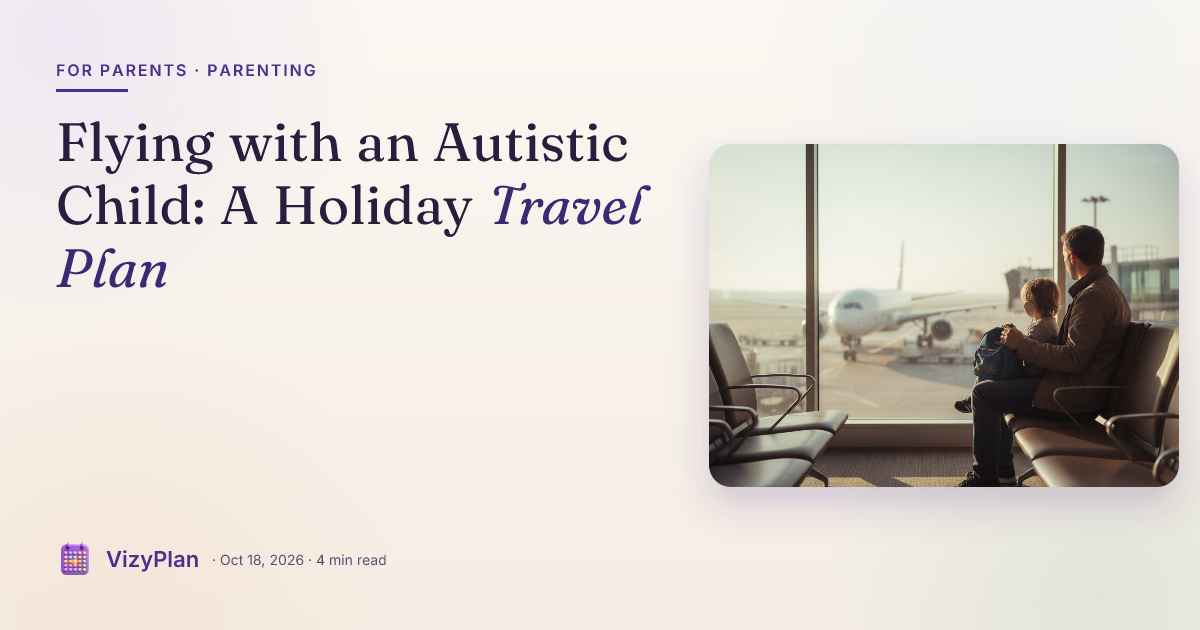
Holiday flights are built from the hardest parts of a day for many autistic kids: long lines, loud announcements, strangers sitting close, and a lot of waiting with no clear end. Flying with an autistic child over Thanksgiving or winter break is still very doable, and most of the work happens before you ever reach the airport.
The first time we flew with our son, the security line was the hardest part of the trip. The flight itself was easier than the forty minutes before it.
Help that exists before you fly
TSA Cares. The first call to make before a holiday flight is to TSA Cares, the TSA helpline for travelers with disabilities and medical conditions. TSA asks travelers to contact TSA Cares at least 72 hours before departure, by phone at (855) 787-2227 or through an online request form. Through TSA Cares you can request a Passenger Support Specialist, a TSA officer trained to assist passengers with disabilities. The service does not skip or speed up screening, but it means someone at the checkpoint expects your family.
The sunflower lanyard. The Hidden Disabilities Sunflower lanyard quietly signals to airport staff that the person wearing it may need extra time or support. When Washington's Reagan National and Dulles airports joined the program in 2023, they counted more than 25 airports nationwide offering it, with free lanyards at information desks. Participation varies, so check both airports' websites or ask at the information desk.
Airport rehearsals. Wings for Autism and Wings for All, programs from The Arc, let families practice checking in, going through the security checkpoint, waiting at the gate, and boarding a plane that never leaves the ground. Dates change each year, so check The Arc's site for one near you.
Seven steps for flying with an autistic child
- Build a picture plan of the travel day. Car, check-in, security, gate, plane, bags, Grandma's. A child who has seen every step in order has fewer surprises to absorb in the moment.
- Call TSA Cares at least three days out. Put the 72 hour deadline on your calendar now.
- Ask for pre-boarding at the gate. Federal rules require airlines to offer preboarding to passengers with a disability who tell gate staff they need extra time or help to board or be seated.
- Choose seats on purpose. A window seat gives a child a wall on one side and something to watch. Sitting toward the front can mean a shorter wait to get off. Whatever you pick, seat the family together.
- Pack noise-cancelling headphones and practice with them. Engine noise and announcements run for hours. Headphones a child already wears at home are far more likely to stay on in the air.
- Fill a carry-on with the familiar. Safe snacks, a charged tablet with downloaded shows, a comfort item, and a change of clothes. Delays happen, and a well-packed bag makes a delay manageable.
- Build extra time into the whole day. Arrive early enough that nobody has to rush through security. Rushing is often what turns a hard morning into a harder one.
Enjoying this article?
Get practical tips and insights delivered to your inbox — no spam, ever.
If a meltdown happens on board
A meltdown on a plane is the moment most parents dread about air travel, and it feels enormous from your seat. Put your attention on your child, not the audience. Lower the input: headphones on, window shade down, a hood up or a blanket to hide under if your child finds that calming. Tell a flight attendant briefly that your child is autistic and overwhelmed, and ask whether a quieter spot is available. Then wait it out together. Our guide to telling a meltdown from a shutdown can help you read what your child needs in the moment.
The trip after the flight
Flying with an autistic child tends to get easier with each trip. Our post on travel and vacation tips for autistic and ADHD kids covers the days after you land, and our guide to Thanksgiving with an autistic child covers the table once you arrive.
VizyPlan was built by an autism dad and an autism mom who is a licensed speech-language pathologist so the airport, the plane and the landing can be a picture plan your child sees for weeks before the trip.
Download VizyPlan and show the trip before the trip. Try it free for a week. If it helps, keep going for $6.99/month or $59.99/year.
VizyPlan was built by an autism dad and an autism mom who is a licensed speech-language pathologist who needed something that did not exist. Start your free trial.