The calendar on the clinic wall says November, and families on your caseload are already feeling it. School concerts, travel, relatives, shopping and a broken routine all land on parents who were stretched before the season started. Caregiver stress during the holidays is not a personal failing, and providers are often the first professionals to see it, usually in a tired face at pickup or a cancelled session.
What the research says about caregiver stress
Parents of autistic kids report more parenting stress than other parents, and the finding is consistent. Hayes and Watson's meta-analysis in the Journal of Autism and Developmental Disorders pooled studies with comparison groups and found a large effect size for stress in families of autistic children compared with families of typically developing children. Comparisons with families of children with other disabilities also showed a large effect, though the authors urge caution because many of those comparison families were raising children with Down syndrome.
The season adds weight to that baseline. In a 2023 American Psychological Association poll of 2,061 U.S. adults, 89% said worries like money, missing loved ones and family conflict cause them stress at this time of year, and 41% said their stress goes up compared with the rest of the year. The poll did not single out parents of autistic kids, but families on your caseload carry both loads at once.
Signs of caregiver stress worth noticing
Most parents will not announce that they are overwhelmed. The signals tend to be quieter:
- Attendance shifts: late arrivals, cancellations or a parent who used to stay for the debrief now waiting in the car.
- Home program drop-off: practice logs that stop coming back, or a parent who apologizes for "not doing anything" this week.
- Shorter fuses: frustration that seems bigger than the moment, aimed at the schedule, the school or themselves.
- Words like "drowning" or "I can't": offhand comments are often the most honest data you will get.
Five ways to ease caregiver stress within your scope
None of these steps require you to become a counselor. They require you to adjust the plan to fit the family's real December.
- Shrink the home program to one or two priorities. Ask which routine is hardest right now, then pick the one or two targets that make that routine easier. Our guide to parent-friendly therapy goals covers writing targets families can actually follow.
- Offer flexible scheduling before families have to ask. Mention telehealth check-ins, shorter sessions or a shifted time in the same breath as the holiday calendar, so a change feels like an option rather than a confession.
- Validate without fixing. A sentence like "This time of year is a lot, and you are still showing up" acknowledges caregiver stress without turning a session into therapy for the parent.
- Lower the data bar on purpose. Swap daily logs for a single weekly check-in. Our post on home data collection parents keep up with has lighter options.
- Plan the break together. A short plan for the weeks off, built around the family's own events, beats a packet that sits on the counter. Pair it with your holiday break regression plan.
Enjoying this article?
Get practical tips and insights delivered to your inbox — no spam, ever.
Refer, do not counsel
Every discipline draws the line in a similar place. ASHA's Scope of Practice in Speech-Language Pathology describes counseling that empowers families to make informed decisions and supports peer groups, and it directs SLPs to refer to other professionals when needs fall outside communication and swallowing. BCBAs and OTs can check the same boundary in their own professional codes. When a parent's distress goes beyond the therapy plan, the most helpful move is a warm handoff:
- Respite care. In a study of 101 couples raising autistic children, each extra weekly hour of respite care was linked to better marital quality, with more respite tied to lower daily stress. The survey design shows an association, not proof of cause. The ARCH National Respite Locator helps families find local programs.
- Parent support groups. Local autism organizations, parent training centers and clinic-run groups give families peers who understand.
- Mental health professionals. Keep a short list of counselors and therapists who work with caregivers, and offer it plainly, the same way you would share a dentist's number.
If a parent mentions thoughts of self-harm, follow your organization's crisis protocol right away.
Small changes, steady families
Caregiver stress rarely disappears in December, but a lighter plan, a flexible calendar and a warm referral can keep a family connected to services through January. For a parent-facing read you can share, our post on caregiver burnout in neurodivergent families speaks directly to parents.
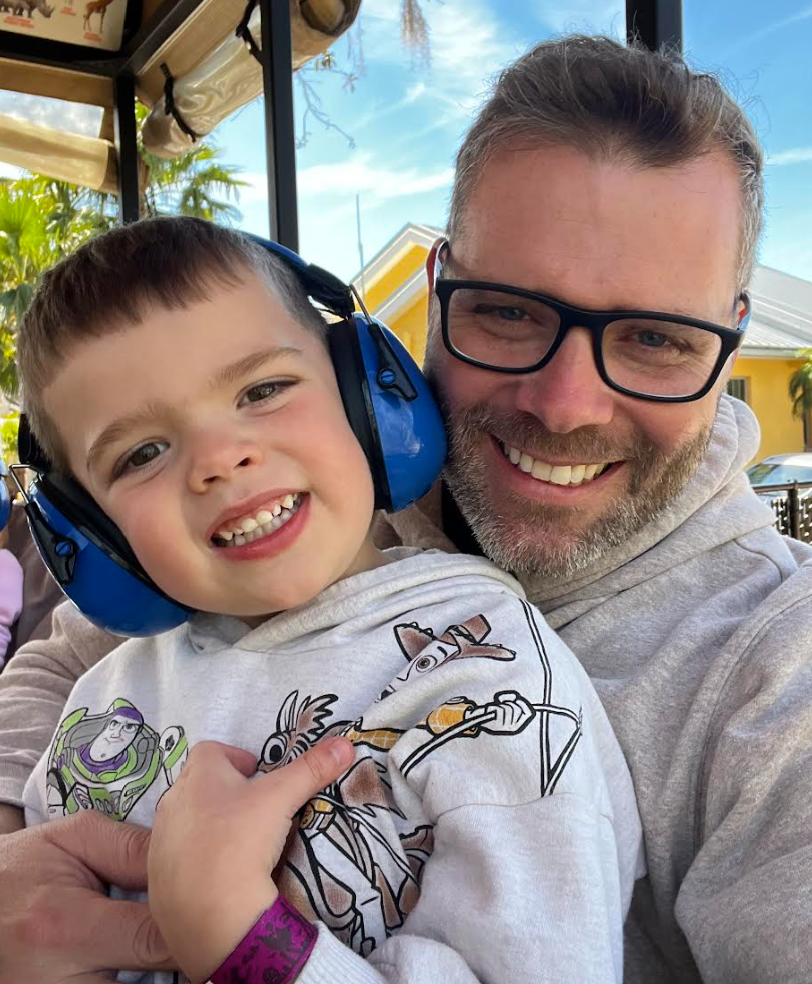
VizyPlan was built by an autism dad and an autism mom who is a licensed speech-language pathologist so families have one simple picture plan for the day instead of another packet to keep up with.
Share VizyPlan with your families so the holiday routine takes one less decision. Families can try it free for a week. If it helps, they can keep going for $6.99/month or $59.99/year.
VizyPlan was built by an autism dad and an autism mom who is a licensed speech-language pathologist who needed something that did not exist. Explore VizyPlan.