Thanksgiving and winter break often mean a hotel room, an air mattress on Grandma's floor, or a bunk in a room full of cousins. Sleeping away from home asks a lot of any child, and for many autistic kids a new room at night is the hardest part of the whole trip. The good news: most of what makes bedtime work at home can be packed in a bag.
Why a new bed is harder for autistic kids
Sleep is already a sore spot for many autistic families before anyone leaves the house. In a 2021 BMC Psychiatry survey of 1,310 autistic children aged 2 to 7, 67.4% had sleep problems, compared with 51% of typically developing children. Bedtime resistance, sleep anxiety and taking a long time to fall asleep were the most common.
Sleeping away from home adds a layer on top of that. Researchers have long known about the "first night effect," the lighter, more broken sleep people get in an unfamiliar place. A 2016 Current Biology study in adults found that on the first night in a new setting, one side of the brain stayed more alert and reacted more to unexpected sounds, and the pattern was gone in later sessions. If grown-ups sleep lightly on night one, a child who notices every new hum and shadow will too.
Pack the bedtime, not just the pajamas
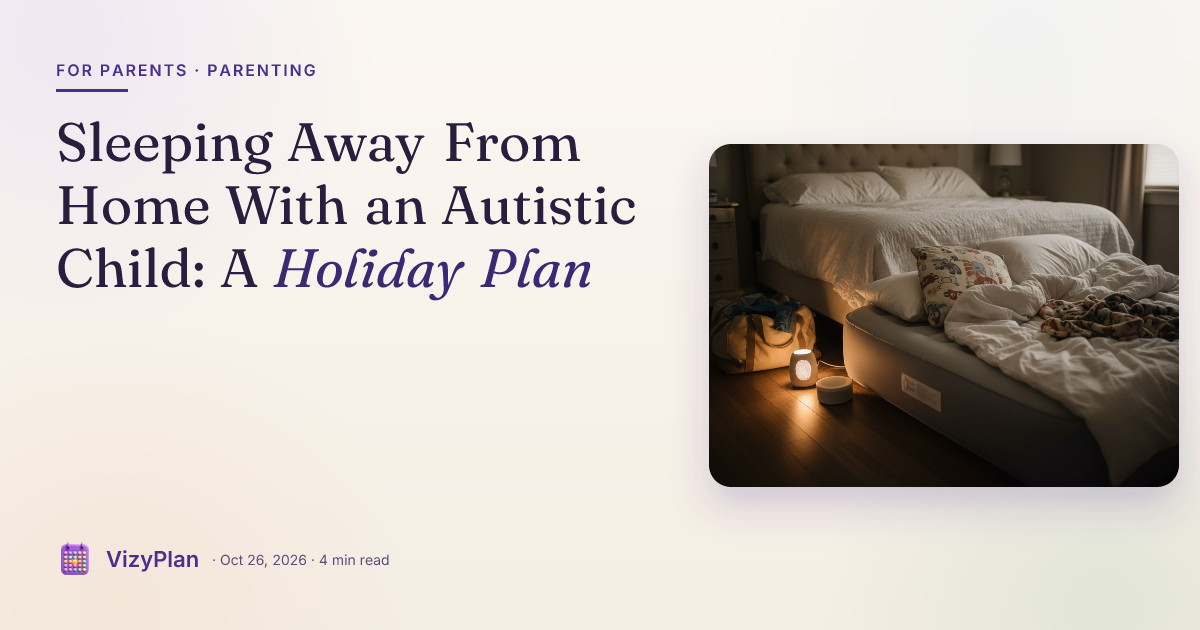
When sleeping away from home, familiar sensory input is the closest thing to bringing your child's room along. A short list:
- Their own pillow and blanket. Smell and texture are powerful cues, so skip washing them right before the trip.
- The same sound. If your child sleeps with a fan or white noise, bring it or download the same track. A steady sound also covers hotel hallways and late-night relatives.
- The same light. Pack the night light your child already uses. For bright rooms, travel blackout shades or painter's tape and a dark towel over a window can work.
- Comfort items. The stuffed animal, the book, the soft shirt. Whatever is part of bedtime at home comes along.
A plan for sleeping away from home
- Preview the room with photos. Ask Grandma to text pictures of where your child will sleep, or look up hotel room photos online. Show your child the bed, the bathroom and the light switch days before you go.
- Keep the bedtime sequence identical. Bath, pajamas, teeth, two books, lights out: same steps, same order, same words. The ATN/AIR-P sleep tool kit recommends a regular routine that every caregiver follows the same way, starting 15 to 30 minutes before bedtime, and suggests visual schedules to teach it.
- Hold bedtime close to the usual time. A late family dinner can push bedtime back, and that shift is often what turns night one into a long night. Step away from the party early if you need to.
- Set up the sleep space first. Unpack the pillow, blanket, sound machine and night light before dinner, so your child walks into a room that already looks and sounds like bedtime.
- Plan the first night like the hardest one. Expect a later sleep and an earlier wake. If sharing a room helps your child settle, plan for it the first night and build back toward the usual setup later in the trip.
- Decide the 3am plan before you leave. Agree with your partner on who gets up, where the quiet spot is, and what calm activity is allowed.
The routine itself is worth protecting. In a large multinational study led by Jodi Mindell, children with a consistent nightly bedtime routine fell asleep faster, woke less during the night and slept longer, and more nights with a routine went with better sleep. Those findings show an association rather than proof of cause, and the study was not specific to autism, but they point the same way as what many autism sleep guides recommend.
Enjoying this article?
Get practical tips and insights delivered to your inbox — no spam, ever.
What to do at 3am
A child awake in a strange room at 3am is usually unsettled, not misbehaving. Keep the lights low and your voice quiet. Offer the same few words you use at home, the comfort item, and the sound machine turned back on. Skip screens if you can, since bright light and exciting shows make it harder to fall back asleep. If your child cannot settle, a short walk to the bathroom and back, or a few minutes on your lap in the quiet spot, often resets things better than a long negotiation in bed.
Then let the morning be easy. One rough night while sleeping away from home is normal, and most kids sleep better by night two or three as the room becomes familiar.
Before and after the trip
Each trip makes sleeping away from home a little more familiar. If the trip includes a flight, our guide to flying with an autistic child covers the travel day. For the big meal itself, see Thanksgiving with an autistic child. And if bedtime is a struggle at home too, start with autism and sleep problems: what actually helps.
VizyPlan was built by an autism dad and an autism mom who is a licensed speech-language pathologist so the bedtime routine can be a picture plan your child takes anywhere, from Grandma's air mattress to a hotel bed.
Download VizyPlan and pack the bedtime routine for the trip. Try it free for a week. If it helps, keep going for $6.99/month or $59.99/year.
VizyPlan was built by an autism dad and an autism mom who is a licensed speech-language pathologist who needed something that did not exist. Start your free trial.