
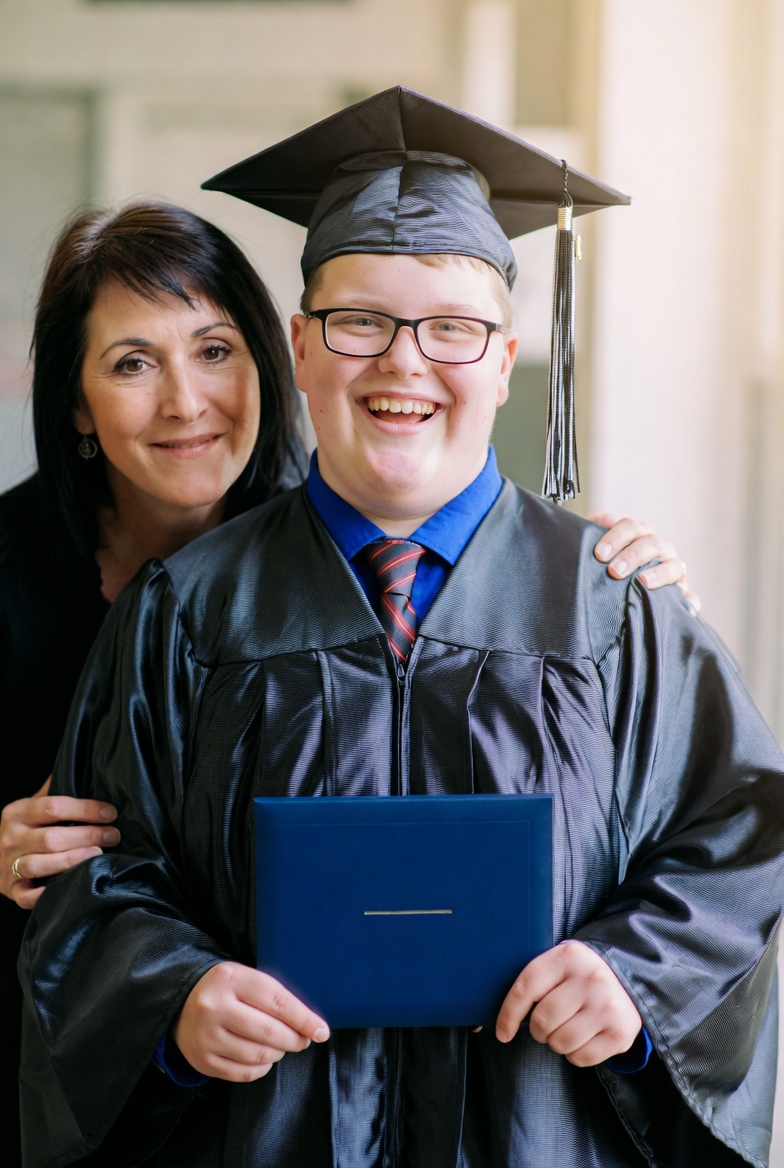
For years, you have built a support system around your child. Speech therapy. Occupational therapy. An IEP with goals reviewed every year. A team of professionals who know your child by name. Then one day, your child walks across a stage, picks up a diploma, and almost everything disappears.
This is the services cliff. And for the roughly 50,000 Americans with autism who turn 18 each year, it is one of the most disorienting transitions a family will ever face.
If your child is still young, you might not be thinking about this yet. But the families on the other side of it will tell you the same thing: they wish someone had told them sooner.
What the Services Cliff Actually Means
The services cliff describes the dramatic drop in support that happens when autistic individuals age out of the school system, typically between ages 18 and 22 depending on the state. Under federal law, every child with a disability is entitled to a Free Appropriate Public Education through the Individuals with Disabilities Education Act. That word, entitled, is the one that matters most.
Under IDEA, services come to your child. The school district is legally obligated to identify, evaluate, and provide support. You do not have to apply. You do not have to prove eligibility. Your child has a right to services, and the school bears the burden of delivering them.
After graduation, everything flips. The adult system operates on eligibility, not entitlement. Your child, now a legal adult, must apply for every service, prove they qualify, and often wait months or years to receive support that used to arrive automatically. As one resource guide from PAAutism puts it: "Under IDEA, children are entitled to services. After school, adults must prove eligibility. This is the fundamental shift that creates the services cliff."
That shift is not just philosophical. The numbers tell a devastating story.
The Numbers Behind the Cliff
Research from Drexel University's A.J. Drexel Autism Institute has documented what happens after graduation in detail that every parent should see.
Services vanish almost overnight. Three out of four children on the autism spectrum receive speech therapy during school. After graduation, fewer than one in ten continue receiving it. More than half of autistic adults receive no vocational or life skills services following high school. Approximately 26 percent of young adults on the spectrum receive no services at all.
Disconnection is the norm, not the exception. Thirty-seven percent of autistic young adults were completely disconnected during their early twenties, meaning they never got a job or continued education after high school. For comparison, fewer than 8 percent of young adults with other types of disabilities experienced the same disconnection.
The decline starts before graduation. Research published in the National Institutes of Health found that with each passing year of high school, students with autism received fewer services. By the time graduation arrives, the cliff has already begun.
Why Employment Numbers Are So Alarming
The employment picture for autistic adults is one of the starkest indicators of how the system fails after high school.
Unemployment rates range from 40 to 85 percent depending on the study and how underemployment is measured. Only about 58 percent of young adults on the spectrum worked for pay at all between high school and their early twenties, far lower than young adults with learning disabilities (90 percent) or even intellectual disabilities (74 percent).
When autistic adults do find work, it is often part-time and low-wage. Among those who became employed after vocational rehabilitation services, 80 percent worked part-time with median weekly earnings of just $160. Forty-five percent of employed autistic adults work part-time, compared to 19 percent of the general population.
These are not numbers about capability. They are numbers about a system that does not bridge the gap between the structured support of school and the unstructured demands of adulthood. Many autistic adults want to work. Research shows 60 to 70 percent report wanting gainful employment. The infrastructure to get them there is what falls short.
Independent Living and the Reality Families Face
The housing picture is equally sobering. Eighty-seven percent of adults on the autism spectrum live with their parents or guardians after high school. Only 5 to 21 percent have ever lived independently.
For many families, this is not a choice. It is the result of a system with waiting lists measured in years and support options that are nearly impossible to navigate without help. The first two years after graduation are especially critical. Research shows this period has the highest rates of complete disengagement from services, employment, and education.
If you are the parent of a younger child and this feels far away, consider this: the average wait time for autism-specific Medicaid waivers is 63 months. That is more than five years. Approximately 607,000 people are currently on waiting lists for home and community-based waiver services. Starting early is not being anxious. It is being strategic.
Healthcare Falls Through the Cracks Too
One area that rarely gets discussed is the healthcare transition. When your child ages out of pediatric care, finding adult providers who understand autism can feel impossible.
Less than 9 percent of autistic adolescents receive recommended guidance on transitioning from pediatric to adult healthcare. Only 14 percent of youth with autism talked with their pediatricians about switching to an adult care doctor. Almost two-thirds of adult physicians received no training in the care of adults with autism.
The result is predictable. As youth with autism leave pediatric care, scheduled outpatient visits decline while emergency service use increases. Families who spent years building relationships with understanding pediatricians are suddenly starting over with doctors who may have little experience with autism.
What You Can Do Starting Now
The most important thing to understand about the services cliff is that preparation is the single best tool you have. The families who fare best on the other side are the ones who started planning years before graduation.
If Your Child Is 14 or Younger
This is earlier than most parents think about transition, but it is exactly when preparation should begin.
Push for strong transition goals in the IEP. Federal law requires transition planning by age 16, and some states require it by 14. Do not wait for the school to bring it up. Request that IEP meetings include specific, measurable postsecondary goals related to employment, education, and independent living.
Build independent living skills into daily life. Cooking, laundry, hygiene routines, money management, and using transportation are all skills that can be practiced for years before they are needed. Visual schedules break complex tasks into steps your child can follow independently. First-then boards help motivate practice of less-preferred skills. These are not just classroom tools. They are life tools.
Apply for the Medicaid waiver waitlist. With average wait times exceeding five years, getting on the list now is critical even if your child does not need services yet. Contact your state's developmental disabilities agency to understand what waivers are available and how to apply. We covered financial resources in detail in our guide to autism funding and programs.
Teach self-advocacy. In the adult world, your child will need to explain their needs, request accommodations, and navigate systems that are not designed for them. Start by including your child in IEP meetings. Let them practice asking for what they need in low-stakes situations. Self-advocacy is a skill that develops over time, not something that appears at 18.
Enjoying this article?
Get practical tips and insights delivered to your inbox — no spam, ever.
Ages 16 to 18: The Critical Window
Apply for SSI. At age 18, Supplemental Security Income no longer considers parental income when determining financial eligibility. This is a significant shift that makes many young adults newly eligible. The current maximum SSI benefit is $943 per month.
Open an ABLE account. The Achieving a Better Life Experience Act allows individuals with disabilities to save up to $19,000 per year in tax-advantaged accounts without losing eligibility for SSI or Medicaid. Starting in 2026, the eligibility age expands from 26 to 46. Qualified expenses include education, housing, transportation, employment support, assistive technology, and healthcare.
Connect with Vocational Rehabilitation. Every state runs a VR program that provides career counseling, job training, placement assistance, and supported employment. Referrals can happen before graduation. Do not wait until your child is unemployed to make this connection.
Research guardianship alternatives. When your child turns 18, they become a legal adult regardless of their disability. You will need to decide whether to pursue guardianship, power of attorney, or supported decision-making. Supported decision-making is increasingly recommended because it preserves the individual's legal rights while creating a network of trusted people to help with decisions. Explore the options now so you are not making this choice under pressure.
Plan the healthcare transition. Start looking for adult providers who have experience with autism. Ask your current pediatrician for referrals. Request that your child's medical records, therapy history, and diagnosis documentation are organized and accessible.
Before Graduation
Request a Summary of Performance. This document from the school summarizes your child's disability, accommodations, and supports. You will need it when applying for adult services.
Secure all educational and medical records. Gather IEP documents, evaluations, therapy notes, and medical records. Adult service providers will want this documentation, and getting it after your child leaves the school system becomes significantly harder.
Request a comprehensive evaluation. Schools are required to provide one before a student ages out. This evaluation can serve as documentation for adult service applications and establish a baseline for future needs.
Understanding Your Financial Options
Financial planning is one of the areas where early action pays the most dividends. Several programs exist specifically for individuals with disabilities, but navigating them requires understanding how they interact.
ABLE accounts allow tax-free savings for disability-related expenses without jeopardizing means-tested benefits. The 2026 contribution limit is $19,000 per year, and families can roll over funds from 529 education savings plans into ABLE accounts.
Special needs trusts can hold assets without affecting SSI eligibility. Unlike ABLE accounts, there is no annual contribution limit, making them useful for larger inheritances or settlements.
SSI and SSDI serve different purposes. SSI is need-based and does not require work history. SSDI is available through the Disabled Adult Child benefit, which allows adults disabled before age 22 to receive benefits based on a parent's Social Security record.
A special needs financial planner can help you understand how these programs work together for your family's specific situation.
The Caregiver Side of the Cliff
The services cliff does not just affect the autistic individual. It reshapes the entire family.
Research shows that 45 percent of autism caregivers experience depressive symptoms. Caregivers have 3.6 times higher odds of chronic stress compared to non-autism caregivers. Nearly three-quarters of primary caregivers are female, and the majority are mothers who often reduce or leave employment to fill the gaps that disappear after graduation.
One parent described the transition this way: "After school ends, we will become his teachers 365 days a year without any breaks for the rest of our lives. It is wholly our responsibility to try to make him able to care for himself as best we can before we die. Many of the autism parents we know refer to this moment in our collective lives as the cliff."
If you are feeling the weight of this, you are not alone. Caregiver burnout is a predictable consequence of sustained stress without adequate support. Taking care of yourself is not optional. It is part of taking care of your child.
The System Is Broken, But You Are Not Powerless
Let us be honest about what this article describes. It describes a system that works reasonably well for children and then largely abandons them and their families at 18. It describes waiting lists that last longer than high school itself. It describes a shift from entitlement to eligibility that leaves families scrambling during one of the most vulnerable periods of their child's life.
That is the reality. And pretending otherwise does not help anyone.
But here is the other reality. Families who start early, who understand the system before they need it, who build skills and connections and financial plans years before graduation, those families navigate the cliff with more stability. Not because the system works for them, but because they prepared for a system that does not.
You are reading this article. That already puts you ahead of most families, many of whom do not learn about the services cliff until they are standing at the edge of it.
Where to Start Today
If this article has you feeling overwhelmed, start with one action. Just one.
If your child is under 14, bring up transition planning at the next IEP meeting. If your child is 14 to 17, contact your state's developmental disabilities agency and ask about waiver waitlists. If your child is 17 or older, apply for SSI and connect with your state's Vocational Rehabilitation office.
The cliff is real. But you do not have to face it unprepared.
VizyPlan helps families build the visual routines and independent living skills that matter most during the transition to adulthood. Start your free trial and give your child tools for independence that grow with them.