
Vizy Timer

Waiting at an Appointment in a room built for nobody.

Twenty-five minutes past your slot, in a waiting room with fluorescent lighting and a television nobody chose, and your child has asked when eleven times. So have you, internally.

Free 7-day trial · No email or credit card to start · Built by an autism dad and a licensed SLP

Why it works here

Why a visual timer helps with waiting at an appointment

A waiting room combines an unknown duration with a difficult sensory environment, which is a reliably bad combination. You cannot control when you are called, but you can break the wait into visible chunks so your child is counting down something finite rather than staring into an open-ended one.

You will recognize this if

  • Your child copes with the appointment itself but not with the wait before it.
  • You avoid booking anything that might run late.
  • The waiting room, not the procedure, is where things fall apart.
The setup

How to set it up for waiting at an appointment

Takes about five minutes. Use it as written, or keep only the steps your family needs. A short setup that gets used beats a complete one that gets abandoned in week two.

  1. 1 Ask reception for a realistic estimate before you sit down
  2. 2 Set the timer in ten-minute blocks rather than one long unknown stretch
  3. 3 Pair each block with one activity, so the block has content as well as a length
  4. 4 Sit in the quietest corner you can find, away from the door and the screen
  5. 5 Reset the timer openly if the wait extends, and say why
  6. 6 Agree what happens after the appointment before you go in
The mistake most families make

Promising a length you cannot control is the fastest way to lose your child's trust in the timer. Time the block, not the appointment.

In the app

Built into the routine, not bolted onto it.

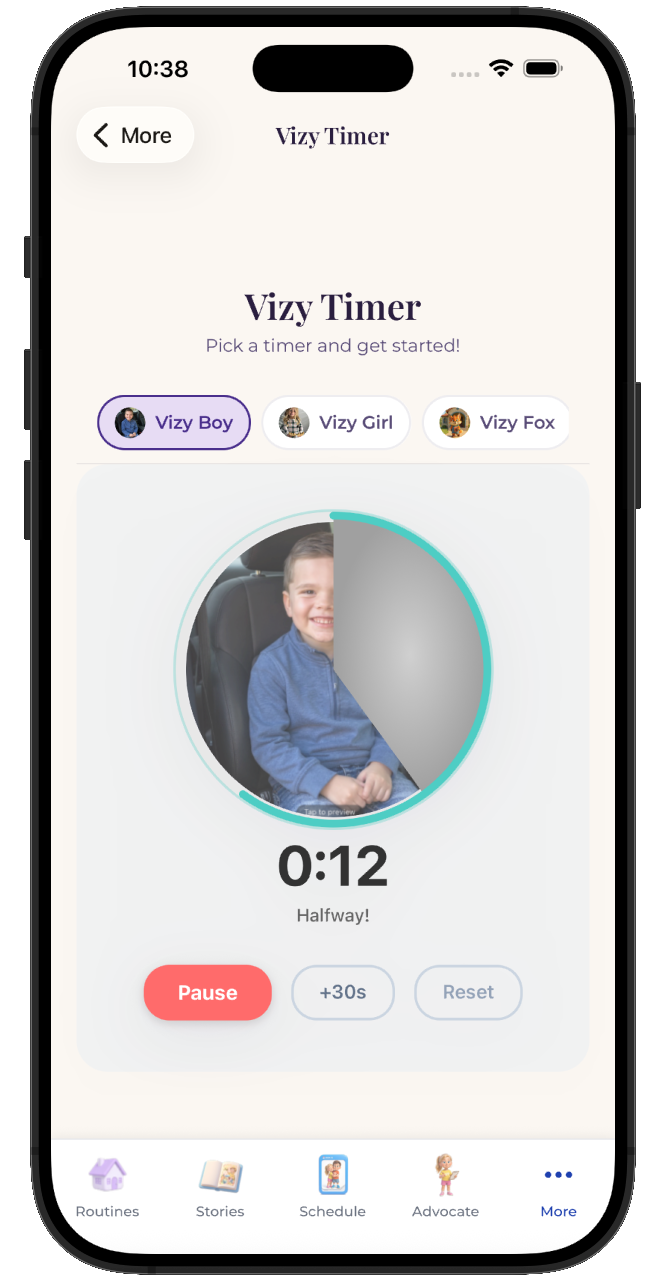
The Vizy Timer lives inside the same routine your child already follows, so waiting at an appointment is a step with a visible length rather than a separate tool somebody has to remember to open.
  • Attach it to any step in any routine
  • Works for pre-readers, gestalt language processors, and AAC users
  • Same setup at home, at school, and in therapy
See the step-by-step guide →
The VizyPlan Vizy Timer set up for waiting at an appointment

Set this up for your child.

Five minutes to build, and your child sees it every time waiting at an appointment comes around.

$6.99/month after the free trial · Cancel anytime · Also at app.vizyplan.com

Common questions

About waiting at an appointment

What if we get called before the timer ends?
Say so out loud and celebrate it. A wait that ends early is a good surprise, and it does not undermine the timer the way a wait that runs long does.
How do I explain a delay to a child who takes things literally?
Be concrete about the cause rather than vague about the length. The doctor is with another patient and we are next tells your child something true, where soon does not.
Should I use headphones in a waiting room?
If your child is sound sensitive, yes, and put them on before the room gets loud rather than after. Waiting rooms are a common source of auditory overload.

VizyPlan supports routines and communication at home and school. It is not a medical device and does not diagnose or treat any condition. Talk to your child's care team about clinical questions.