

Grocery Store Strategies: Running Errands with Your Neurodivergent Child
9 min read
Strip lighting, freezer hum, PA announcements, and forty minutes of decisions. The grocery store is one of the hardest sensory environments your child enters voluntarily, and you have to go every week.
Free 7-day trial · No email or credit card to start · Built by an autism dad and an autism mom SLP
The shop has no visible structure from a child's point of view, which makes it feel endless. A timer gives the trip a shape, and pairing it with a short list lets your child track progress toward an ending they can see.
Takes about five minutes. Use it as written, or keep only the steps your family needs. A short setup that gets used beats a complete one that gets abandoned in week two.
Adding one more aisle after the timer ends is what teaches your child that the number was never real, and it is usually the aisle where things go wrong.
The Vizy Timer lives inside the same routine your child already follows, so time at the grocery store is a step with a visible length rather than a separate tool somebody has to remember to open.
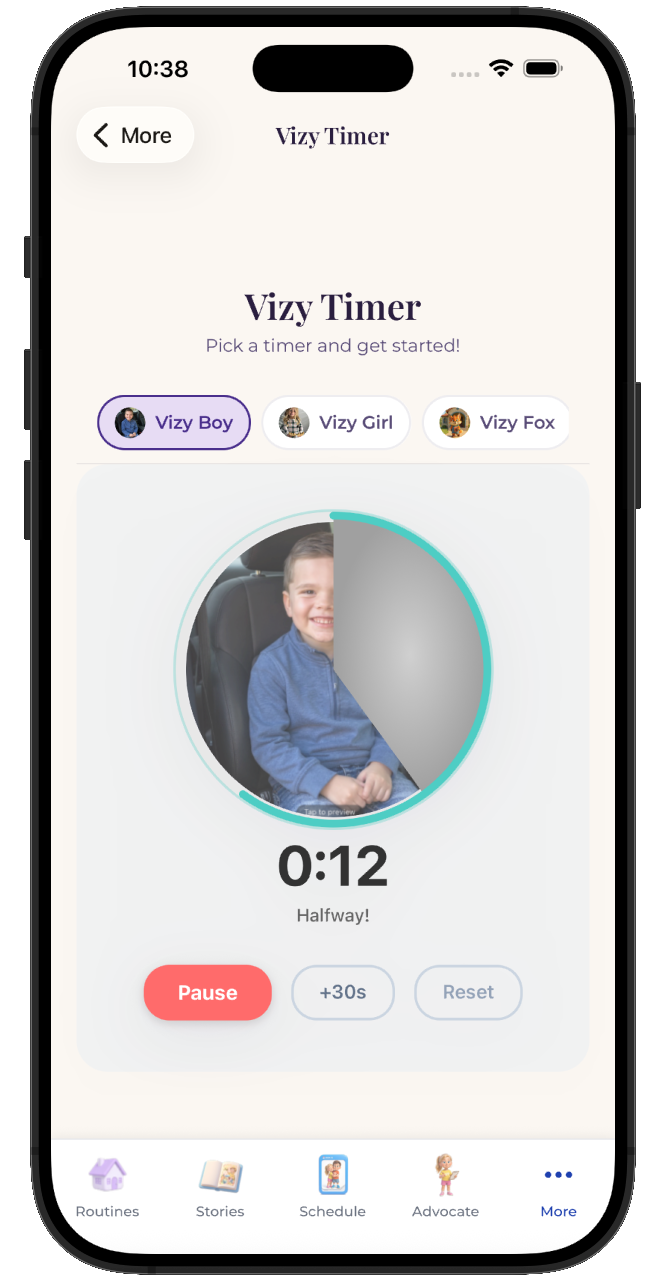
Five minutes to build, and your child sees it every time time at the grocery store comes around.
$6.99/month after the free trial · Cancel anytime · Also at app.vizyplan.com
VizyPlan supports routines and communication at home and school. It is not a medical device and does not diagnose or treat any condition. Talk to your child's care team about clinical questions.