Making Friends at School: What Research Really Found
5 min read
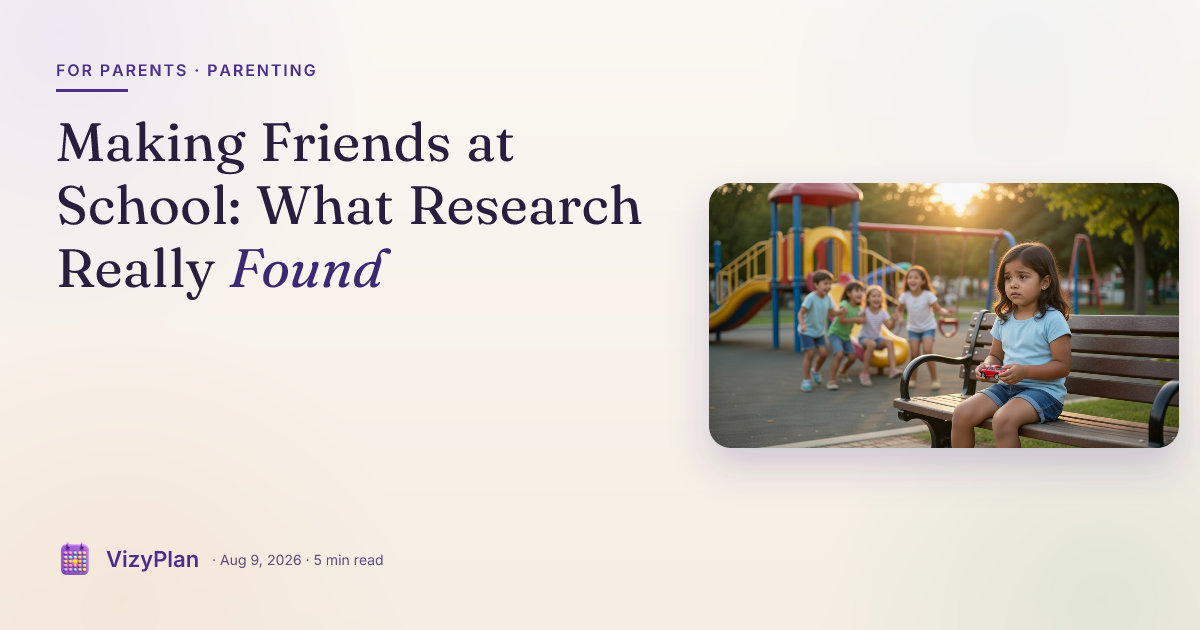
Your child stands two feet from a group of children playing, watching, wanting in, and never quite entering. They are not uninterested. They do not know the entry procedure.
Free 7-day trial · No email or credit card to start · Built by an autism dad and an autism mom SLP
Joining a group has an unwritten sequence that most children absorb by watching and some never extract. Naming the actual steps, including how to handle a no, turns an impossible social leap into a procedure your child can follow.
What the research saysA study using proximity sensors during recess found autistic pupils spent as much time in social contact as classmates but had significantly fewer reciprocated friendships, suggesting the gap is in mutual connection rather than proximity.
Tsou et al., Autism, 2024
Takes about five minutes. Use it as written, or keep only the steps your family needs. A short setup that gets used beats a complete one that gets abandoned in week two.
Leaving out what happens after a no means the first rejection ends the whole strategy, and rejection is a normal part of joining rather than a sign it failed.
The Social Stories lives inside the same routine your child already follows, so a story about joining a game is a step with a visible length rather than a separate tool somebody has to remember to open.
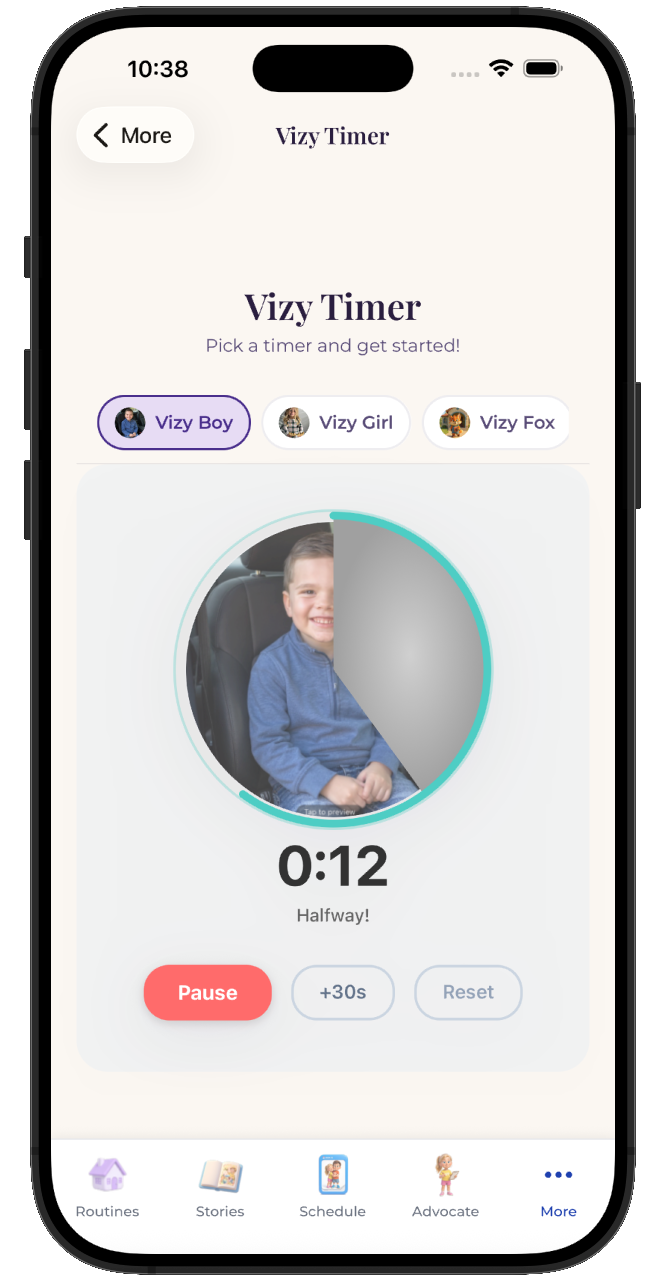
Five minutes to build, and your child sees it every time a story about joining a game comes around.
$6.99/month after the free trial · Cancel anytime · Also at app.vizyplan.com
VizyPlan supports routines and communication at home and school. It is not a medical device and does not diagnose or treat any condition. Talk to your child's care team about clinical questions.