

Visual Routines

Sharing a Routine With a Therapist so home practice fits into it.

Your therapist sends home practice as a separate assignment, and it lives on the fridge unattempted while three perfectly good routines run past it every day.

Free 7-day trial · No email or credit card to start · Built by an autism dad and a licensed SLP

Why it works here

Why a visual routine helps with sharing a routine with a therapist

Home practice added as a new task competes with a family's existing week and usually loses. A target attached to a routine that already runs gets far more repetitions, because the routine was going to happen anyway.

You will recognize this if

  • Home practice arrives as its own separate assignment.
  • The practice sheet has more blank rows than filled ones.
  • Your therapist's picture of home differs from what actually happens.
What the research says

A meta-analysis of 51 effect sizes found parent-implemented intervention produced moderate overall benefits, which is why embedding targets in existing home routines is worth the coordination.

Meta-analysis of parent-implemented interventions, 2023
The setup

How to set it up for sharing a routine with a therapist

Takes about five minutes. Use it as written, or keep only the steps your family needs. A short setup that gets used beats a complete one that gets abandoned in week two.

  1. 1 Show the therapist your actual routines rather than describing your week
  2. 2 Ask which existing step a target could attach to
  3. 3 Ask for one target at a time rather than a list
  4. 4 Update the routine during the session so it leaves already changed
  5. 5 Show the routines that fail as well as the ones that work
  6. 6 Report honestly what happened rather than what was meant to
The mistake most families make

Only sharing the routines that go well hides the information a clinician can actually act on, and the resulting plan gets built on a flattering picture.

In the app

Built into the routine, not bolted onto it.

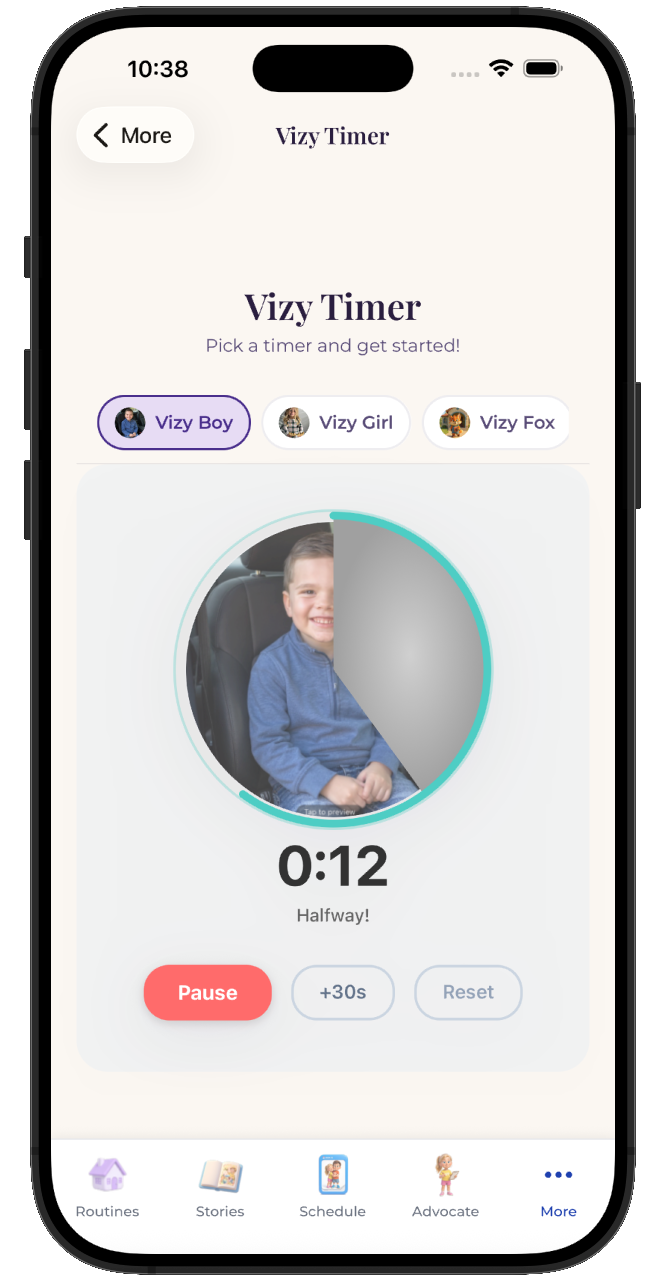
The Visual Routines lives inside the same routine your child already follows, so sharing a routine with a therapist is a step with a visible length rather than a separate tool somebody has to remember to open.
  • Attach it to any step in any routine
  • Works for pre-readers, gestalt language processors, and AAC users
  • Same setup at home, at school, and in therapy
See the step-by-step guide →
The VizyPlan Visual Routines set up for sharing a routine with a therapist

Set this up for your child.

Five minutes to build, and your child sees it every time sharing a routine with a therapist comes around.

$6.99/month after the free trial · Cancel anytime · Also at app.vizyplan.com

Common questions

About sharing a routine with a therapist

Will my therapist want to see our routines?
Almost certainly. Real information about home is scarce and useful, and most clinicians would rather adjust a plan than have it abandoned.
What if we are not managing the home program?
Say so early. A therapist who knows the plan is too heavy will lighten it, and one who does not will keep building on an assumption.
How much practice is realistic?
Five minutes daily, attached to something already happening, is a genuinely good outcome for most families.

VizyPlan supports routines and communication at home and school. It is not a medical device and does not diagnose or treat any condition. Talk to your child's care team about clinical questions.