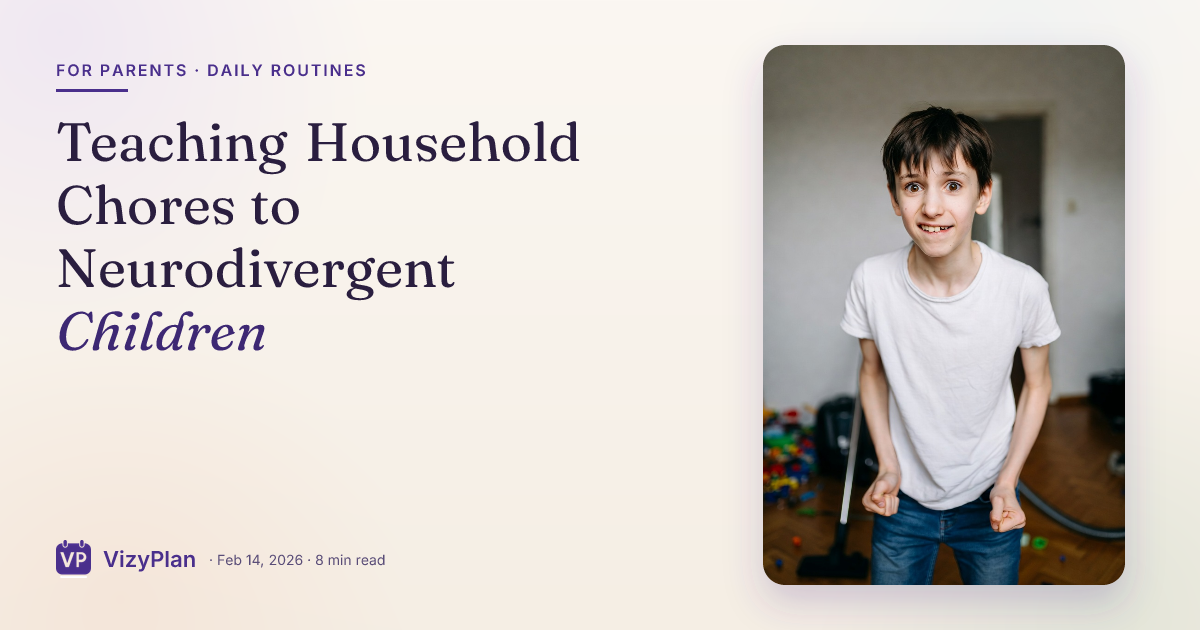
Teaching Household Chores to Neurodivergent Children
8 min read
Your child starts the routine, gets three steps in, and you finish it. Every day. They have never once experienced completing it themselves.
Free 7-day trial · No email or credit card to start · Built by an autism dad and an autism mom SLP
Backward chaining has your child perform the last step first, so every attempt ends with them completing the routine. The sense of finishing is what builds momentum, and it is exactly what a child who always gets rescued at step three never gets.
What the research saysVisual activity schedules are established as an evidence-based practice for building independence, and pairing them with a systematic teaching approach is what turns a displayed sequence into a performed one.
Knight, Sartini and Spriggs, Journal of Autism and Developmental Disorders, 2015
Takes about five minutes. Use it as written, or keep only the steps your family needs. A short setup that gets used beats a complete one that gets abandoned in week two.
Teaching forward, where your child does step one and you take over, means they experience starting and failing repeatedly and never experience finishing.
The Visual Routines lives inside the same routine your child already follows, so chaining a routine backward is a step with a visible length rather than a separate tool somebody has to remember to open.
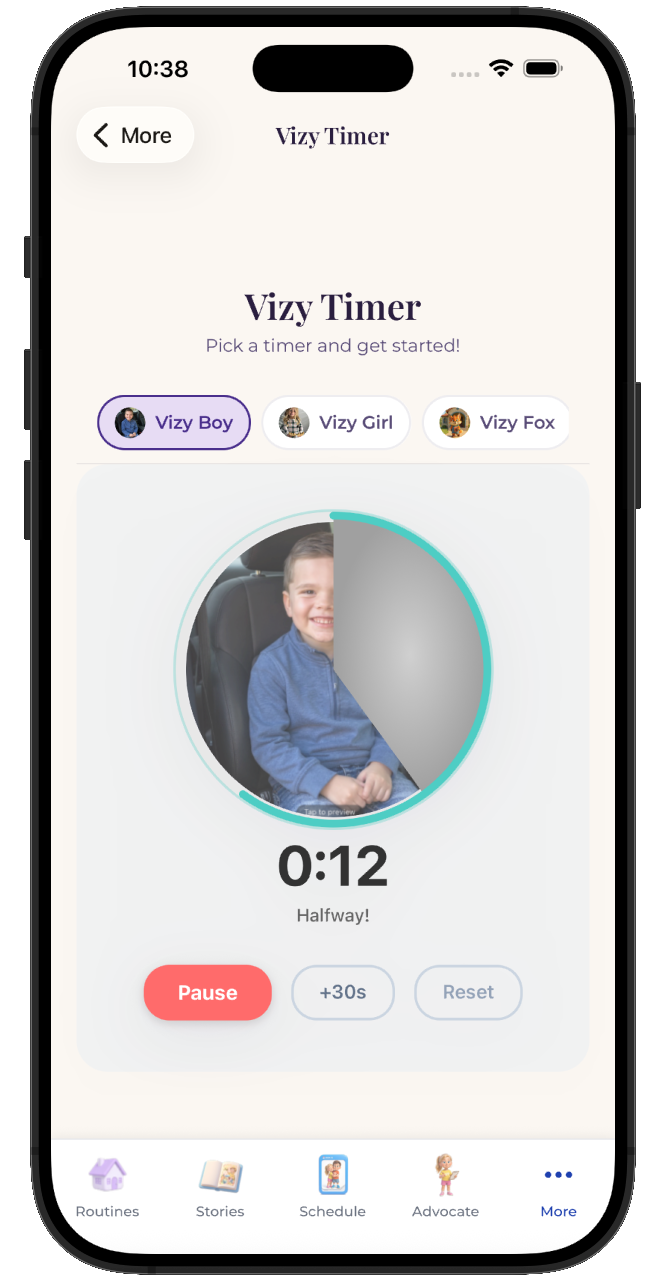
Five minutes to build, and your child sees it every time chaining a routine backward comes around.
$6.99/month after the free trial · Cancel anytime · Also at app.vizyplan.com
VizyPlan supports routines and communication at home and school. It is not a medical device and does not diagnose or treat any condition. Talk to your child's care team about clinical questions.