Visual Routines

Building an After School Routine for a child running on nothing.

Your child got in the car looking fine and was unrecognizable by 4:15. The hour after school decides the whole evening and it is usually the least planned hour of the day.

Free 7-day trial · No email or credit card to start · Built by an autism dad and a licensed SLP

Why it works here

Why a visual routine helps with building an after school routine

A child arriving home from school has spent everything they had, which means the after-school routine has to be designed for depletion rather than productivity. Recovery first and demands last is the opposite of most family afternoons, and it is what makes the evening work.

You will recognize this if

  • The teacher describes a completely different child than you get.
  • Small things produce large reactions specifically between three and five.
  • How the first hour goes predicts the entire evening.
What the research says

Children who hold themselves together across a full school day frequently release that accumulated load once they reach a safe environment, a pattern known as after-school restraint collapse.

VizyPlan, After-school restraint collapse
The setup

How to set it up for building an after school routine

Takes about five minutes. Use it as written, or keep only the steps your family needs. A short setup that gets used beats a complete one that gets abandoned in week two.

  1. 1 Put food first, before anything else including conversation
  2. 2 Follow it with something low demand that your child chooses
  3. 3 Put no questions about school anywhere in the first block
  4. 4 Place homework after recovery, never before it
  5. 5 Keep the order identical every school day so nothing is decided
  6. 6 End the routine with something your child looks forward to
The mistake most families make

Putting homework early to get it out of the way is the most common after-school mistake, and it reliably costs more time than it saves.

In the app

Built into the routine, not bolted onto it.

The Visual Routines lives inside the same routine your child already follows, so building an after school routine is a step with a visible length rather than a separate tool somebody has to remember to open.
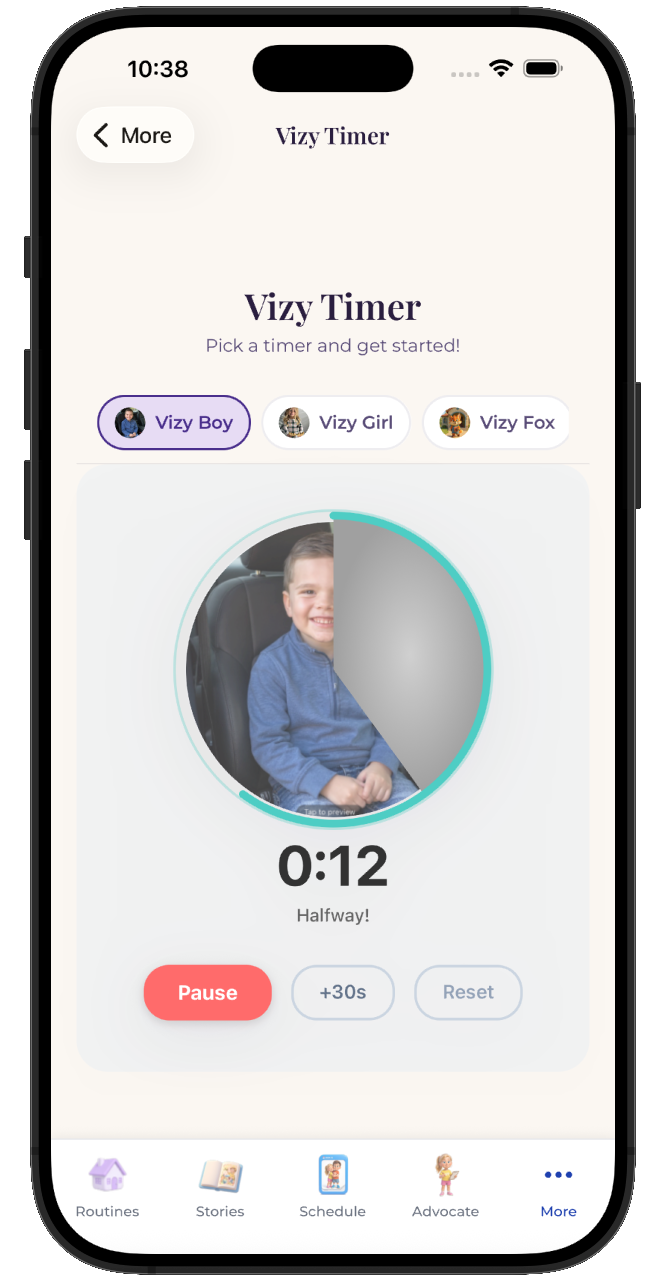
  • Attach it to any step in any routine
  • Works for pre-readers, gestalt language processors, and AAC users
  • Same setup at home, at school, and in therapy
See the step-by-step guide →
The VizyPlan Visual Routines set up for building an after school routine

Set this up for your child.

Five minutes to build, and your child sees it every time building an after school routine comes around.

$6.99/month after the free trial · Cancel anytime · Also at app.vizyplan.com

Common questions

About building an after school routine

How long should the recovery block be?
Sixty to ninety minutes for many children, and doing it daily matters more than the exact length. The days you skip it are usually the days it was needed.
When can I ask about school?
After the recovery block, in small anchored questions rather than open ones. How was school is the hardest question you can ask a depleted child.
What about activities after school?
They can work, and they go better when recovery comes first. An activity starting before your child has refilled tends to go badly for everyone.

VizyPlan supports routines and communication at home and school. It is not a medical device and does not diagnose or treat any condition. Talk to your child's care team about clinical questions.