Homework Battles: A Calmer System That Actually Works
6 min read
Homework has no fixed place in your day, so it floats, and a floating demand gets renegotiated every single afternoon. That negotiation costs more than the homework does.
Free 7-day trial · No email or credit card to start · Built by an autism dad and an autism mom SLP
An activity with no fixed position has to be decided each time, and decisions are expensive for a depleted child. A permanent slot removes the daily argument about when, which is usually the larger half of the problem.
What the research saysAmong 579 children with ADHD, homework problems increased significantly with grade level, and children with a co-occurring learning disability showed significantly more difficulty than those with ADHD alone.
Langberg et al., School Mental Health, 2010
Takes about five minutes. Use it as written, or keep only the steps your family needs. A short setup that gets used beats a complete one that gets abandoned in week two.
Moving homework later because the afternoon went badly teaches your child that a difficult afternoon postpones it, which makes tomorrow afternoon more difficult.
The Visual Routines lives inside the same routine your child already follows, so building a homework routine is a step with a visible length rather than a separate tool somebody has to remember to open.
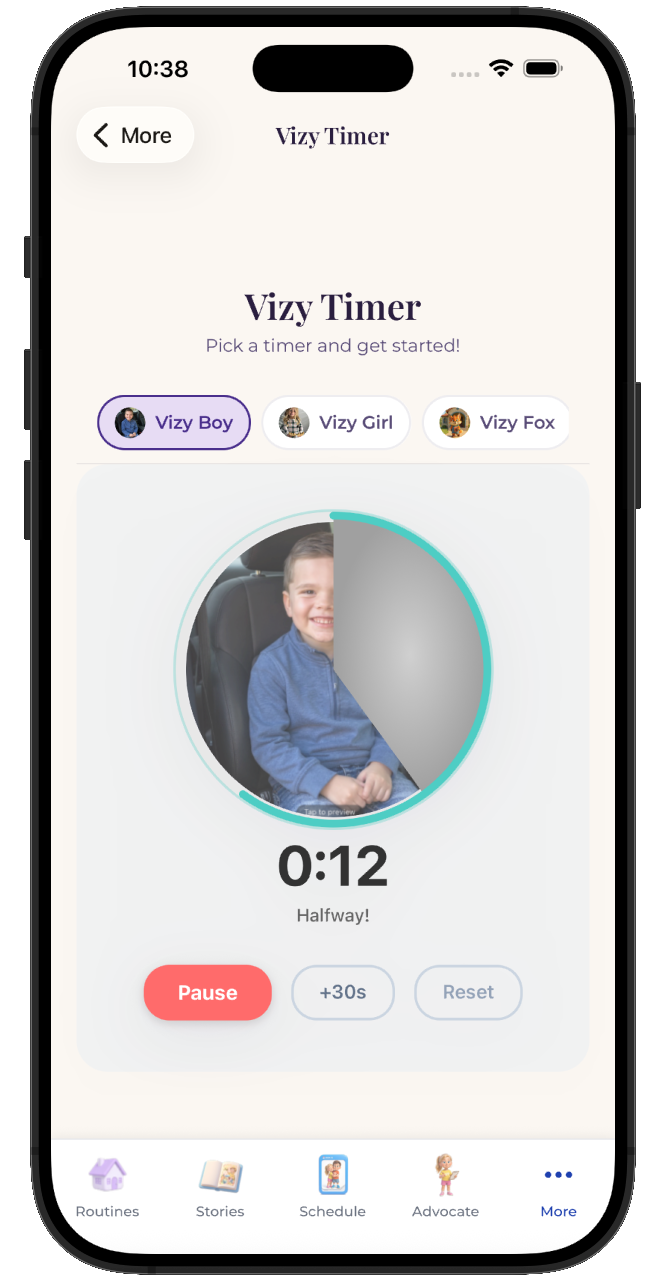
Five minutes to build, and your child sees it every time building a homework routine comes around.
$6.99/month after the free trial · Cancel anytime · Also at app.vizyplan.com
VizyPlan supports routines and communication at home and school. It is not a medical device and does not diagnose or treat any condition. Talk to your child's care team about clinical questions.