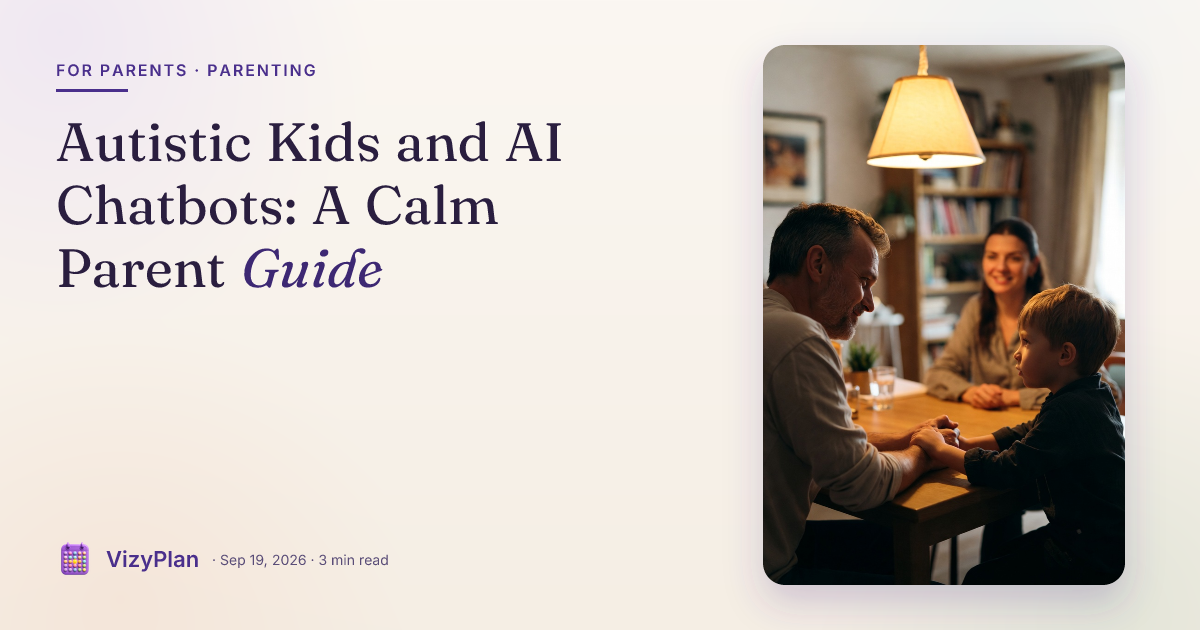

You have probably noticed it without naming it. Your child cannot start their homework, cannot begin cleaning their room, cannot get over the hump of starting at all, until you simply sit down nearby. You are not helping. You are barely talking. And somehow the task that was impossible a minute ago becomes possible. That is body doubling, and it is one of the most useful and underused tools for neurodivergent kids.
What body doubling is
Body doubling means doing a task in the quiet presence of another person, not for help or instruction, but just to have someone there. The body double does their own thing alongside the child. Research on neurodivergent adults, including a 2024 study in ACM Transactions on Accessible Computing, found that one of the top uses of body doubling is task initiation, getting started and beating the stuck feeling. For autistic and ADHD brains, starting is often the hardest part, a wall sometimes called autistic inertia, where a child is neither doing the task nor able to begin it.
Why it works
Starting a task draws heavily on executive function, the brain's system for initiating, planning, and following through. A present person lightens that load. The shared focus offers a gentle external anchor and a low-stakes sense of accountability, so the prefrontal cortex is not carrying the whole weight of beginning alone. Body doubling pairs naturally with the broader challenge of executive function, and it is a close cousin of co-regulation, where your calm presence steadies your child's system.
How to body double well
- Be present, not in charge. Sit nearby and do your own quiet task. Resist the urge to manage, correct, or hover.
- Keep demands low. Skip the stream of questions and reminders. Your presence is the support, not your instructions.
- Use declarative cues sparingly. A soft observation like I am starting my list now models the moment of beginning without turning it into a command.
- Make it routine. Same spot, same time, so your child learns that hard tasks come with company.
Body doubling costs nothing and asks little. Often the most powerful thing you can offer a stuck child is simply to pull up a chair, which makes it a natural fit for the homework routine.
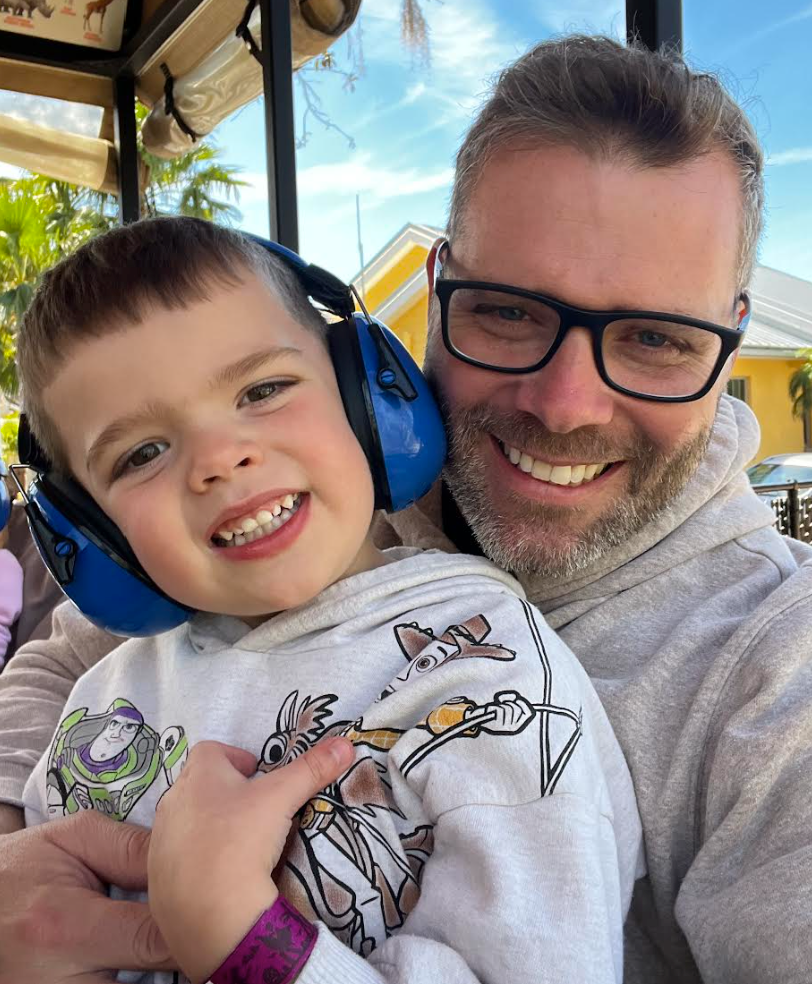
VizyPlan was built by an autism dad who learned that showing up beats taking over. Pair a clear visual of the task with your quiet presence beside it, and the hardest part, starting, gets a whole lot easier.
Enjoying this article?
Get practical tips and insights delivered to your inbox — no spam, ever.
Download VizyPlan and start your 7-day free trial today. Make the hardest part, starting, easier for your child. Just $6.99/month after your trial, no credit card required upfront.
VizyPlan was built by an autism dad who needed something that did not exist. Start your free trial.