Picture a single autistic child's week. An OT works on motor planning and sensory regulation. An SLP runs language and AAC goals. A BCBA targets daily living skills. A teacher manages classroom expectations. Each is skilled, and each is working in a silo. The person stuck stitching it all together is the parent, who becomes the unpaid translator between four plans that never quite meet. Interdisciplinary collaboration around one shared artifact is how a team stops handing the family that job.
Why fragmentation costs the child
Siloed care is not just inconvenient, it dilutes outcomes. When disciplines do not coordinate, goals can quietly compete. The OT wants a sensory break at the exact moment the BCBA wants task persistence. The SLP models one prompt while the classroom uses another. The child absorbs the friction as mixed signals, and the family absorbs it as exhaustion. Coordinated care consistently outperforms parallel care, but coordination needs a shared place to happen, not just good intentions in four separate notes.
What a shared plan looks like
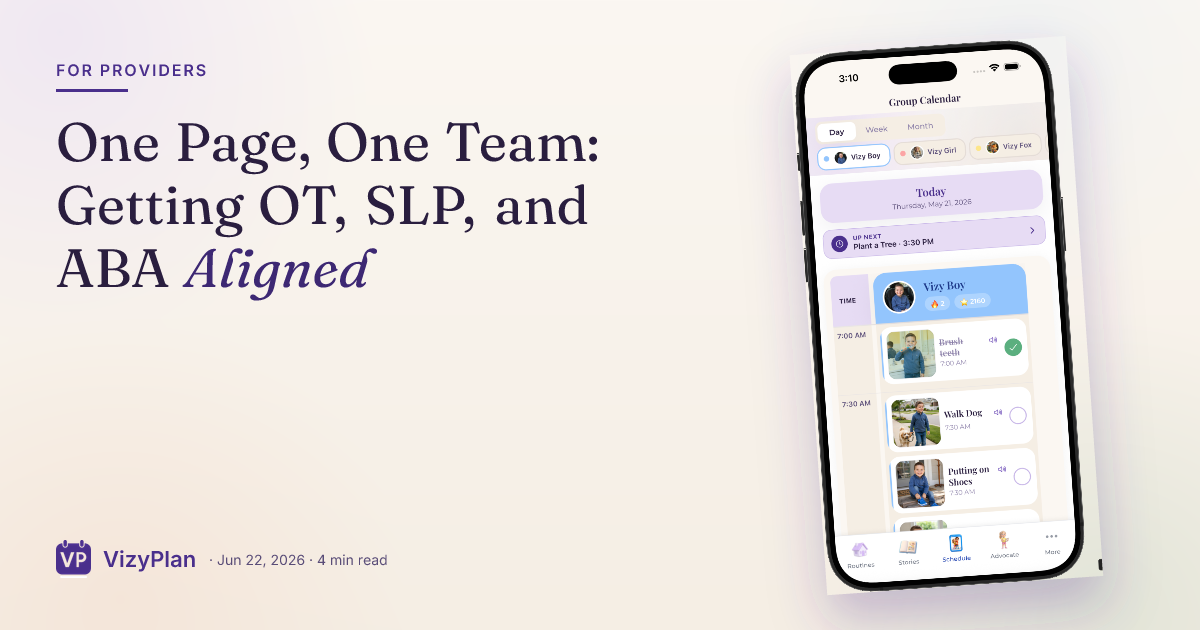
The fix is rarely another meeting. It is a common artifact every discipline can attach to, written in language the family actually uses. Three principles make it work.
- One routine, many goals. Anchor everyone's targets to the same daily routine the family already runs. The morning sequence carries the OT's regulation step, the SLP's request, and the BCBA's self-care target at once.
- Shared language, not jargon. A plan the parent cannot read is a plan that dies at the door. Translate each goal into a plain, visual step.
- One source of truth. When every provider sees the same plan, prompts stop contradicting each other and progress is visible to the whole team.
Enjoying this article?
Get practical tips and insights delivered to your inbox — no spam, ever.
Make the family the beneficiary, not the bridge
The goal is a family running one coherent plan instead of refereeing four. That is also where carryover finally holds, the problem we examine in our post on the speech therapy carryover gap. Collaboration that lives in a shared, visual home routine turns four parallel efforts into one aligned push, and the IEP table benefits too, as we cover in provider collaboration for IEP preparation.
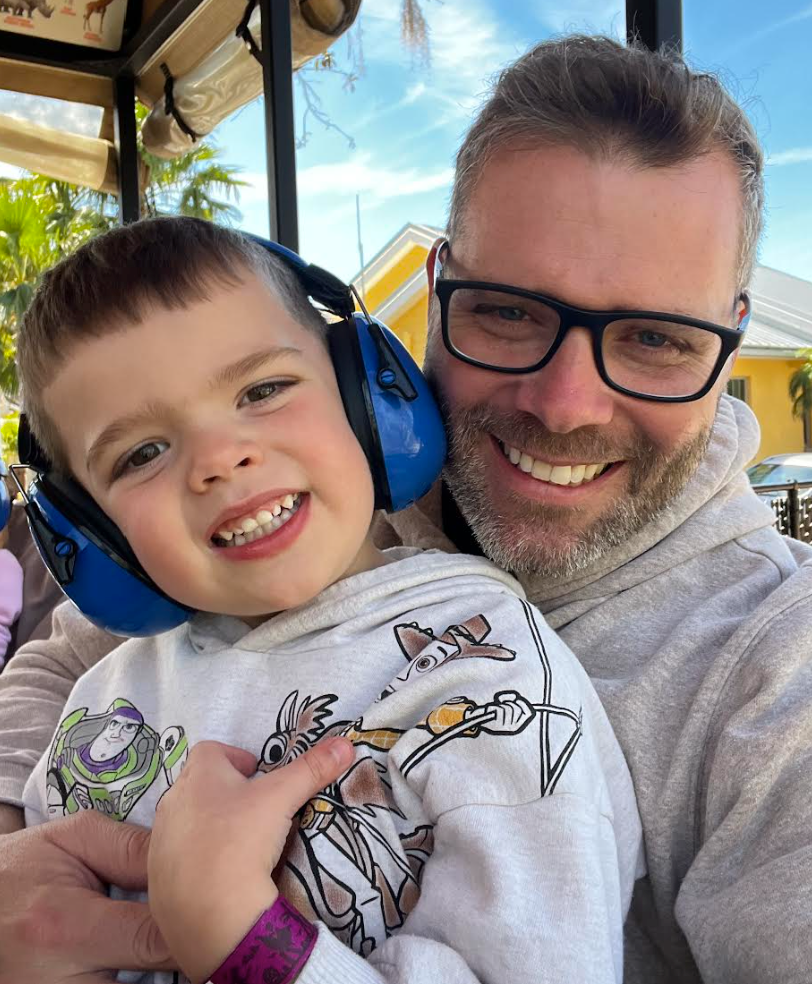
VizyPlan was built by an autism dad and an autism mom SLP to be that shared page. Every discipline can attach its goal to the same home routine, in the family's own words and photos, so the whole team is finally pointing the same direction.
Download VizyPlan and start your 7-day free trial today. Give your whole team one plan the family can run. Just $6.99/month after your trial, no credit card required upfront.
VizyPlan was built by an autism dad and an autism mom who is a licensed speech-language pathologist who needed something that did not exist. Start your free trial.