If you are an SLP and you have ever sent a family home with a beautifully designed program that never got implemented, this one is for you. The speech therapy carryover gap is not a parent motivation problem and not a clinician design problem. It is structural. Stokes and Baer flagged it in 1977 and the field's literature reviews keep flagging it now. Here is what the gap looks like, why parent-facing handouts rarely close it, and where a visual planning layer fits.
The gap is the entire field's weak point
The National Professional Development Center on ASD rates visual supports as an evidence-based practice, and visual activity schedules are an EBP for generalization of academic and daily-living skills. But the evidence base is built on intervention environments. The carryover problem is what happens when you, the clinician, are no longer in the room. Recent reviews on visual schedules and on-task behavior consistently note that systematic instructional procedures plus the visual support drive the effect. Hand a parent a worksheet and ask them to be the systematic instructional procedure between sessions, and the effect collapses.
Why home programs fail
Three structural reasons:
- Format mismatch. Your worksheet lives in a folder. The parent lives on their phone. The carryover skill never makes it to where the parenting actually happens.
- Generic content. Clip art doesn't land for many of your clients (the mirror neuron research on self-recognition predicts this). The visuals you teach with in session feel different from what gets sent home.
- Parent executive function. The families who most need your home program are also the families most depleted by autism parenting. A 40-minute home program adds load they cannot reliably absorb.
The shift: from content creator to consultant
The most successful SLPs I have worked with stopped trying to be the content factory between sessions and started being a consultant. Their job becomes: choose the right targets, coach the parent in using the right tools, and verify carryover from the data the parent brings back. The home program is the tool. The clinician is the strategist.
Enjoying this article?
Get practical tips and insights delivered to your inbox — no spam, ever.
Where a visual planner fits
A planning app cannot replace what you do in session. But it can be the carryover infrastructure your families actually use between sessions. VizyPlan was co-built by a licensed SLP for the explicit purpose of closing the gap between the goal you wrote down and the routine the parent runs at home. Personalized images of each client, shared calendar with the family, one-tap social stories for the situations you flagged in session. The clinical work stays yours. The carryover scaffolding doesn't have to.
If carryover is where your families are stalling, it is worth a closer look.
Download VizyPlan and start your 7-day free trial today. See what your families would see between sessions. If it helps, keep going for $6.99/month or $59.99/year.
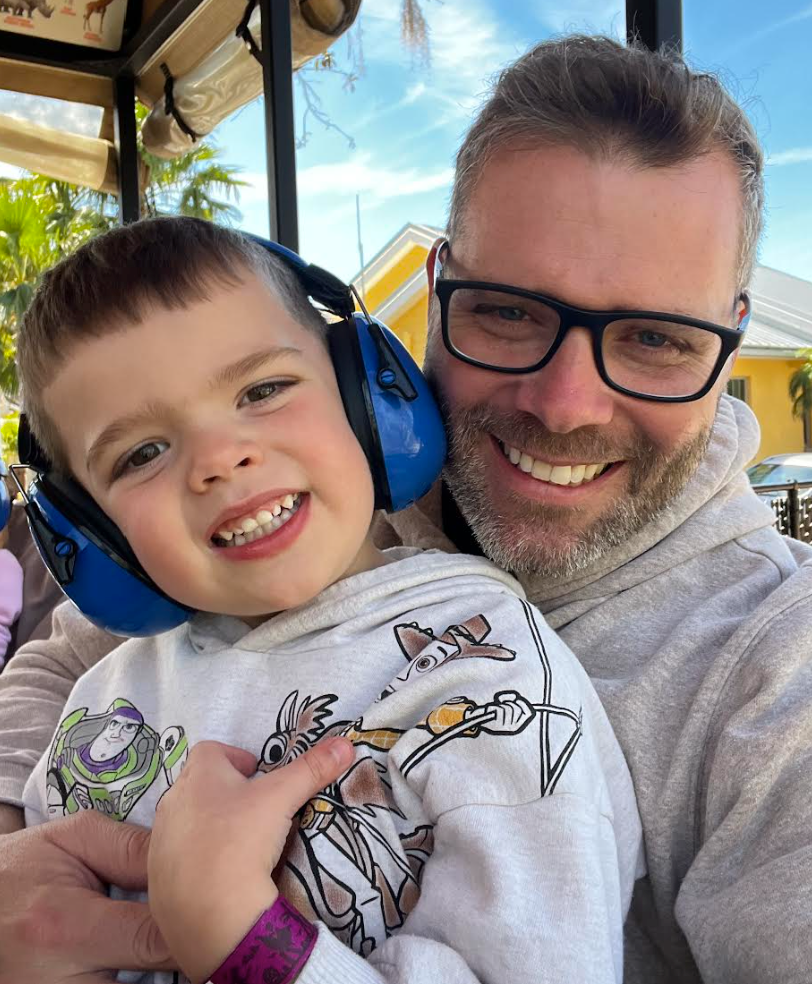
VizyPlan was built by an autism dad and an autism mom who is a licensed speech-language pathologist who needed something that did not exist. Start your free trial.