
Visual Routines

Building a Routine for Two Homes when the houses do things differently.

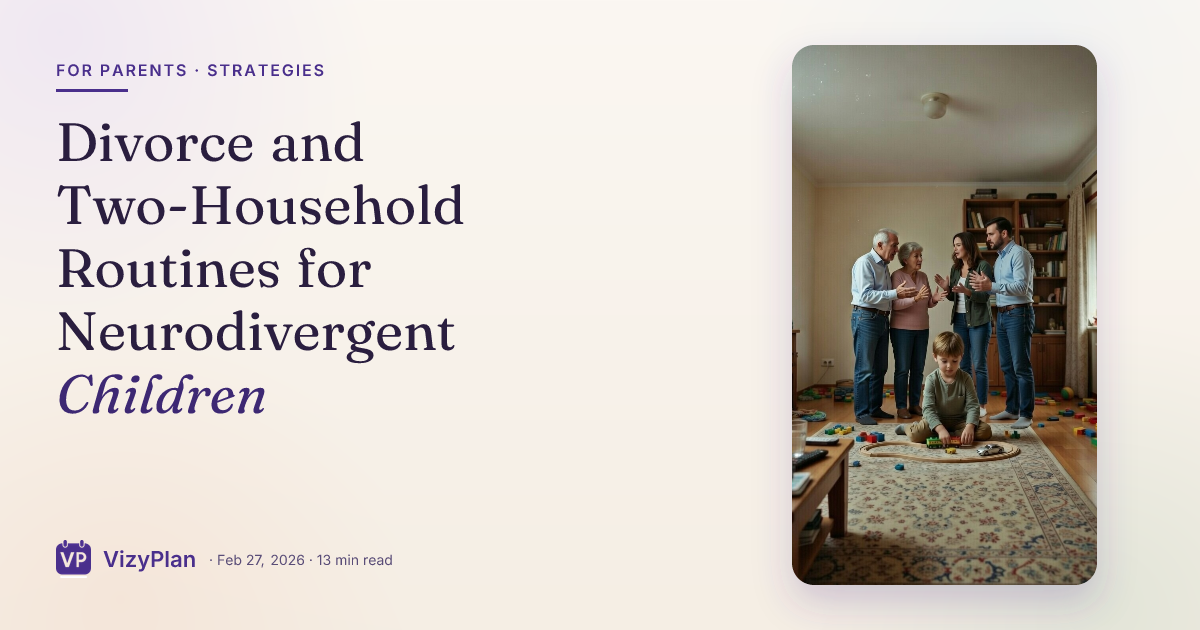
Your child moves between two homes and two sets of rules, and the transition day is reliably the hardest of the week.

Free 7-day trial · No email or credit card to start · Built by an autism dad and a licensed SLP

Why it works here

Why a visual routine helps with building a routine for two homes

A child moving between homes is managing two environments and a handover, which is a considerable load. A shared routine means the sequence at least stays constant even when the houses do not, and the sequence is what your child is actually leaning on.

You will recognize this if

  • The day of the move is worse than either house.
  • Skills that hold in one home disappear in the other.
  • Your child asks repeatedly which house comes next.
The setup

How to set it up for building a routine for two homes

Takes about five minutes. Use it as written, or keep only the steps your family needs. A short setup that gets used beats a complete one that gets abandoned in week two.

  1. 1 Agree two or three routines that will be identical in both homes
  2. 2 Let everything else differ openly rather than pretending otherwise
  3. 3 Use photos from both homes so each place is represented
  4. 4 Put the handover itself on the routine as a step with a time
  5. 5 Share the routine rather than instructions between households
  6. 6 Review it together every few months rather than after each hard week
The mistake most families make

Trying to make both homes identical usually fails and creates conflict. Aligning a small number of routines is achievable and delivers most of the benefit.

In the app

Built into the routine, not bolted onto it.

The Visual Routines lives inside the same routine your child already follows, so building a routine for two homes is a step with a visible length rather than a separate tool somebody has to remember to open.
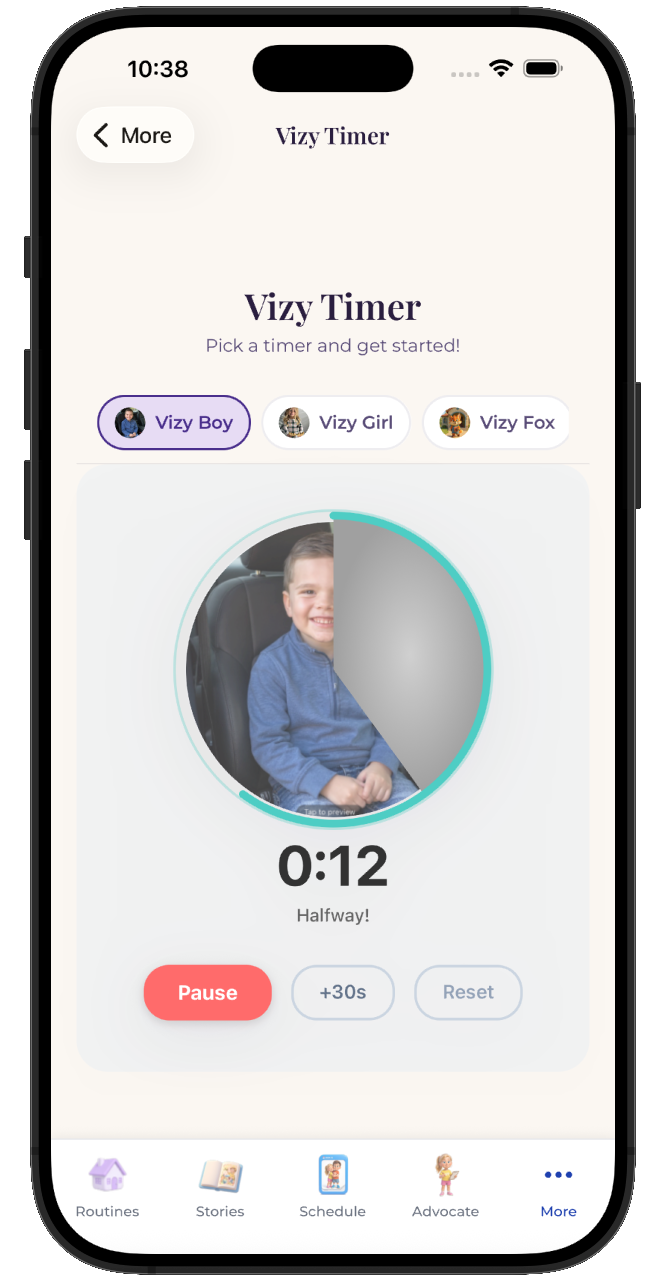
  • Attach it to any step in any routine
  • Works for pre-readers, gestalt language processors, and AAC users
  • Same setup at home, at school, and in therapy
See the step-by-step guide →
The VizyPlan Visual Routines set up for building a routine for two homes

Set this up for your child.

Five minutes to build, and your child sees it every time building a routine for two homes comes around.

$6.99/month after the free trial · Cancel anytime · Also at app.vizyplan.com

Common questions

About building a routine for two homes

What if the other household will not use the app?
Share a printed version of the agreed routines. Partial alignment on the sequence is worth a great deal more than none.
Which routines should match?
Bedtime and mornings usually, because they run most often and inconsistency there costs sleep in both houses.
How do I explain the differences?
Plainly rather than smoothing them over. Children cope well with two sets of known rules and badly with rules they have to work out each visit.

VizyPlan supports routines and communication at home and school. It is not a medical device and does not diagnose or treat any condition. Talk to your child's care team about clinical questions.