Visual Routines

Building a Routine for an AAC User that matches the words on their device.

Your child communicates with a device, and the routine uses different words and different symbols for the same activities. They are learning two labels for one thing.

Free 7-day trial · No email or credit card to start · Built by an autism dad and a licensed SLP

Why it works here

Why a visual routine helps with building a routine for an aac user

A routine and a communication system do different jobs and work best when their vocabulary matches. Aligning the words means the routine reinforces the language your child is already learning to use rather than competing with it.

You will recognize this if

  • The same activity has different symbols in each system.
  • Requesting an activity and finding it on the routine are separate skills.
  • Device access competes with routine access.
The setup

How to set it up for building a routine for an AAC user

Takes about five minutes. Use it as written, or keep only the steps your family needs. A short setup that gets used beats a complete one that gets abandoned in week two.

  1. 1 Match the activity names on the routine to the device vocabulary exactly
  2. 2 Use the same image where your AAC system permits it
  3. 3 Include a break or help step so requesting is always available
  4. 4 Print the routine as cards if screen competition is a real constraint
  5. 5 Ask your speech-language pathologist to align the vocabulary
  6. 6 Model requesting the next step on the device rather than prompting the routine
The mistake most families make

Running two separate vocabularies doubles the learning without anyone intending it, and it is the most common issue in this setup.

In the app

Built into the routine, not bolted onto it.

The Visual Routines lives inside the same routine your child already follows, so building a routine for an AAC user is a step with a visible length rather than a separate tool somebody has to remember to open.
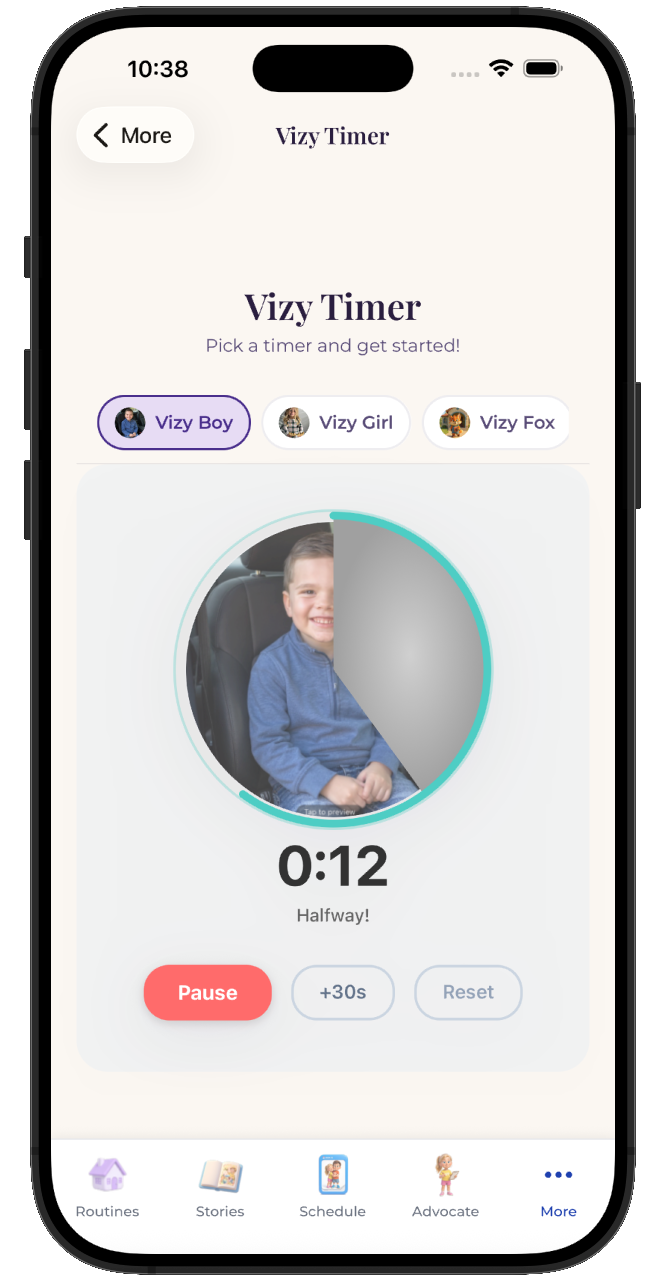
  • Attach it to any step in any routine
  • Works for pre-readers, gestalt language processors, and AAC users
  • Same setup at home, at school, and in therapy
See the step-by-step guide →
The VizyPlan Visual Routines set up for building a routine for an AAC user

Set this up for your child.

Five minutes to build, and your child sees it every time building a routine for an AAC user comes around.

$6.99/month after the free trial · Cancel anytime · Also at app.vizyplan.com

Common questions

About building a routine for an AAC user

Will a visual routine slow AAC learning?
There is no good reason to expect so, and aligned vocabulary means the routine reinforces the same words your child is learning.
Should the routine be on the same device?
It depends. If the device is your child's voice, competing for it has a real cost, and printed cards may be the better answer.
Who decides the vocabulary?
Your speech-language pathologist, with you. Aligning a routine to an existing system is a good conversation for your next session.

VizyPlan supports routines and communication at home and school. It is not a medical device and does not diagnose or treat any condition. Talk to your child's care team about clinical questions.