
Fewer Authorized Hours: Maximizing Carryover When Payers Cut
4 min read
Your therapist asks how the week went and you summarize four days from memory, badly. Meanwhile they are working on targets that would slot straight into your morning if anyone had connected the two.
Free 7-day trial · No email or credit card to start · Built by an autism dad and an autism mom SLP
A day map is a record of what actually happened at home, which is the setting a clinic never sees. Sharing it turns a vague recollection into real information, and it lets your therapist embed targets in routines that are already running rather than assigning new ones.
What the research saysIn one multi-site trial analysis, 126 of 168 children showed no disruptive behavior during structured clinic observation despite meeting enrollment criteria, illustrating how much clinic settings miss about home.
Research in Autism Spectrum Disorders analysis
Takes about five minutes. Use it as written, or keep only the steps your family needs. A short setup that gets used beats a complete one that gets abandoned in week two.
Only sharing the parts that are going well hides exactly the information a clinician can act on, and it usually results in a plan built on an inaccurate picture.
The Map Your Day lives inside the same routine your child already follows, so sharing the map with a therapist is a step with a visible length rather than a separate tool somebody has to remember to open.
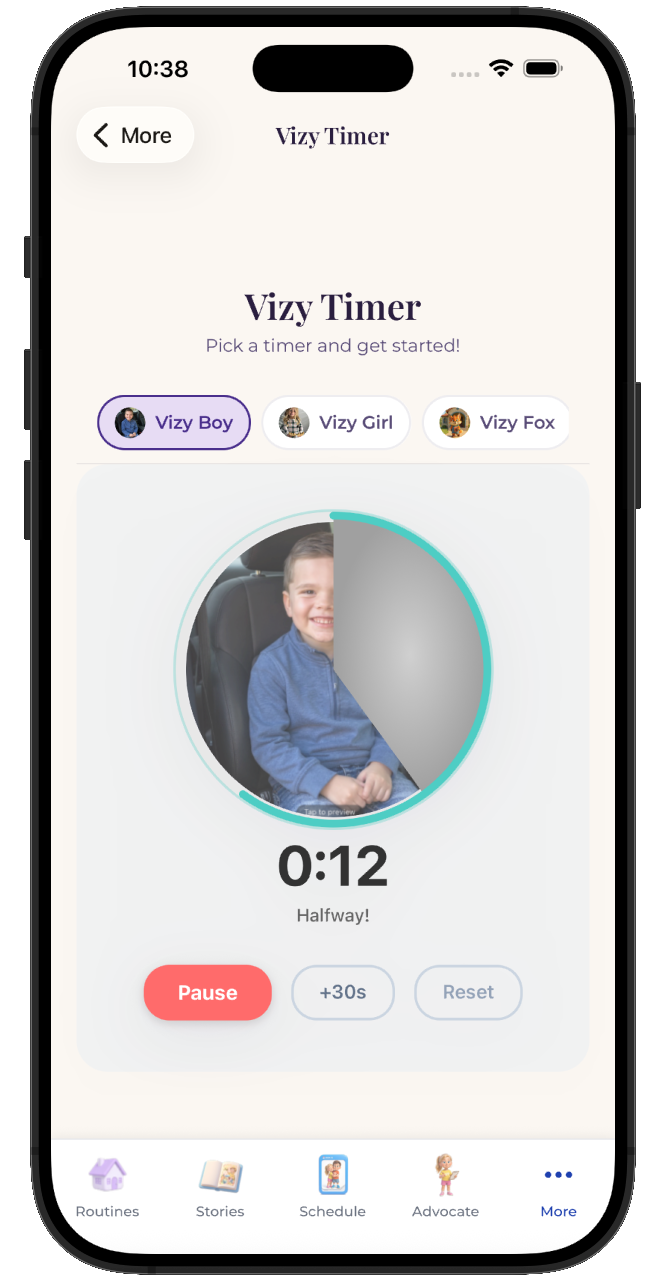
Five minutes to build, and your child sees it every time sharing the map with a therapist comes around.
$6.99/month after the free trial · Cancel anytime · Also at app.vizyplan.com
VizyPlan supports routines and communication at home and school. It is not a medical device and does not diagnose or treat any condition. Talk to your child's care team about clinical questions.