
Map Your Day

Ordering Activities Easy to Hard so the hard one is not first.

Your map opens with the activity your child resists most, because that is the one you most want handled. It is also the reason the map stalls at step one every morning.

Free 7-day trial · No email or credit card to start · Built by an autism dad and a licensed SLP

Why it works here

Why a day map helps with ordering activities easy to hard

Compliance builds momentum. Putting two or three easy, already-mastered activities ahead of a difficult one makes the difficult one measurably more likely to happen, and it costs nothing except a change in order.

You will recognize this if

  • The map stalls at the same step nearly every day.
  • Your child completes activities happily once they get going.
  • The first activity is the one you dread most.
What the research says

Across four decades of studies, presenting two to five high-probability requests immediately before a low-probability one increased compliance enough for the approach to be classified as an evidence-based practice for autistic children.

Sayar, Gulboy, Yucesoy-Ozkan and Baran, Behavioral Disorders, 2024
The setup

How to set it up for ordering activities easy to hard

Takes about five minutes. Use it as written, or keep only the steps your family needs. A short setup that gets used beats a complete one that gets abandoned in week two.

  1. 1 List your activities and mark which ones your child almost always does
  2. 2 Put two or three of those at the front of the segment
  3. 3 Place the difficult activity immediately after them, not last
  4. 4 Keep the easy activities genuinely easy rather than merely shorter
  5. 5 Do not add extra praise to the easy ones, or they stop feeling easy
  6. 6 Reorder rather than removing when a segment keeps failing
The mistake most families make

Saving the hard activity for the end so the day ends on a challenge tends to backfire, because your child arrives at it with the least capacity they have had all segment.

In the app

Built into the routine, not bolted onto it.

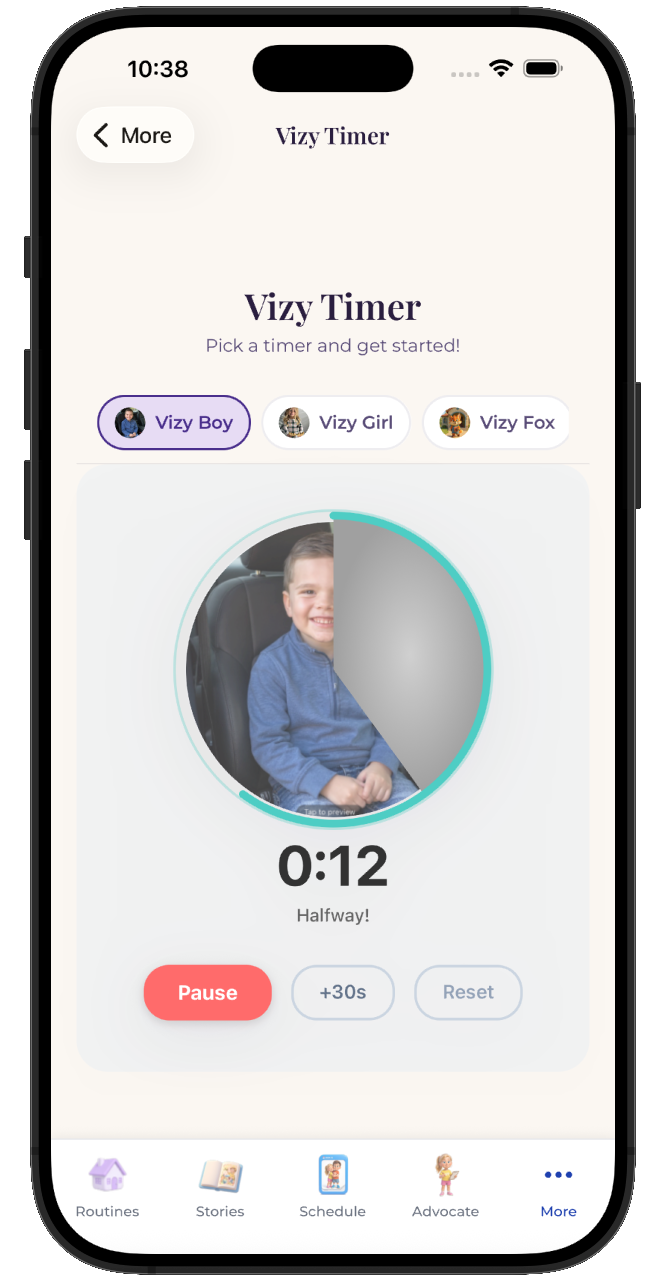
The Map Your Day lives inside the same routine your child already follows, so ordering activities easy to hard is a step with a visible length rather than a separate tool somebody has to remember to open.
  • Attach it to any step in any routine
  • Works for pre-readers, gestalt language processors, and AAC users
  • Same setup at home, at school, and in therapy
See the step-by-step guide →
The VizyPlan Map Your Day set up for ordering activities easy to hard

Set this up for your child.

Five minutes to build, and your child sees it every time ordering activities easy to hard comes around.

$6.99/month after the free trial · Cancel anytime · Also at app.vizyplan.com

Common questions

About ordering activities easy to hard

How many easy activities should come first?
Two or three is the range the research supports. More than that and the segment gets long enough that the momentum has faded before the hard step arrives.
Does this mean my child avoids hard things?
The opposite. Sequencing this way makes hard things more likely to happen, which means more practice at them rather than less.
What counts as an easy activity?
Anything your child does readily most of the time, even something trivial like putting on socks. The point is a run of successful completions, not the difficulty of the content.

VizyPlan supports routines and communication at home and school. It is not a medical device and does not diagnose or treat any condition. Talk to your child's care team about clinical questions.