

Map Your Day

A Map for a Demand Avoidant Child where nothing feels like an order.

Every time the map tells your child what to do, the answer is no, and the more reasonable the request the more certain the refusal. For some children the demand itself is the problem, not the task.

Free 7-day trial · No email or credit card to start · Built by an autism dad and a licensed SLP

Why it works here

Why a day map helps with a map for a demand avoidant child

Where demand avoidance is driving the refusal, the usual levers make things worse, because rewards and consequences are both demands wearing different clothes. A map can help specifically because it moves the ask out of a person and into something neutral your child can approach on their own terms.

You will recognize this if

  • Refusal scales with how directly something is asked, not how hard it is.
  • Your child refuses things they visibly want to do.
  • Praise for compliance makes the next request harder.
The setup

How to set it up for building a map for a demand avoidant child

Takes about five minutes. Use it as written, or keep only the steps your family needs. A short setup that gets used beats a complete one that gets abandoned in week two.

  1. 1 Let your child build and reorder the map themselves
  2. 2 Offer the map rather than presenting it, and accept a no
  3. 3 Phrase activities as options and descriptions rather than instructions
  4. 4 Remove points from anything that has become a battleground
  5. 5 Leave gaps in the map that your child fills
  6. 6 Drop any activity that consistently triggers refusal, and revisit it much later
The mistake most families make

Adding a reward to a refused activity usually increases the pressure rather than the appeal, because the reward makes the demand more explicit rather than less.

In the app

Built into the routine, not bolted onto it.

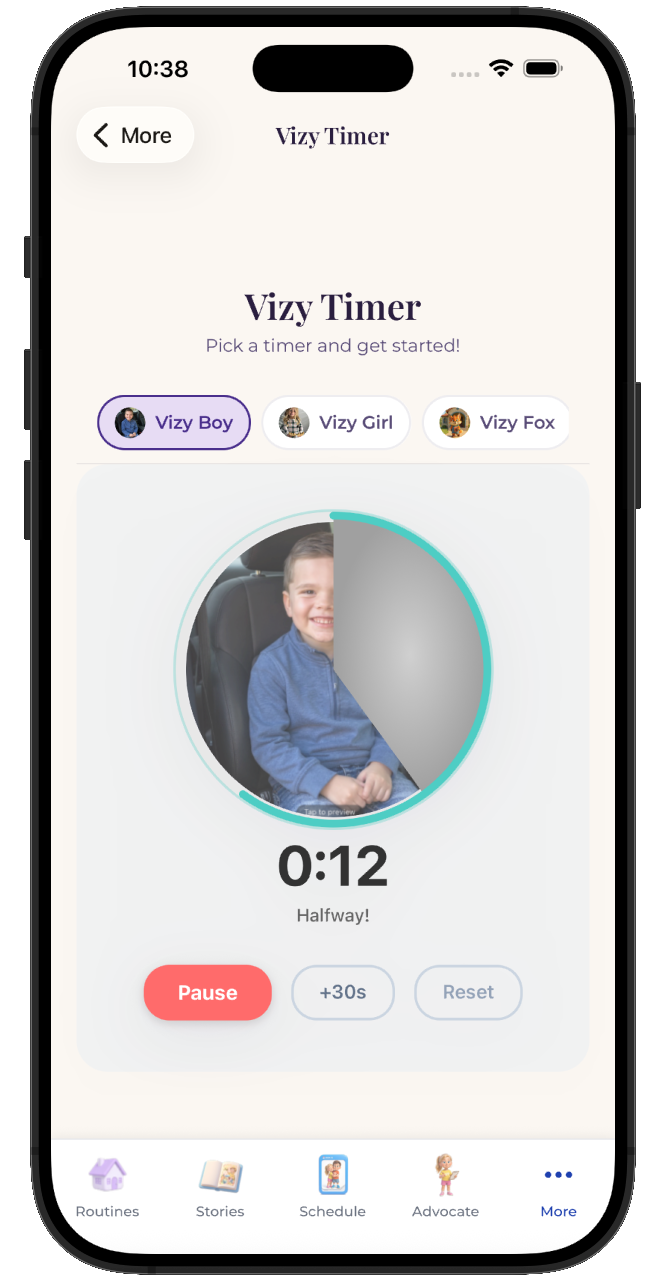
The Map Your Day lives inside the same routine your child already follows, so building a map for a demand avoidant child is a step with a visible length rather than a separate tool somebody has to remember to open.
  • Attach it to any step in any routine
  • Works for pre-readers, gestalt language processors, and AAC users
  • Same setup at home, at school, and in therapy
See the step-by-step guide →
The VizyPlan Map Your Day set up for building a map for a demand avoidant child

Set this up for your child.

Five minutes to build, and your child sees it every time building a map for a demand avoidant child comes around.

$6.99/month after the free trial · Cancel anytime · Also at app.vizyplan.com

Common questions

About building a map for a demand avoidant child

Does a visual schedule help with demand avoidance?
It can, provided it is genuinely offered rather than imposed. The advantage is that the information comes from the map rather than from a person, which lowers the interpersonal pressure.
Should I use points with a demand avoidant child?
Often not, or only very lightly. Rewards are contingencies, and contingencies read as demands to many children with this profile.
What if nothing on the map gets done?
Reduce the map to almost nothing and rebuild from whatever your child does willingly. A two-item map that runs is a foundation, and a ten-item map that is refused is not.

VizyPlan supports routines and communication at home and school. It is not a medical device and does not diagnose or treat any condition. Talk to your child's care team about clinical questions.