

Missed Therapy Appointments: The September Drop
3 min read
The refused activity has been sitting on the map for four days. Every attempt to enforce it has cost more than it was worth, and every attempt to skip it has taught your child that refusal works.
Free 7-day trial · No email or credit card to start · Built by an autism dad and an autism mom SLP
Pairing a low-preference activity immediately before a high-preference one makes the second act as a natural consequence of the first. Shown as two adjacent steps on the map rather than said out loud, it becomes the structure of the day rather than a deal you are offering.
What the research saysThe Premack principle, arranging a preferred activity to follow a less preferred one, underpins the widely used first-then board, and behavioral antecedent and consequence strategies are listed among established interventions by the National Standards Project.
National Standards Project Phase 2, National Autism Center, 2015
Takes about five minutes. Use it as written, or keep only the steps your family needs. A short setup that gets used beats a complete one that gets abandoned in week two.
Announcing the deal out loud turns a structure into a negotiation, and negotiations invite counter-offers. Let the two adjacent steps do the talking.
The Map Your Day lives inside the same routine your child already follows, so using first then for a refused activity is a step with a visible length rather than a separate tool somebody has to remember to open.
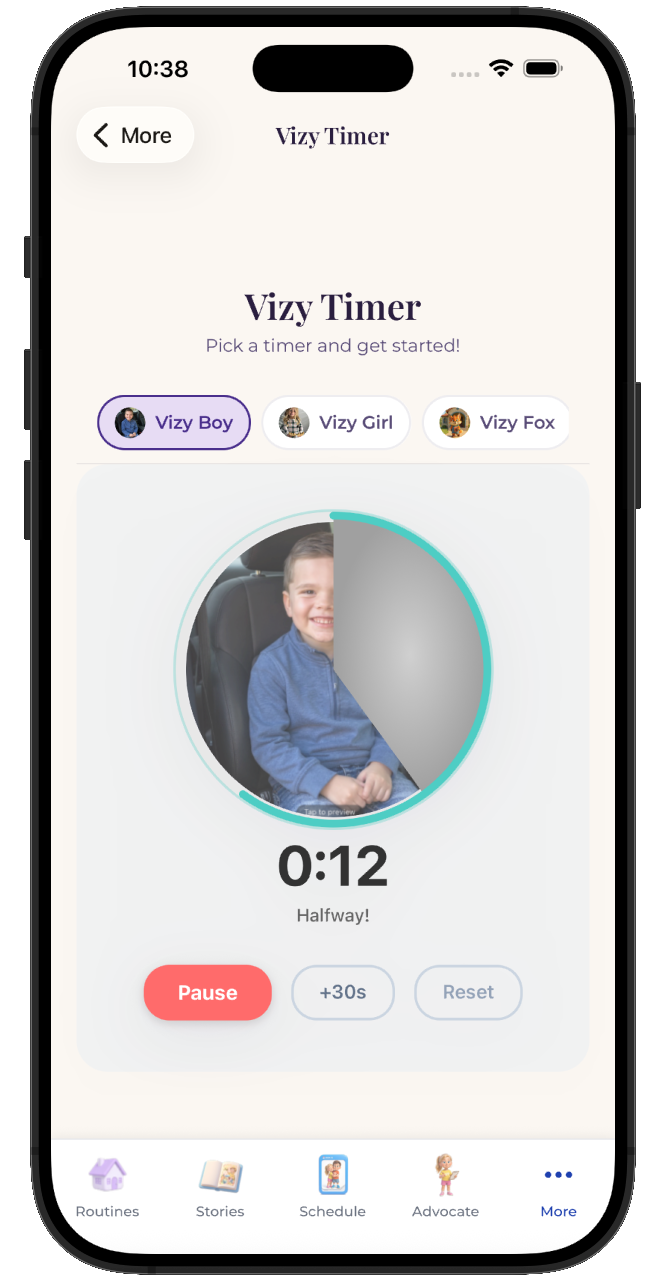
Five minutes to build, and your child sees it every time using first then for a refused activity comes around.
$6.99/month after the free trial · Cancel anytime · Also at app.vizyplan.com
VizyPlan supports routines and communication at home and school. It is not a medical device and does not diagnose or treat any condition. Talk to your child's care team about clinical questions.