
Map Your Day

Keeping the Game From Becoming the Point when the points start running the house.

Your child has started asking how many points before they will do anything, including things they used to do willingly. The system that fixed your mornings is quietly eating the rest of your day.

Free 7-day trial · No email or credit card to start · Built by an autism dad and a licensed SLP

Why it works here

Why a day map helps with keeping the game from becoming the point

Rewards work, and they have a documented cost when they are attached to something a child already did for their own reasons. Knowing where that line is lets you keep the game on the activities that genuinely need it and off the ones that do not.

You will recognize this if

  • Your child asks what the reward is for activities they used to do unprompted.
  • Effort drops sharply when points are not on offer.
  • The negotiation has moved from the activity to the price of the activity.
What the research says

A meta-analysis of 128 experiments found tangible rewards offered for completing a task can measurably undermine intrinsic motivation for that task, particularly when the reward is expected and contingent on finishing.

Deci, Koestner and Ryan, Psychological Bulletin, 1999
The setup

How to set it up for keeping the game from becoming the point

Takes about five minutes. Use it as written, or keep only the steps your family needs. A short setup that gets used beats a complete one that gets abandoned in week two.

  1. 1 List which activities your child was doing willingly before the map existed
  2. 2 Take points off those, and say why out loud
  3. 3 Keep points on the two or three activities that genuinely need them
  4. 4 Attach points to starting rather than to quality wherever you can
  5. 5 Move some rewards to unpredictable rather than guaranteed
  6. 6 Review the list every month, because the set that needs points keeps shrinking
The mistake most families make

Adding points to everything because the system is working is how a motivation tool becomes a currency. The moment a child is paid for something they already enjoyed, the enjoyment starts doing less work.

In the app

Built into the routine, not bolted onto it.

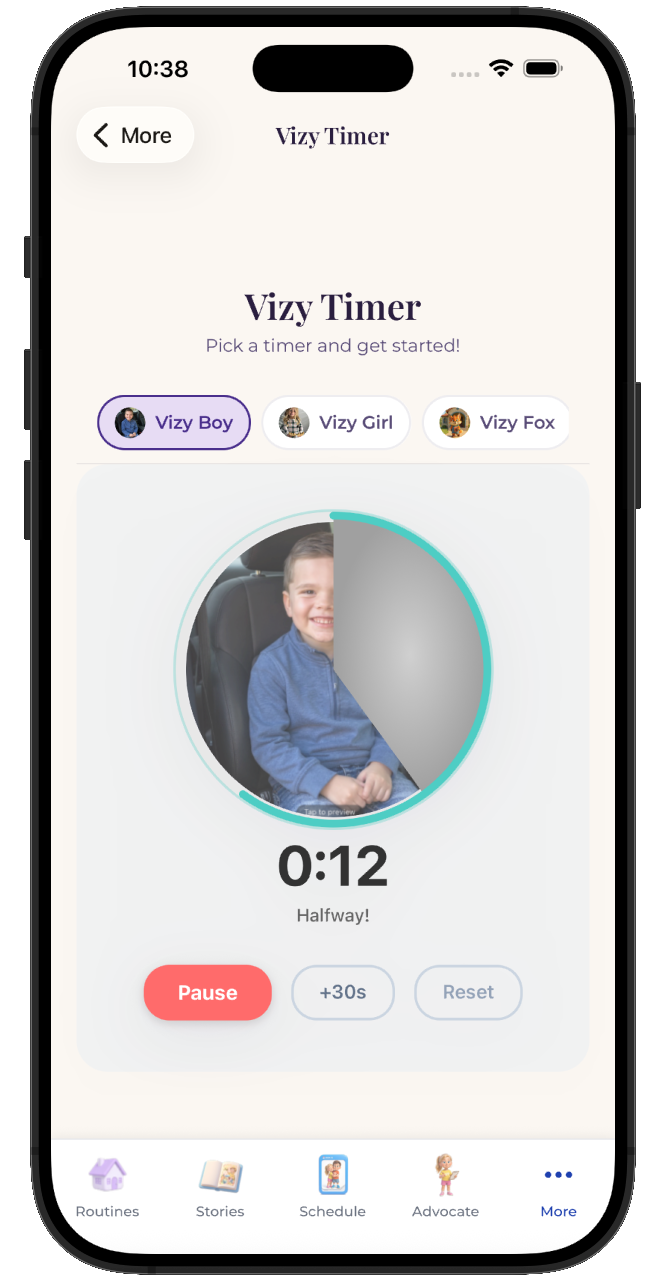
The Map Your Day lives inside the same routine your child already follows, so keeping the game from becoming the point is a step with a visible length rather than a separate tool somebody has to remember to open.
  • Attach it to any step in any routine
  • Works for pre-readers, gestalt language processors, and AAC users
  • Same setup at home, at school, and in therapy
See the step-by-step guide →
The VizyPlan Map Your Day set up for keeping the game from becoming the point

Set this up for your child.

Five minutes to build, and your child sees it every time keeping the game from becoming the point comes around.

$6.99/month after the free trial · Cancel anytime · Also at app.vizyplan.com

Common questions

About keeping the game from becoming the point

Should I stop using points altogether?
Rarely. Points do real work on activities a child has no internal reason to do. The caution applies specifically to attaching them to things your child already wanted to do.
How do I take points off something without a fight?
Say what is changing and why before it changes, and move it in one step rather than quietly reducing it. Children notice quiet reductions and read them as unfairness.
Does this apply to praise as well?
Less so. Praise that gives real information about what a child did well tends to support motivation, where praise that simply evaluates them can have the same flattening effect as a reward.

VizyPlan supports routines and communication at home and school. It is not a medical device and does not diagnose or treat any condition. Talk to your child's care team about clinical questions.