Missed Therapy Appointments: The September Drop
3 min read
You added points to everything on the map because it seemed generous, and now your child has a price list for the entire day and no reason to do anything without one.
Free 7-day trial · No email or credit card to start · Built by an autism dad and an autism mom SLP
Points are a limited resource in a specific sense: the more activities carry them, the less each one means, and the more of your child's day becomes transactional. Choosing deliberately which two or three activities need them keeps the currency valuable and the rest of the day intact.
What the research saysA meta-analysis of 128 experiments found that expected tangible rewards contingent on completing a task reduced intrinsic motivation for that task, an effect that argues for narrow rather than broad use.
Deci, Koestner and Ryan, Psychological Bulletin, 1999
Takes about five minutes. Use it as written, or keep only the steps your family needs. A short setup that gets used beats a complete one that gets abandoned in week two.
Rewarding everything devalues the reward and converts willing behavior into paid behavior, which is a trade most families would not make deliberately.
The Map Your Day lives inside the same routine your child already follows, so choosing what earns points is a step with a visible length rather than a separate tool somebody has to remember to open.
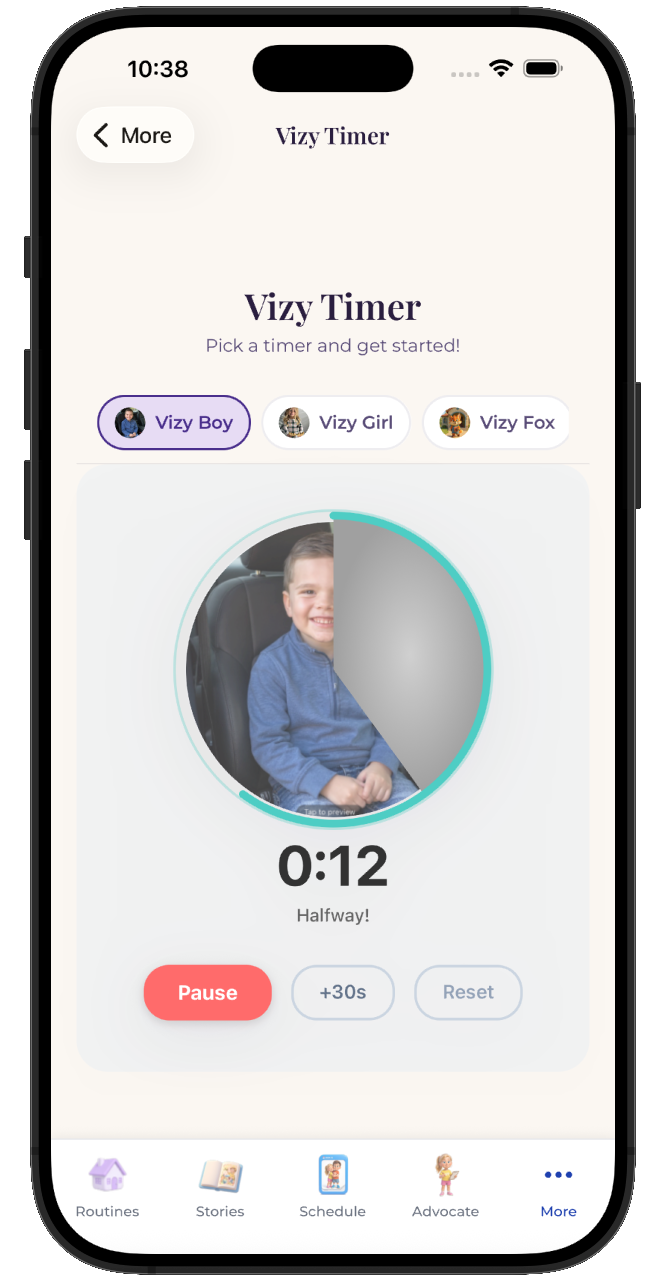
Five minutes to build, and your child sees it every time choosing what earns points comes around.
$6.99/month after the free trial · Cancel anytime · Also at app.vizyplan.com
VizyPlan supports routines and communication at home and school. It is not a medical device and does not diagnose or treat any condition. Talk to your child's care team about clinical questions.