Fewer authorized hours are no longer the exception. As several state Medicaid programs trim ABA rates and commercial payers tighten utilization management, more of your clients are arriving with authorizations that cover less than the clinical picture calls for. The instinct is to fight every reduction, and some are worth fighting. The harder, more durable work is making the approved hours do more. When the schedule shrinks, the math only works if the gains hold between sessions.
What fewer authorized hours actually change
A reduction does not change the goal. It changes the density of practice supporting the goal. A skill that was getting reinforced across twelve hours a week now gets eight, and the missing four have to land somewhere or the progress curve flattens. Payers are also asking for more in return for less, requiring stronger documentation of continued need to keep an authorization alive. The clinician is now expected to show progress with fewer hours and prove it with better data, at the same time.
The leverage point is the same one families feel from the other side. Skills that generalize to home need less in-session reinforcement to maintain, which means the hours you keep go further.
How to densify carryover when the hours drop
- Triage to the highest-leverage goal. With fewer hours, spread thin loses to focused depth. Pick the one or two goals that unlock the most daily function.
- Build a parent-run home routine for that goal. Pull it straight from the active program, keep it to a few minutes a day, and make it specific enough to run without you in the room.
- Capture the carryover as data. Home practice that produces a visible record becomes evidence of progress, which is exactly what a continued-care authorization needs.
- Tie it back to the authorization narrative. Document generalization gains in the language payers reward, the same approach we outline in our insurance denials and prior authorization guide.
The carryover problem is one we have written about often, from the speech therapy front-door gap to extended school year programming. Under fewer authorized hours, carryover stops being a nice-to-have and becomes the mechanism that keeps the plan working.
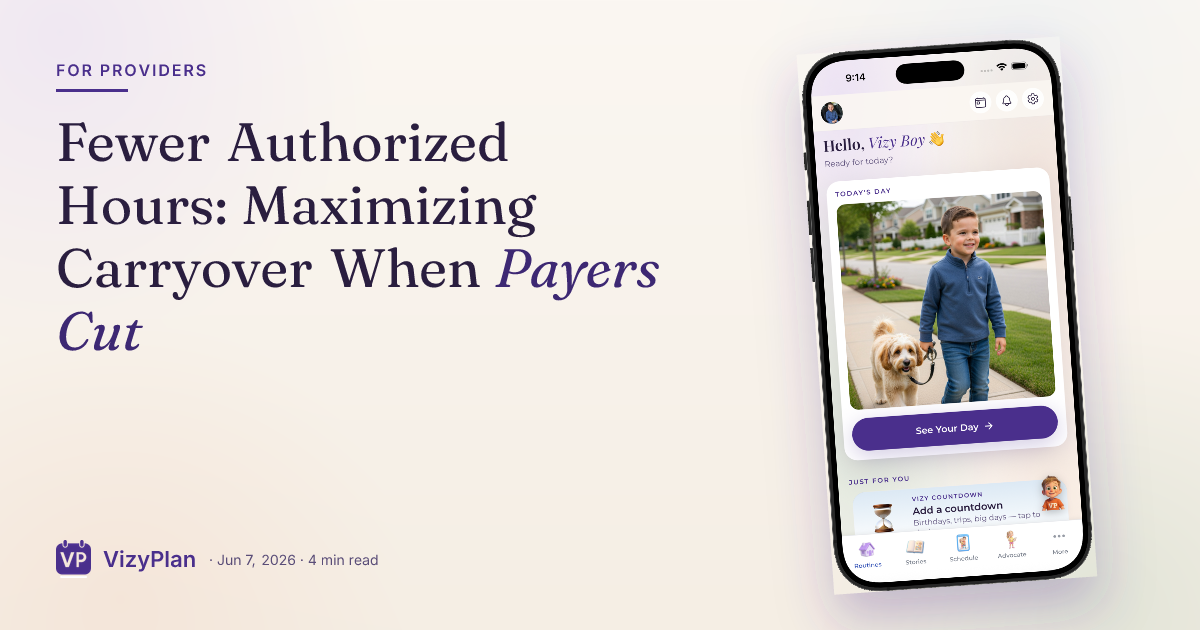
VizyPlan turns a clinical goal into a visual routine the family runs at home, so the hours you lost to a payer get partly recovered at the kitchen table. The clinical work stays yours. The carryover, and the data behind it, travels with the family.
Enjoying this article?
Get practical tips and insights delivered to your inbox — no spam, ever.
Download VizyPlan and start your 7-day free trial today. Make every approved hour go further. Just $6.99/month after your trial, no credit card required upfront.
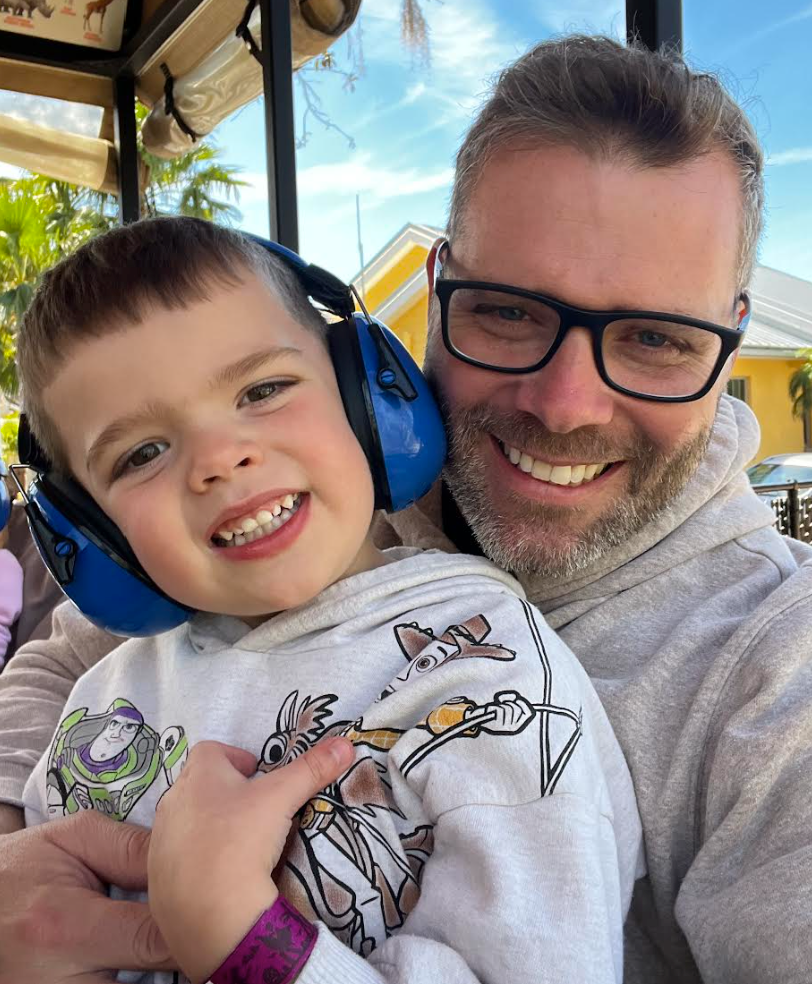
VizyPlan was built by an autism dad and an autism mom who is a licensed speech-language pathologist who needed something that did not exist. Start your free trial.