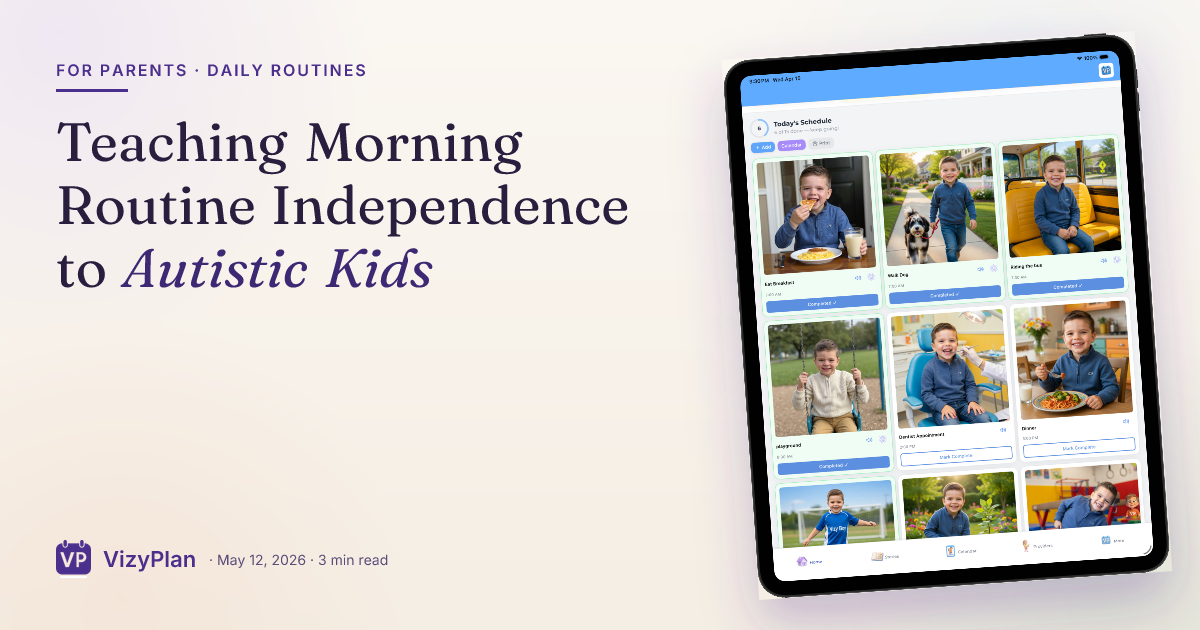
Teaching Morning Routine Independence to Autistic Kids
3 min read
Your fourteen-year-old needs the structure and would rather do almost anything than use something with cartoon stickers on it. The support is right and the packaging is wrong.
Free 7-day trial · No email or credit card to start · Built by an autism dad and an autism mom SLP
Executive function demands rise through adolescence while visible supports usually get withdrawn, which is precisely backward. A map built to look like a tool rather than a reward chart keeps the scaffolding without asking a teenager to accept something designed for a seven-year-old.
What the research saysAnalysis of the move to middle school found the achievement gap between students with disabilities and their peers widened during the transition year, as environments demanded more independent organization.
The Academic Effects of Moving to Middle School, EdWorkingPapers
Takes about five minutes. Use it as written, or keep only the steps your family needs. A short setup that gets used beats a complete one that gets abandoned in week two.
Continuing to monitor a teenager's map is the fastest way to make them abandon it. Handing over ownership completely is the price of it being used at all.
The Map Your Day lives inside the same routine your child already follows, so building a map for a teenager is a step with a visible length rather than a separate tool somebody has to remember to open.
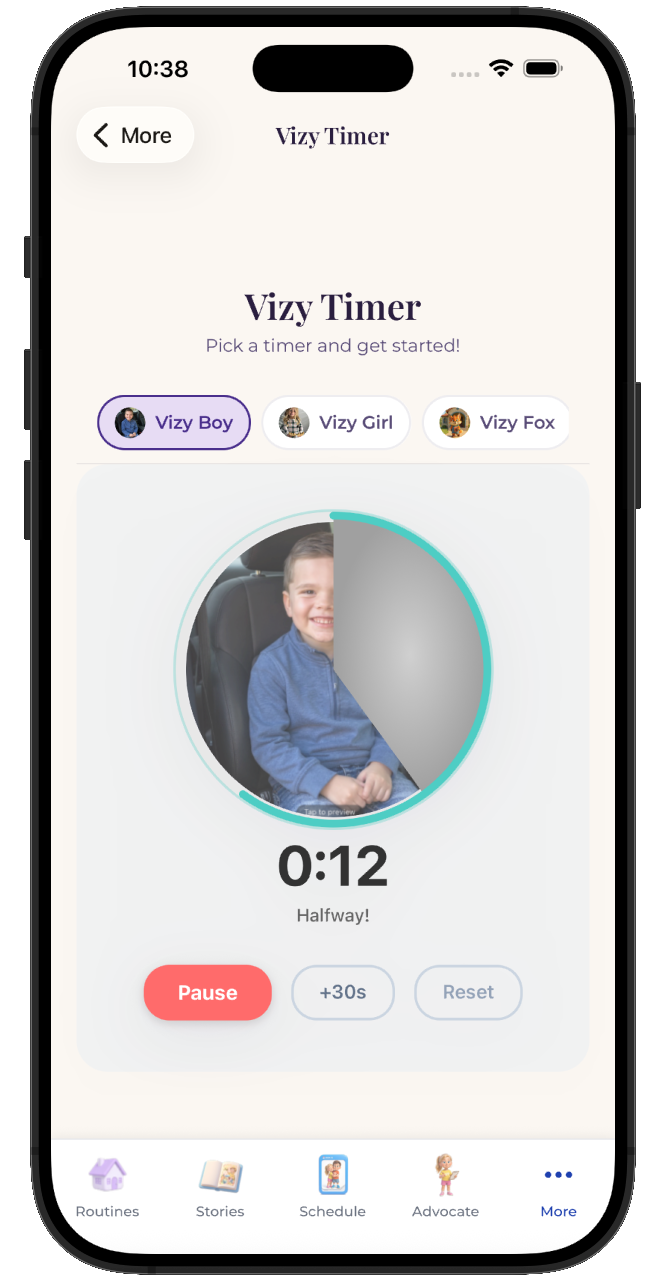
Five minutes to build, and your child sees it every time building a map for a teenager comes around.
$6.99/month after the free trial · Cancel anytime · Also at app.vizyplan.com
VizyPlan supports routines and communication at home and school. It is not a medical device and does not diagnose or treat any condition. Talk to your child's care team about clinical questions.