
Morning Routine Independence: Fading Your Prompts
3 min read
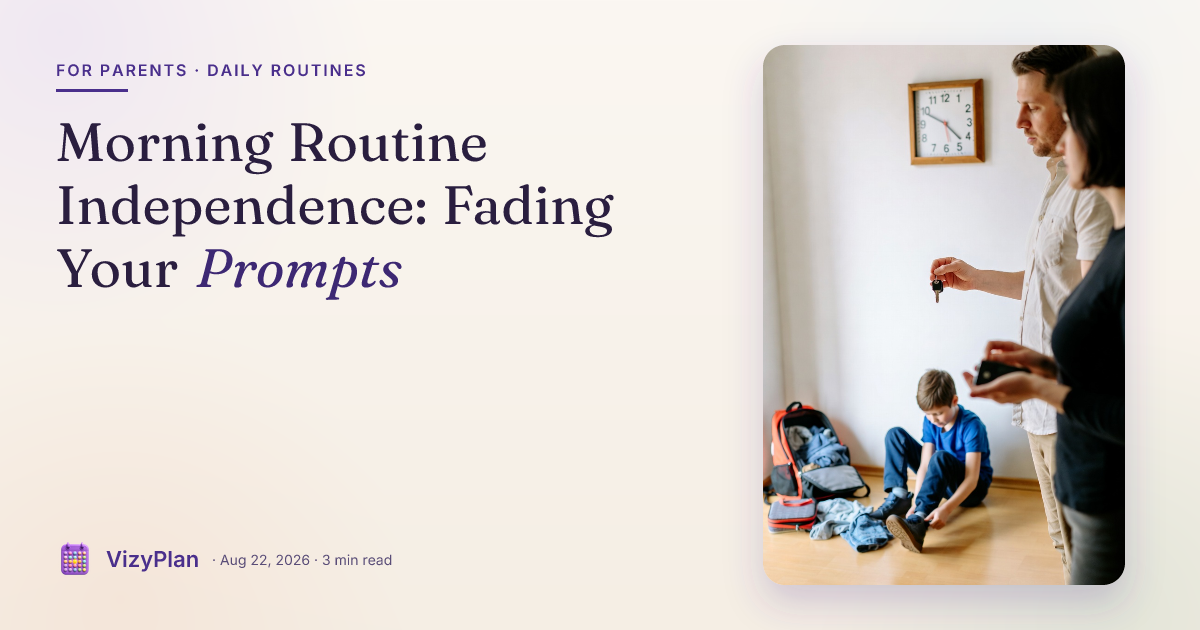
The map works, and you are still the one opening it, pointing at it, and reading it out. Somewhere along the way you replaced verbal prompting with visual prompting and kept the prompting.
Free 7-day trial · No email or credit card to start · Built by an autism dad and an autism mom SLP
The goal of a day map is a child who checks it themselves. Getting there means deliberately removing your involvement one layer at a time, because a support your child never operates independently produces dependence on you rather than on the map.
What the research saysVisual activity schedules meet the criteria for an evidence-based practice partly because they support independence, but the independence only develops when adult prompting is systematically faded.
Knight, Sartini and Spriggs, Journal of Autism and Developmental Disorders, 2015
Takes about five minutes. Use it as written, or keep only the steps your family needs. A short setup that gets used beats a complete one that gets abandoned in week two.
Prompt dependency builds quietly and is easiest to spot when someone else runs the routine. If a grandparent or babysitter cannot make the map work, the map was never doing the work.
The Map Your Day lives inside the same routine your child already follows, so handing the map over to your child is a step with a visible length rather than a separate tool somebody has to remember to open.
Five minutes to build, and your child sees it every time handing the map over to your child comes around.
$6.99/month after the free trial · Cancel anytime · Also at app.vizyplan.com
VizyPlan supports routines and communication at home and school. It is not a medical device and does not diagnose or treat any condition. Talk to your child's care team about clinical questions.