

Winter break takes away the one thing many autistic kids lean on all fall: a school day that runs the same way every time. Two weeks with no bell, no bus and no lunch at 11:40 can feel less like a vacation and more like falling off a map. A loose but visible winter break schedule gives your child a map back, without turning the holidays into a second school.
In our house, the hard part of a long break was never the big days. The hard part was the empty mornings when nobody, including our son, knew what came next.
Why a break without structure feels so big
Unstructured days change more than mood. Researchers studying school-age children proposed the Structured Days Hypothesis after reviewing 190 studies, and about 80% showed that kids' activity, screen, eating and sleep habits were less healthy on weekend days than on weekdays. The authors point to the built-in routine of a school day, including more regular sleep, as a likely reason. Winter break is essentially fourteen weekend days in a row.
For many autistic kids, predictability matters for more than habits. In a study of parents during pandemic school closures, children's behavioral inflexibility predicted their anxiety when routines fell apart. The study was small and the authors call it preliminary, but plenty of families will recognize the pattern. Our guide to regression after routine disruption explains why skills can slip after a long stretch off.
The good news: visual supports have real evidence behind them. A review in the Journal of Autism and Developmental Disorders found that visual activity schedules meet the bar for an evidence-based practice for autistic people from preschool through adulthood.
How to build a winter break schedule
- Keep three anchors: wake, meals and bed. Everything else can flex. Sleep researcher Jodi Mindell advises sticking to the usual bedtime through the holidays and keeping any late nights to one or two in a row. A predictable start, middle and end of the day carries a lot of weight on its own.
- Plan one thing per day. A walk to the library, baking cookies, a visit to Grandma's. One clear plan gives the day a shape without filling it. Show the plan in pictures the night before, so the morning starts with an answer instead of a question.
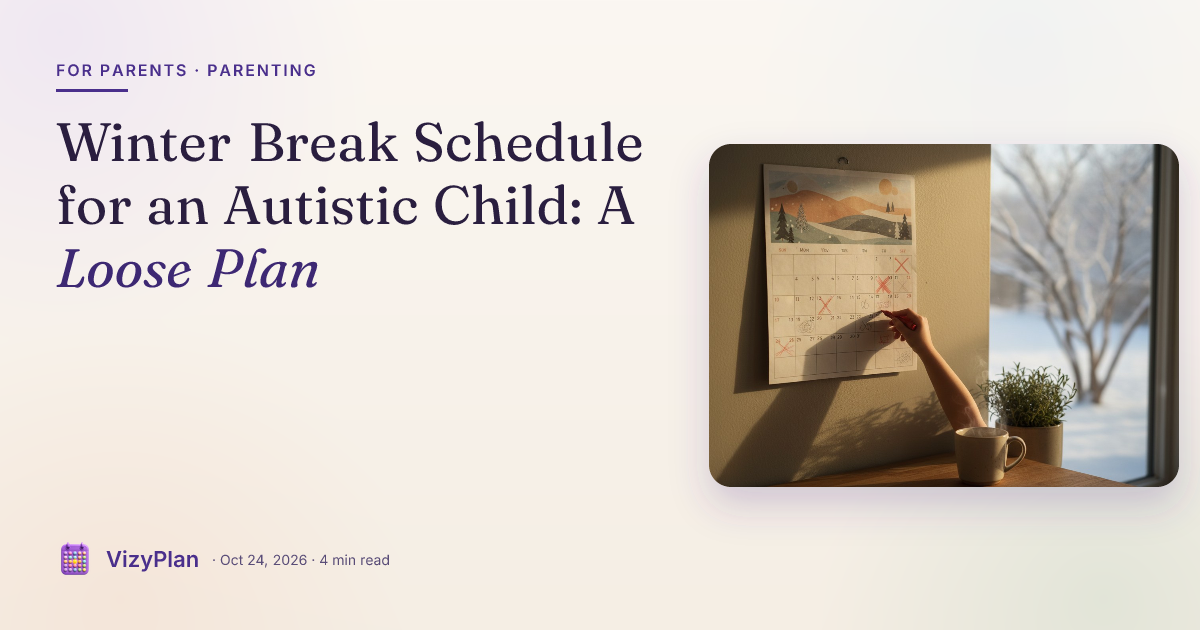
- Put a countdown on the wall. A paper calendar with every break day visible, and the first day back at school marked with a school picture. Cross off one day each night. A countdown makes an abstract "two weeks" into something a child can see shrinking.
- Follow a busy day with a quiet day. Holiday gatherings, travel and gift opening use up a lot of energy. Put a home day with low demands right after each big one. Our post on surviving family gatherings has ideas for the big days themselves.
- Show changes as soon as you know them. Weather and family plans shift. Swap the picture on the schedule and walk through the new plan together, rather than announcing the change at the door.
- Use the last two days to rehearse school mornings. Alarm at the school time, dressed, breakfast, backpack by the door, even a short drive past school. Mindell suggests shifting bedtime and wake time back in 15 to 30 minute steps starting two to three days before routines return.
Enjoying this article?
Get practical tips and insights delivered to your inbox — no spam, ever.
What a loose winter break schedule looks like
A loose winter break schedule is a few pictures, not a timetable. A sample day might read: wake up, breakfast, get dressed, the one plan, lunch, quiet time, free play, dinner, bath, bed. Times can stay off the schedule entirely if exact clocks cause stress. The order does the work.
Leave room for your child's own interests, too. A long break is a good stretch for the deep, absorbing play that school days crowd out. A schedule with plenty of free time in it still counts as a schedule.
Coming back in January
The return to school is its own transition, and a winter break schedule that kept the anchors steady makes the return smaller. Our guide to returning to school after a break covers the first week back. If you work with your child's therapists, our provider article on holiday break regression shows how many clinicians plan for this window, which can open a useful conversation about home practice over the break.
VizyPlan was built by an autism dad and an autism mom who is a licensed speech-language pathologist so a winter break schedule can be a set of pictures your child checks every morning, right down to the countdown to the first day back.
Download VizyPlan and give the break a shape your child can see. Try it free for a week. If it helps, keep going for $6.99/month or $59.99/year.
VizyPlan was built by an autism dad and an autism mom who is a licensed speech-language pathologist who needed something that did not exist. Start your free trial.