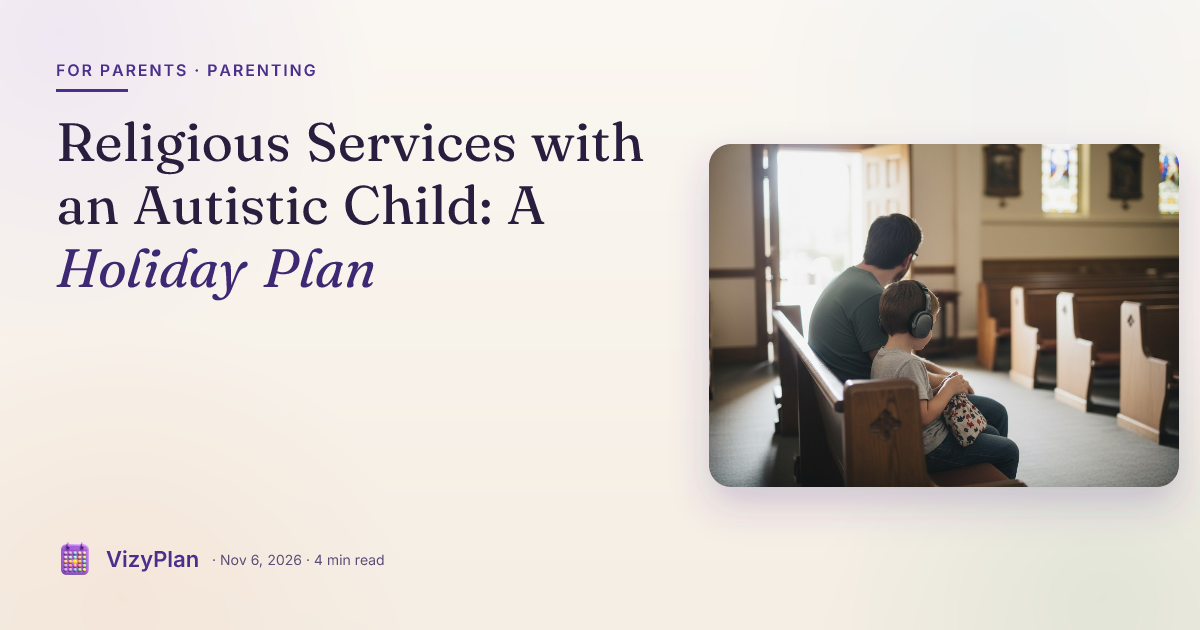
Holiday services are often the fullest, loudest and longest gatherings a congregation holds all year. Whether your family worships in a church, synagogue, mosque, temple or gurdwara, religious services with an autistic child can feel like a test you did not sign up for. A little preparation in November changes the odds.
The goal of religious services with an autistic child is not a perfectly still child in the pew. The goal is a child who knows what is coming, has a way to stay regulated and has a clear way out.
Why religious services with an autistic child take extra planning
Families of autistic kids attend less often, and the gap is not about faith. Sociologist Andrew Whitehead analyzed CDC national survey data in a 2018 study in the Journal for the Scientific Study of Religion and found that the odds of autistic children never attending religious services were 1.84 times higher than for children without a chronic health condition. Whitehead pointed to organizational barriers rather than deliberate exclusion.
Parents themselves say faith matters. In a 2013 survey of 416 parents published in Intellectual and Developmental Disabilities, Ault, Collins and Carter found that most parents valued their faith and their congregation, but many were not satisfied with the supports offered. What parents prized most was a welcoming attitude.
Worship spaces are also sensory spaces. Researcher Léon van Ommen at the University of Aberdeen has described how music, echoing acoustics, greetings at the door and touch rituals like handshakes or held hands can overwhelm autistic worshippers, and how a hard sensory experience can take a long time to recover from. His work comes from Christian settings, but bells, chanting, crowds and incense show up across many traditions.
How to prepare for religious services with an autistic child
The strategies below draw on visual supports and social narratives, both identified as evidence-based practices by the National Clearinghouse on Autism Evidence and Practice in 2020.
- Preview the space in a quiet week. Visit when the building is nearly empty. Walk in the door you will use, find the seat, the bathroom and a quiet spot. Take photos of each one. A space your child has already explored feels very different on a crowded holiday.
- Make a picture sequence of the service. Lay out the parts in order: arriving, sitting, music, readings or prayers, standing or kneeling, the sermon, food or a blessing, going home. A social story can explain the parts that might surprise your child, such as a loud instrument, candles or a moment of silence.
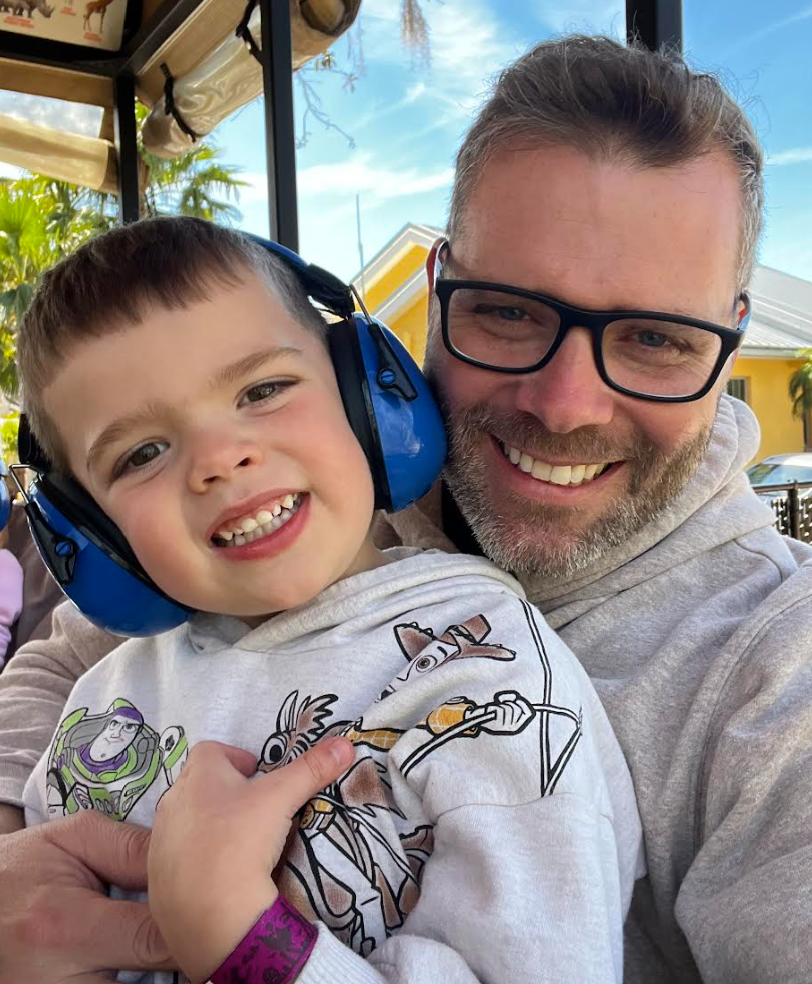
- Pack a sensory kit. Noise-reducing headphones, a fidget, a small quiet book or picture card, a snack if food is allowed, and one comfort item. Practice with the kit at home so nothing in the bag is new on the day.
- Sit near the exit. An aisle seat in the back row or near a side door lets you step out without crossing the room. The seat by the door is not a lesser seat. The seat by the door is what makes the rest of the service possible.
- Talk to clergy or the inclusion team ahead of time. Many congregations have a disability or inclusion ministry, a quiet room or a buddy volunteer. Tell them what helps your child, which rituals might be hard (a handshake, a hug, a loud processional) and how they can greet your child. Most leaders would rather know in advance.
- Ask about sensory-friendly services. Some congregations offer quieter services with softer music, dimmer lights, shorter readings and freedom to move. Others offer a quieter time slot during the holidays. If yours does not, ask. A single parent request has started more than one sensory-friendly service.
- Decide in advance that leaving early is fine. Pick a stopping point together, such as after the music or after the blessing, and show it on the picture sequence. If your child needs to leave sooner, leaving is part of the plan, not a failure.
Enjoying this article?
Get practical tips and insights delivered to your inbox — no spam, ever.
Give yourself permission to leave early
Many parents feel judged by the room. Remember that a family who attends for fifteen good minutes and goes home calm is building something. A family who stays through a meltdown is often building dread. If you are not sure whether your child is overwhelmed or shutting down, our guide to autistic shutdown vs meltdown can help you read the signs.
Start small. Attend a regular weekend service before the holiday, or part of one. Celebrate the parts that went well and adjust the picture sequence for next time. Religious services with an autistic child often get easier with repetition, because the space and the order become familiar.
If the holiday also brings a big family meal afterward, our post on autism and holiday family gatherings covers that part of the day.
VizyPlan was built by an autism dad and an autism mom who is a licensed speech-language pathologist so the service, the stopping point and the drive home can sit in one picture sequence your child can check before you walk in.
Download VizyPlan and start your 7-day free trial today. Build the holiday service in pictures before the day arrives. If it helps, keep going for $6.99/month or $59.99/year.
VizyPlan was built by an autism dad and an autism mom who is a licensed speech-language pathologist who needed something that did not exist. Start your free trial.