
ARFID and Autism: When It Is More Than Picky Eating
4 min read
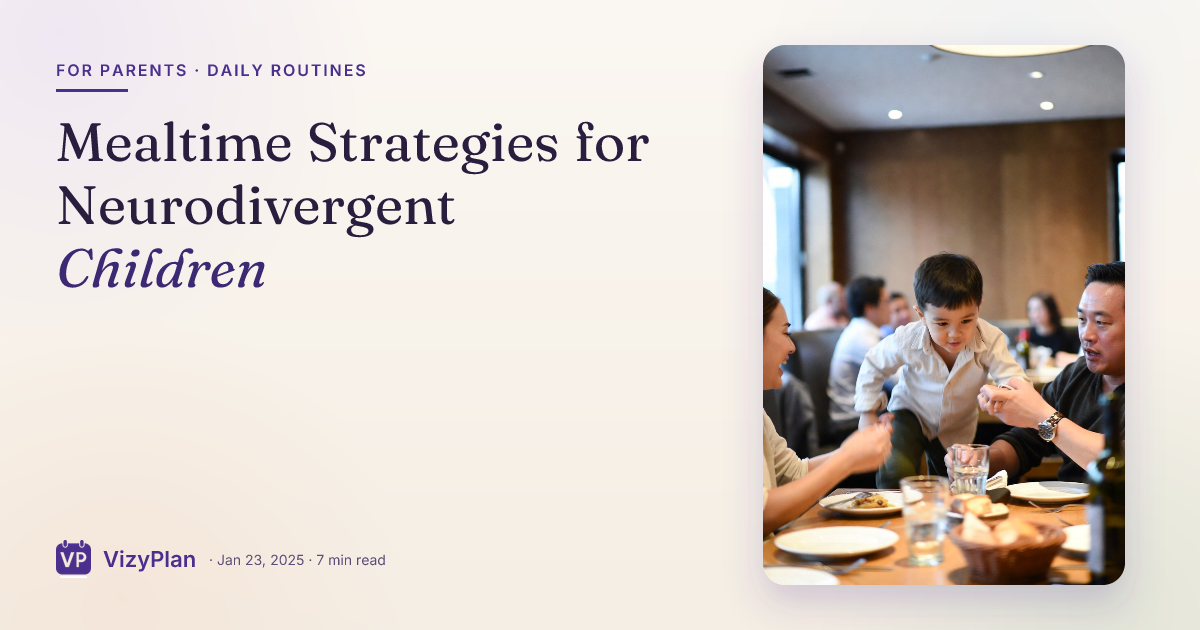
Dinner is on the table and your child is not. Or they are, for ninety seconds, before they are up again and you are eating cold food while refereeing.
Free 7-day trial · No email or credit card to start · Built by an autism dad and an autism mom SLP
Sitting through a family meal asks for transition, sensory tolerance, and sustained sitting all at once. A visual dinner routine breaks that into visible parts so your child knows how long the sitting lasts and what counts as done.
A picture-first schedule answers the same three questions every time: what is happening now, what happens next, and when it ends. Children who can see those answers stop needing to ask, and the prompting that usually falls to you moves onto the schedule instead.
A starting point for dinner at the table. Use it as written, or cut it down to the steps your child actually needs. Fewer steps that get finished beat a complete list that stalls.
Tip: keep the same order every time. The order is what your child learns, more than the individual steps.
Clip art shows a child. VizyPlan generates images of your child, doing the step, in a routine you built in a few minutes.
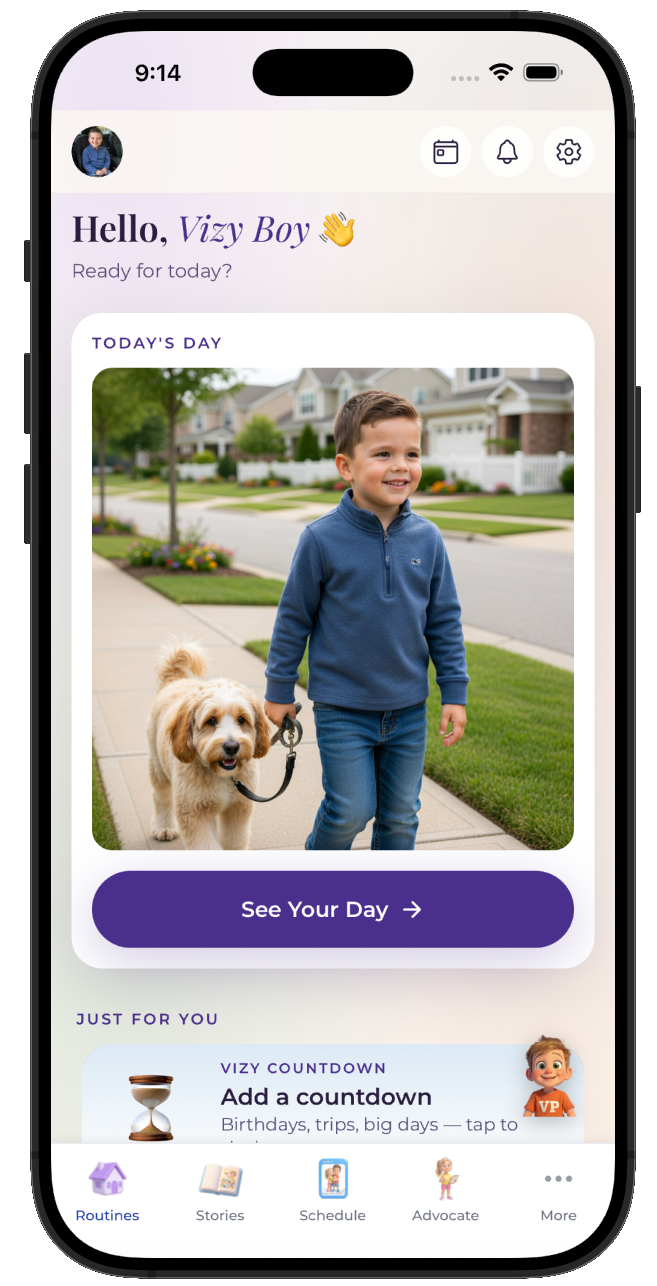
Add one reference photo and VizyPlan generates an image of your child doing each step of dinner at the table. Children attend longer to images of themselves than to generic icons, which is the whole reason the personalization exists.
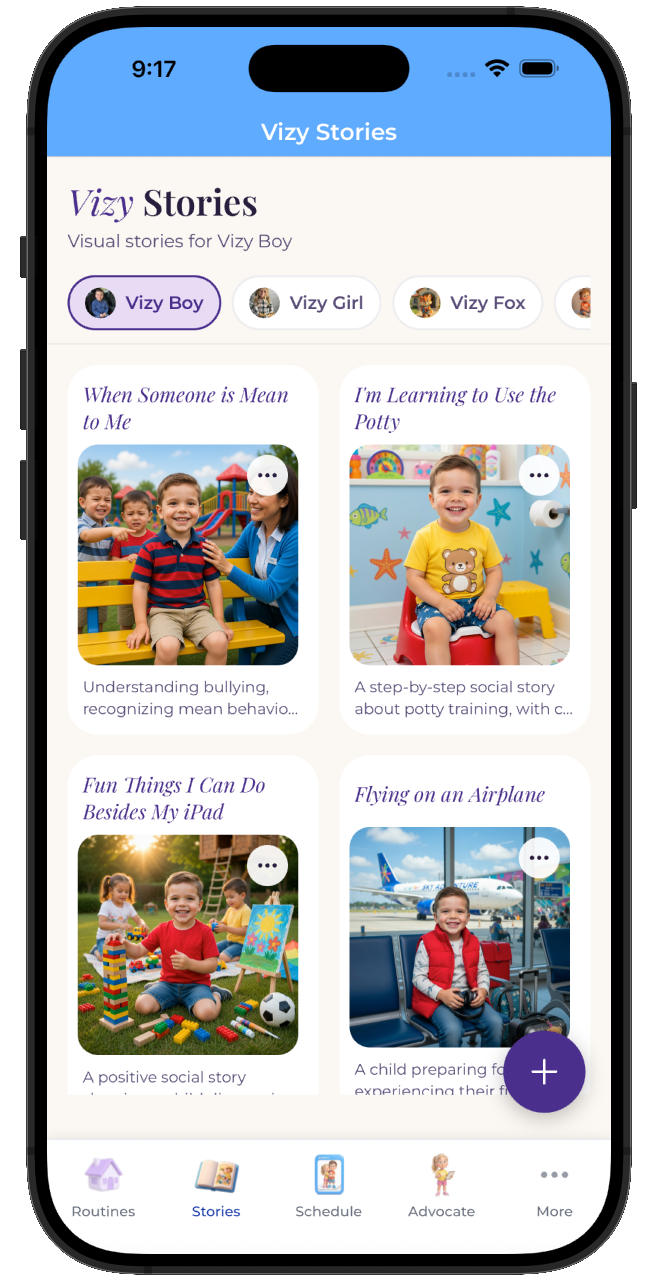
One tap turns dinner at the table into a picture-by-picture story your child reads at home, days before it happens. A child who has already seen it arrives prepared rather than surprised.
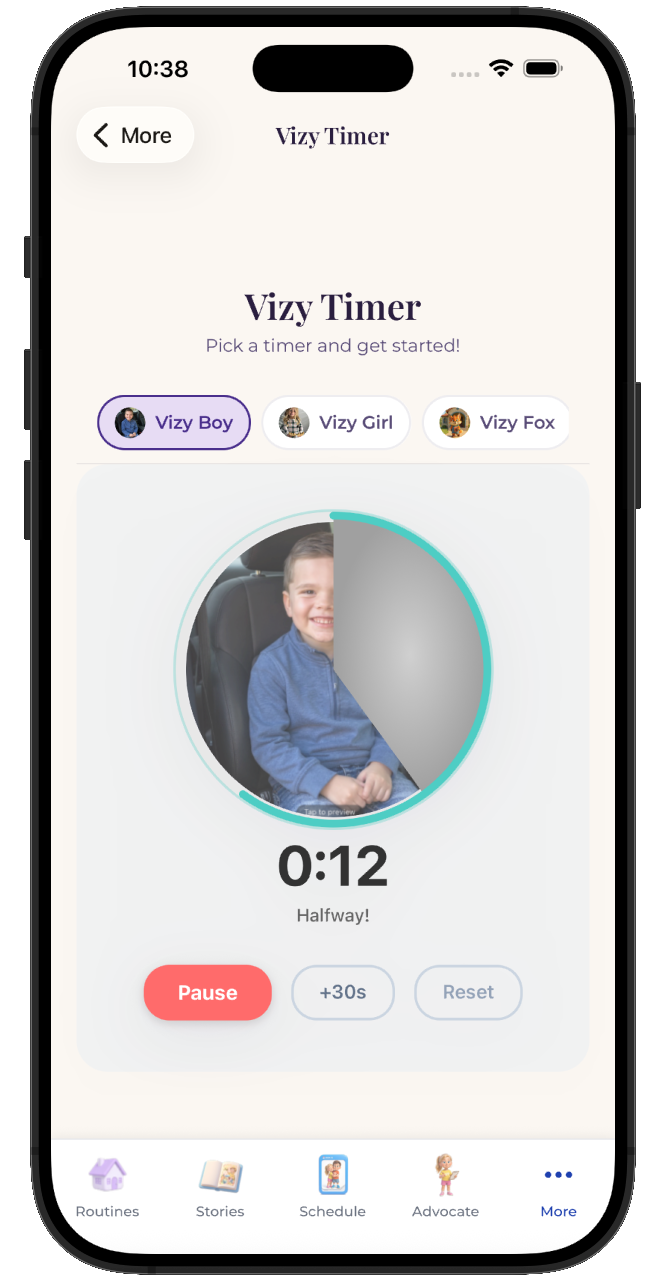
Most of the hard moments in dinner at the table are timing problems. A visual timer that depletes on screen makes the ending visible, and breathing and grounding tools are available from any screen when the plan goes sideways anyway.
Set up dinner at the table in about ten minutes, with images of your own child on every step.
$6.99/month after the free trial · Cancel anytime · Also at app.vizyplan.com
VizyPlan supports routines and communication at home and school. It is not a medical device and does not diagnose or treat any condition. Talk to your child's care team about clinical questions.