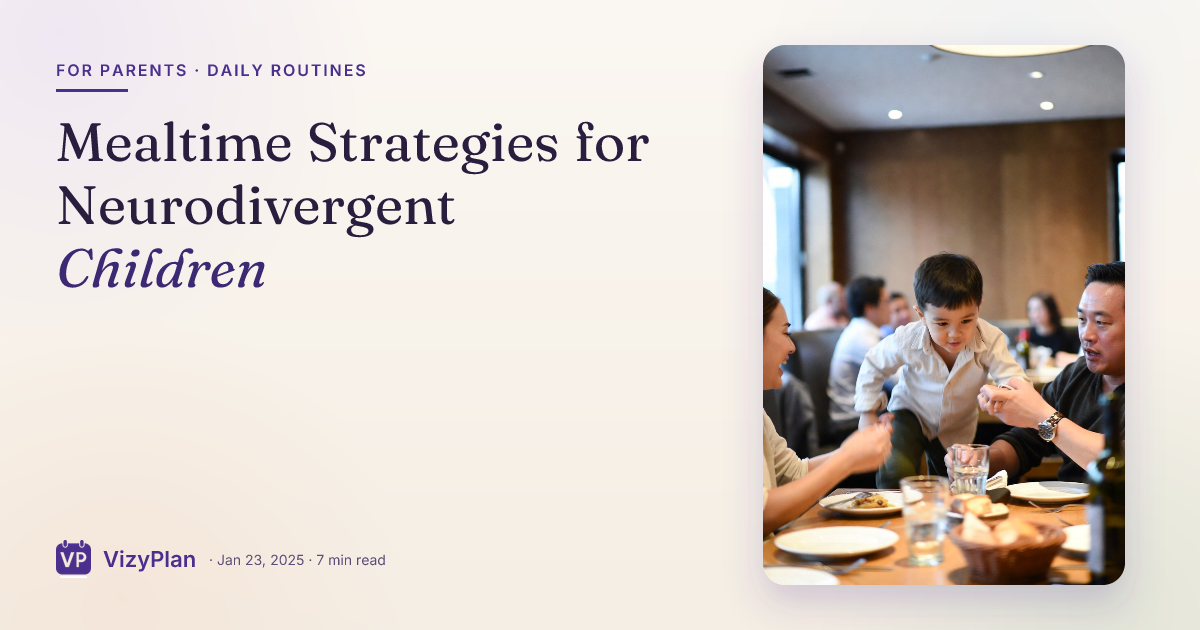
Mealtime can be one of the most stressful parts of the day for families with neurodivergent children. Between sensory sensitivities, rigid food preferences, difficulty sitting still, and the social demands of eating together, what should be nourishing family time often becomes a daily battle.
Understanding why mealtimes are challenging, and implementing targeted strategies, can transform this experience for everyone at the table.
Why Mealtimes Are Difficult
Before implementing strategies, it helps to understand the specific challenges neurodivergent children face around food and eating.
Sensory processing differences affect how children experience food. Textures that seem normal to others may feel unbearable. Temperatures, smells, and even the appearance of food can trigger intense negative reactions that are not within the child's control.
Need for sameness and predictability leads many autistic children to prefer eating the same foods repeatedly. New foods represent unpredictability, which triggers anxiety.
Executive function challenges make the multi-step process of eating difficult. Sitting down, using utensils, pacing bites, and staying at the table all require executive function skills that may be limited.
Interoception difficulties mean some children struggle to recognize hunger and fullness cues. They may not feel hungry at mealtimes or may not recognize when they have eaten enough.
Motor planning challenges can make using utensils frustrating, adding another layer of difficulty to an already demanding activity.
Creating a Sensory-Friendly Eating Environment
The environment where meals happen significantly impacts success.
Reduce visual clutter at the table. A calm, organized eating space is easier to manage than a chaotic one with distractions competing for attention.
Consider lighting carefully. Bright overhead lights can be overwhelming. Softer, natural lighting often supports calmer mealtimes.
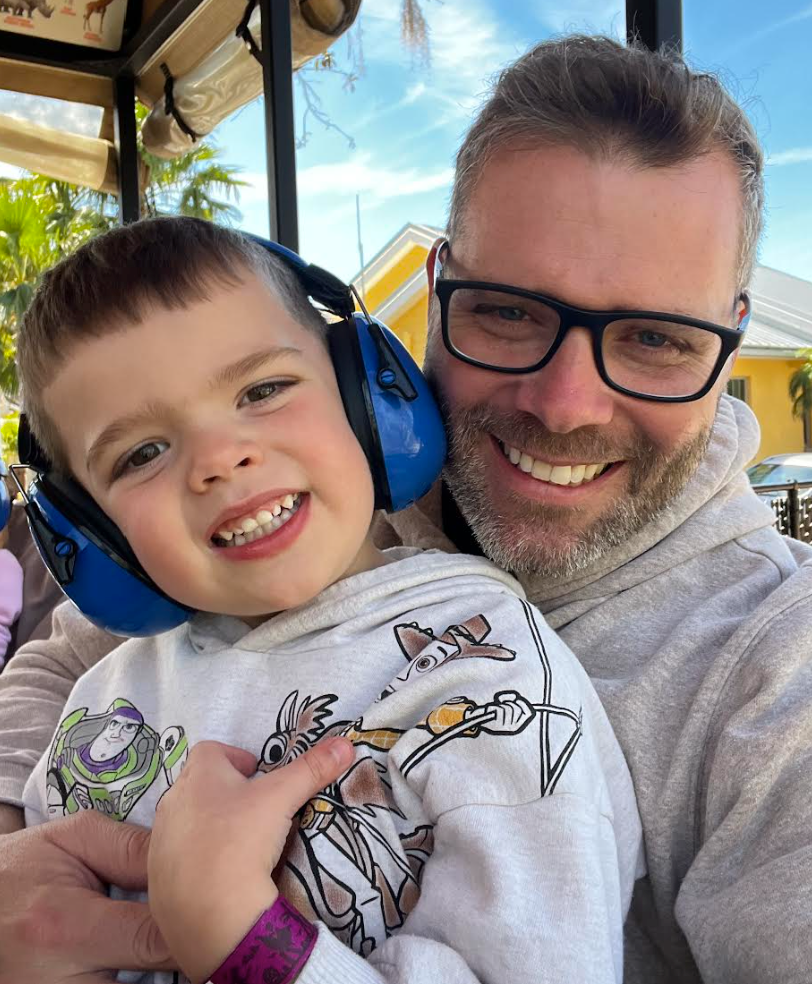
Manage noise levels. Background noise from TVs, loud conversations, or kitchen appliances may make focusing on eating difficult. Some children do better with quiet mealtimes; others benefit from soft background music.
Offer appropriate seating. Some children need foot support to feel stable. Others benefit from wobble cushions or being able to stand at the table. The right seating reduces the physical effort required to participate.
Use preferred dishware. Plate colors, textures, and even the sound utensils make against dishes can affect the eating experience. Finding what works for your child removes unnecessary barriers.
Visual Supports for Mealtime Routines
Visual supports bring the same benefits to mealtimes that they bring to other routines.
Visual meal schedules show what will happen during the meal. Seeing the sequence, sit down, napkin on lap, eat meal, ask to be excused, provides predictability that reduces anxiety.
Visual timers help children understand how long they need to stay at the table. Open-ended mealtimes feel overwhelming; knowing there is an end point makes participation more manageable.
Choice boards for food selection give children agency while keeping options within acceptable boundaries. Offering three acceptable choices rather than asking "What do you want?" prevents overwhelming open-ended decisions.
First-Then boards work well for mealtimes. First we try two bites of vegetables, then we can have preferred food. The visual makes the expectation and reward clear.
Addressing Sensory Food Challenges
Sensory issues with food require patience and gradual approaches.
Respect genuine sensory aversions. A child who gags on certain textures is not being defiant. Their sensory system is genuinely overwhelmed. Forcing foods that trigger this response creates negative associations and makes progress harder.
Introduce new foods gradually. The goal is not eating the new food immediately but building tolerance. Start by having the food on the table, then on the plate, then touched, then tasted, without pressure to swallow.
Consider food properties systematically. Is it the texture, temperature, color, smell, or taste that bothers your child? Understanding the specific issue helps find acceptable alternatives.
Serve safe foods alongside new ones. Having at least one accepted food at every meal ensures nutrition while reducing the pressure around new foods.
Separate foods on the plate. Many children become distressed when foods touch. Using divided plates or serving foods separately removes this trigger.
Managing the ADHD Mealtime Challenge
ADHD presents its own set of mealtime difficulties.
Movement needs do not stop at mealtime. Expecting a child who needs to move to sit completely still during meals sets everyone up for frustration. Consider allowing standing, using a wobble cushion, or taking brief movement breaks during longer meals.
Attention wanders from eating. Children with ADHD may get distracted and forget to eat, leading to meals that drag on indefinitely. Visual timers and clear expectations help maintain focus.
Impulsivity affects eating pace. Some children eat too quickly, barely chewing before swallowing more. Others get distracted between bites and take forever to finish. Visual pacing supports can help regulate eating speed.
Medication may affect appetite. Many ADHD medications suppress appetite during peak effectiveness. Working with your doctor to time meals around medication schedules helps ensure adequate nutrition.
.png)
Building Positive Mealtime Associations
Long-term success requires making mealtimes feel positive rather than stressful.
Reduce pressure around eating. High-pressure mealtimes increase anxiety and decrease willingness to try foods. A relaxed approach, paradoxically, often leads to better eating over time.
Connect mealtimes with positive experiences. Family conversation, sharing highlights of the day, or other positive rituals build good associations with being at the table.
Praise participation, not just eating. Acknowledge sitting at the table, trying a smell of new food, or using utensils well. Celebrating these steps builds confidence.
Avoid making food a battleground. The more meals become power struggles, the more negative associations build. Choose your battles carefully and let some things go.
When to Seek Professional Help
Some mealtime challenges require professional support.
Feeding therapy with an occupational therapist or speech-language pathologist can address significant sensory aversions, oral motor difficulties, or severe food restrictions.
Medical evaluation is important if a child's diet is extremely limited, if they are not growing appropriately, or if there are signs of nutritional deficiency.
Mental health support may help if anxiety around food is severe or if there are signs of developing disordered eating patterns.
Practical Tips for Everyday Meals
Small adjustments make daily meals more manageable.
Prep preferred foods in advance. Having acceptable options ready reduces stress when you are also managing meal preparation.
Maintain consistent meal times. Predictable schedules help children anticipate and prepare for mealtimes.
Keep portions small. Large portions can be overwhelming. Starting with small amounts and allowing seconds feels more manageable.
Model rather than lecture. Children learn more from watching others eat varied foods calmly than from being told to eat their vegetables.
Accept that some days are harder. Progress is not linear. A child who tried something new yesterday may refuse it today. This is normal.
Building Long-Term Healthy Relationships with Food
The goal is not just getting through today's meal but building lifelong healthy eating patterns.
Expand the repertoire gradually. Over months and years, most children with support can expand their accepted foods significantly.
Involve children in food preparation. Children who help prepare food are often more willing to try it. Even small tasks like washing vegetables or stirring create investment.
Teach about nutrition without pressure. Understanding why varied foods matter can motivate older children without the pressure of being forced to eat.
Celebrate progress. When your child tries something new or sits through a meal calmly, recognize the achievement. These moments build toward lasting change.
VizyPlan helps you create visual mealtime routines that reduce stress and build positive eating habits. Start your free trial and bring calm to your family's mealtimes.