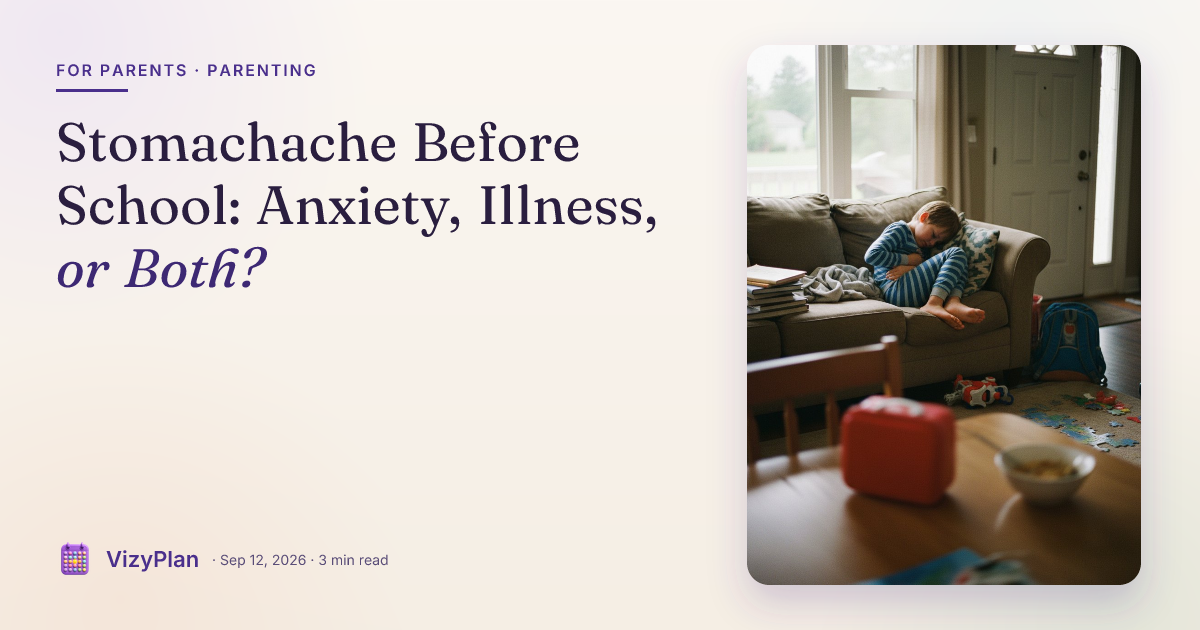
Stomachache Before School: Anxiety, Illness, or Both?
3 min read
Your child has been off school for three weeks and going back has become far larger than the illness ever was. Every day out makes the return slightly harder.
Free 7-day trial · No email or credit card to start · Built by an autism dad and an autism mom SLP
Time away from school builds avoidance whether or not the original reason was anxiety, because the return grows in a child's mind while the routine fades. Counting down to a planned, graded return converts an increasingly impossible day into a sequence with steps.
What the research saysClinical guidance on anxiety-driven school difficulty consistently favors a graded return with support over a wait-and-see approach, which has not proven effective.
Separation anxiety disorder, StatPearls
Takes about five minutes. Use it as written, or keep only the steps your family needs. A short setup that gets used beats a complete one that gets abandoned in week two.
Waiting until your child feels ready almost always lengthens the absence, because readiness rarely arrives on its own and each additional day raises the barrier.
The Vizy Countdown lives inside the same routine your child already follows, so counting down to a return after illness is a step with a visible length rather than a separate tool somebody has to remember to open.
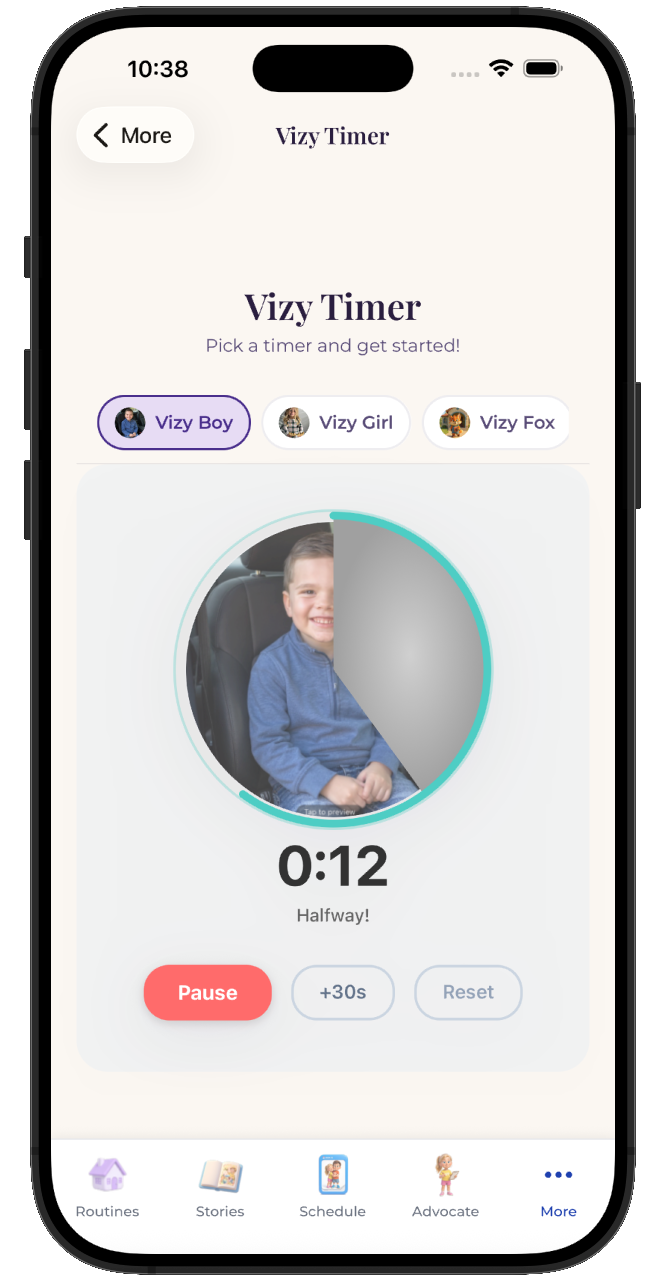
Five minutes to build, and your child sees it every time counting down to a return after illness comes around.
$6.99/month after the free trial · Cancel anytime · Also at app.vizyplan.com
VizyPlan supports routines and communication at home and school. It is not a medical device and does not diagnose or treat any condition. Talk to your child's care team about clinical questions.