

Map Your Day

Mapping a Monotropic Child's Day around the thing they love, not against it.

Your child has one interest that fills most of their attention, and every routine you build is essentially an interruption of it. No wonder the routines keep losing.

Free 7-day trial · No email or credit card to start · Built by an autism dad and a licensed SLP

Why it works here

Why a day map helps with mapping a monotropic child's day

Attention that flows deeply into a small number of interests is a cognitive style rather than a problem to solve, and days built against it will keep failing. A map that treats the interest as a fixed feature, and sequences everything else around it, works with the way your child's attention actually moves.

You will recognize this if

  • Every activity competes with the same single interest.
  • Switching out of the interest is far harder than any other transition.
  • Your child is highly capable within the interest and appears not to be outside it.
What the research says

Monotropism describes attention flowing strongly into a small number of interests at a time, which makes moving between them genuinely effortful rather than simply unwanted.

VizyPlan, Monotropism and transitions
The setup

How to set it up for mapping a monotropic child's day

Takes about five minutes. Use it as written, or keep only the steps your family needs. A short setup that gets used beats a complete one that gets abandoned in week two.

  1. 1 Put the interest on the map as a real activity with a real slot
  2. 2 Give it more time than feels reasonable, because it is doing regulating work
  3. 3 Place demanding activities immediately before it, not after
  4. 4 Give long runways when the interest has to end
  5. 5 Attach skills to the interest wherever you can rather than competing with it
  6. 6 Avoid stacking a transition out of the interest with another transition
The mistake most families make

Using the interest purely as a reward to be withdrawn turns something regulating into leverage, and it tends to damage both the routine and the trust.

In the app

Built into the routine, not bolted onto it.

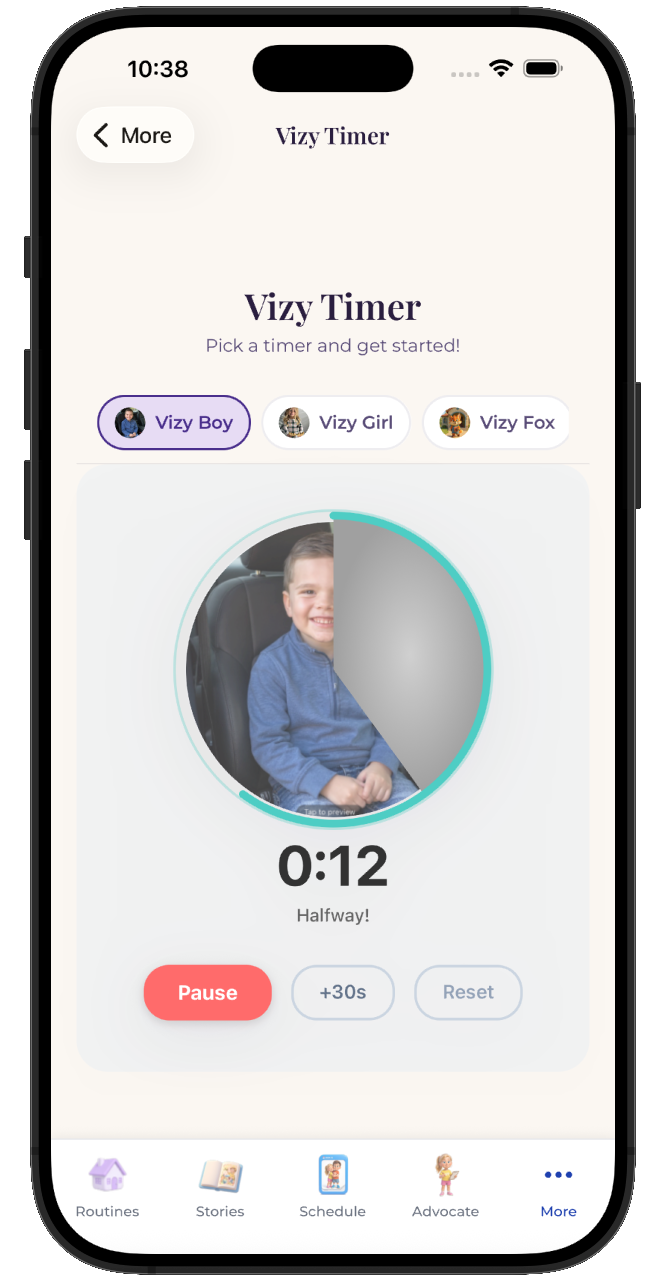
The Map Your Day lives inside the same routine your child already follows, so mapping a monotropic child's day is a step with a visible length rather than a separate tool somebody has to remember to open.
  • Attach it to any step in any routine
  • Works for pre-readers, gestalt language processors, and AAC users
  • Same setup at home, at school, and in therapy
See the step-by-step guide →
The VizyPlan Map Your Day set up for mapping a monotropic child's day

Set this up for your child.

Five minutes to build, and your child sees it every time mapping a monotropic child's day comes around.

$6.99/month after the free trial · Cancel anytime · Also at app.vizyplan.com

Common questions

About mapping a monotropic child's day

Should I limit my child's main interest?
Rarely for its own sake. Interests build skills, regulate, and motivate, and the productive work is usually in the transitions around them.
How do I get other things done?
Sequence them immediately before the interest rather than after. The interest then pulls your child through the rest rather than competing with it.
Can the interest be part of learning?
Very often, and it is usually the highest-leverage thing available. Our post on special interests as a skill engine covers how.

VizyPlan supports routines and communication at home and school. It is not a medical device and does not diagnose or treat any condition. Talk to your child's care team about clinical questions.