
Starting school is one of the biggest transitions in any child's life. For neurodivergent children, including those with autism, ADHD, sensory processing differences, or developmental delays, this milestone comes with a unique set of challenges that can feel overwhelming for both kids and parents alike. The bright fluorescent lights, the unpredictable noise of a crowded hallway, the unspoken social rules that seem to come naturally to other children. It can be a lot.
But here is the good news: with the right preparation, your child can walk into that classroom feeling more confident, more regulated, and more ready to learn. Research consistently shows that visual supports, gradual exposure, and predictable routines are among the most effective tools for reducing anxiety and supporting successful school transitions for neurodivergent kids.
Whether your child is starting school for the very first time or transitioning to a new grade or new building, this guide will walk you through practical, evidence-based strategies to make the process smoother for your whole family.
Why Starting School Is Uniquely Challenging for Neurodivergent Children
Before we dive into preparation strategies, it helps to understand why school can feel so different for neurodivergent kids. When we understand the "why," we can better anticipate what our children need.
Sensory overload is real. Schools are loud, bright, and busy places. The hum of fluorescent lights, the echo of sneakers in a gymnasium, the smell of cafeteria food, the feel of a stiff new uniform. For children with sensory processing differences, these inputs can be physically painful or deeply disorienting. What looks like a "meltdown" is often a nervous system that has simply hit its limit.
New routines demand enormous cognitive energy. Neurodivergent children often thrive on predictability. School introduces dozens of new micro-routines all at once: where to hang your backpack, when to line up, how to ask for help, what happens after lunch. Each of these requires working memory, flexibility, and executive functioning skills that may still be developing.
Social expectations are often unspoken. The classroom is a social environment with countless invisible rules. Raise your hand before speaking. Wait your turn. Make eye contact when the teacher talks to you. Share materials with a partner. For children who process social information differently, these expectations can feel like trying to follow a game where nobody explained the rules.
Communication demands increase dramatically. At home, you understand your child's communication style. You know their gestures, their expressions, their unique ways of telling you what they need. At school, they will need to communicate with new adults and peers who do not yet have that understanding. This can be exhausting and frustrating for children, especially those who use alternative communication methods.
Understanding these challenges is not about expecting the worst. It is about being prepared so you can set your child up for success.
Preparing Weeks Before: Laying the Foundation
The most effective school preparation does not start the night before. It starts weeks, or even months, in advance. Gradual exposure and practice are two of the most powerful tools in your toolkit.
Visit the school ahead of time. Many schools will accommodate pre-visit requests, especially when you explain your child's needs. Try to visit when the building is quiet so your child can explore without the added stress of crowds. Walk the hallways. Find the bathroom. Sit in the classroom. Touch the desk. Let your child build a mental map of the space in a low-pressure environment. If possible, visit more than once so the environment starts to feel familiar rather than foreign.
Create a visual schedule of the school day. Research shows that visual schedules significantly reduce anxiety by giving children a concrete sense of what comes next. A visual schedule transforms the abstract concept of "a school day" into a predictable sequence your child can reference and rely on. Break the day into clear, visual steps: arrival, morning circle, reading time, snack, recess, lunch, afternoon activities, dismissal. Use pictures or icons that your child connects with.
With VizyPlan, you can build a detailed visual schedule for the school day using AI-generated personalized images that actually look like your child's school experience. Instead of generic clipart, your child sees images that reflect their world, which makes the schedule more meaningful and easier to engage with.
Use social stories to explain classroom expectations. Social stories, a strategy developed by Carol Gray, are short narratives that describe a situation, the expected behaviors, and the perspectives of others involved. They are incredibly effective for helping neurodivergent children understand new environments. Create simple stories about things like: "What happens when I get to school," "How to ask my teacher for help," or "What to do at recess." Read these stories together daily in the weeks leading up to the first day.
Practice, practice, practice. Do a "dress rehearsal" of the school morning routine. Drive or walk the route to school. Practice putting on the backpack, opening the lunchbox, using the zipper on the jacket. The more your child physically rehearses these actions, the less cognitive energy they will need on the real day.
Morning Routine Strategies: Starting the Day Strong
The morning sets the tone for the entire school day. A chaotic, rushed morning can dysregulate your child before they even walk through the school doors. A calm, predictable morning gives them the best possible foundation.
Build a visual morning checklist. Break the morning into small, manageable steps with a visual checklist your child can follow independently. This might include: wake up, use the bathroom, get dressed, eat breakfast, brush teeth, put on shoes, grab backpack, go to the car. Each step should have a clear image and be presented in order.
Prepare the night before. Reduce morning decision-making by laying out clothes the night before, packing the backpack, and preparing lunch. For children with ADHD or executive functioning challenges, fewer decisions in the morning means less opportunity for the routine to go off track.
Make getting dressed easier. Sensory sensitivities can turn getting dressed into a daily battle. Wash new clothes several times before the first day to soften them. Cut out tags. Let your child choose between two pre-selected outfits rather than facing an open closet. If your child has strong sensory preferences, honor them whenever school dress codes allow.
Build in transition time. Many neurodivergent children need extra time to shift from one activity to the next. Build buffer time into your morning so transitions do not feel rushed. A five-minute warning before it is time to leave the house can make a world of difference.
Use a reward system for morning wins. Positive reinforcement is one of the most well-supported strategies in behavioral research. Celebrate small victories in the morning routine. Finished getting dressed without a reminder? That earns a star. Completed the whole checklist? Choose a favorite activity after school. VizyPlan's built-in reward system makes it easy to track these wins and keep your child motivated with visual progress they can see and feel proud of.
Classroom Preparation: Setting Up for Success
You cannot control everything that happens in the classroom, but you can prepare your child and collaborate with their teacher to create the best possible environment.
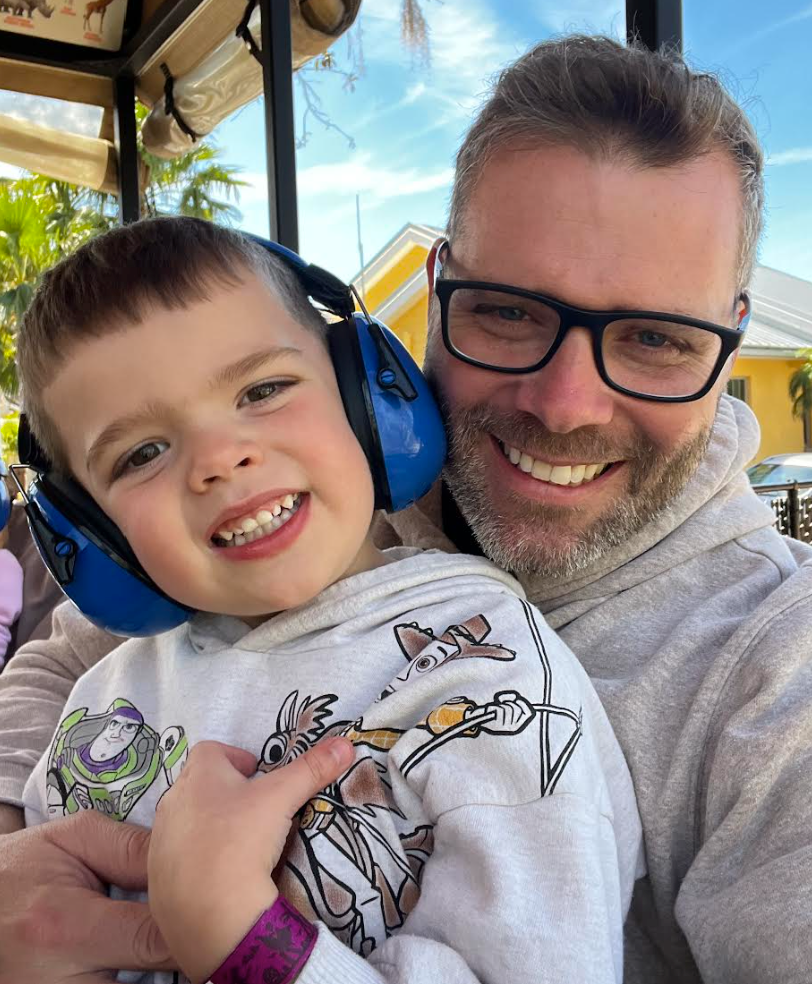
Introduce sensory tools early. Talk to your child's teacher about sensory supports that can help your child stay regulated during the school day. This might include noise-canceling headphones for loud environments, a fidget tool for focused work time, a wiggle cushion for sitting, or a designated quiet space your child can use when they feel overwhelmed. The key is to introduce these tools as normal and helpful, not as something that sets your child apart.
Create communication cards or supports. For children who struggle with verbal communication under stress, visual communication cards can be a lifeline. Simple cards that say "I need a break," "I need help," or "I feel upset" give your child a way to advocate for themselves when words are hard to find. Practice using these at home so they feel natural at school.
Collaborate with the teacher before day one. Schedule a meeting with your child's teacher before school starts. Share what works for your child: what calms them, what triggers dysregulation, how they communicate best, and what their strengths are. Teachers want to support your child, and the more information they have, the better equipped they will be. Bring a one-page summary they can reference easily.
Prepare for transitions between activities. Transitions are one of the hardest parts of the school day for many neurodivergent children. Moving from free play to structured work, from the classroom to the cafeteria, from recess back inside. Ask the teacher if they can give your child advance notice before transitions and whether visual or auditory cues are used in the classroom. Practice transitions at home by using timers and visual countdowns so your child develops familiarity with the concept.
Identify a safe person. Help your child identify one trusted adult at school they can go to if they feel overwhelmed. This might be their teacher, a school counselor, or a special education aide. Knowing there is a safe person available can reduce anxiety significantly.
.png)
After-School Decompression: The Recovery Period
Here is something many parents do not realize until they experience it: your child may come home from school completely drained. They have spent the entire day masking, processing, adapting, and holding it together. After-school meltdowns are common, and they are not a sign that school is failing. They are a sign that your child has been working incredibly hard all day and finally feels safe enough to let go.
Create a predictable after-school routine. Just as the morning routine sets the tone for the day, a consistent after-school routine helps your child decompress and transition back to home life. This might include: a quiet snack, 20 minutes of free choice time (screens, sensory play, or just lying on the couch), followed by a brief check-in about the day.
Do emotion check-ins, not interrogations. Instead of asking "How was school?" (which is overwhelming and vague for many neurodivergent kids), try more specific and visual approaches. Use an emotion chart, a feelings thermometer, or a simple thumbs-up/thumbs-down system. VizyPlan's emotion tracking feature makes this easy by giving your child a visual way to express how they are feeling after school. Over time, you will start to see patterns. Maybe Tuesdays are always harder because of gym class. Maybe Fridays are better because of art. These patterns help you anticipate and plan.
Protect decompression time fiercely. It can be tempting to fill after-school hours with homework, therapy appointments, and extracurricular activities. But neurodivergent children often need significant downtime to recover from the sensory and social demands of school. Be intentional about building in unstructured, low-demand time, especially in the early weeks.
Let them stim, move, and regulate. If your child needs to jump on a trampoline, spin in circles, listen to the same song on repeat, or retreat to a dark room after school, let them. These are not "bad habits." These are self-regulation strategies. Your child is doing exactly what their nervous system needs to recover.
Handling Setbacks and Building Resilience
No matter how well you prepare, there will be hard days. There will be meltdowns in the parking lot, tears at drop-off, notes from the teacher, and evenings where your child says they never want to go back. This does not mean you have failed. It means school is hard, and your child is still learning.
Normalize difficulty without dismissing feelings. Saying "School is hard sometimes, and it is okay to feel that way" validates your child's experience while also communicating that hard things are survivable. Avoid minimizing ("You'll be fine!") or catastrophizing ("Oh no, what happened?!"). Aim for calm, steady reassurance.
Look for patterns, not just incidents. When a rough day happens, resist the urge to react to the single event. Instead, look at the bigger picture. Is there a specific time of day that is consistently difficult? A particular activity or environment? A social situation that keeps coming up? Patterns point you toward solutions. VizyPlan's emotion tracking can be especially helpful here, giving you a visual record of your child's emotional landscape over time so you can spot trends and adjust strategies accordingly.
Celebrate progress, not perfection. Your child does not need to have a flawless school day to be succeeding. Did they walk into the building without crying today? That is progress. Did they use their communication card to ask for a break? That is a win. Did they try a new food at lunch? Incredible. Reward systems that acknowledge effort and small steps forward build the kind of intrinsic motivation that lasts. Focus on what went right, even on the days that feel mostly wrong.
Stay in communication with the school team. Regular check-ins with your child's teacher, counselor, or special education team help you stay ahead of problems rather than reacting to crises. A quick weekly email or a shared communication journal can keep everyone on the same page.
Give it time. Adjustment to school does not happen overnight. Many neurodivergent children need several weeks, sometimes longer, to truly settle into a new routine. Be patient with the process and with yourself. You are doing harder parenting work than most people realize, and you are doing it with love.
How VizyPlan Supports School Transitions
Preparing a neurodivergent child for school involves a lot of moving pieces: visual schedules, social stories, morning routines, emotion tracking, reward systems, and constant communication. VizyPlan brings all of these tools together in one app, designed specifically for families like yours.
With VizyPlan, you can:
- Build personalized visual schedules for school mornings, the school day itself, and after-school routines, complete with AI-generated images that reflect your child's real life
- Create social stories to help your child understand new classroom expectations, recess, lunch, and transitions
- Track emotions daily to spot patterns in school-related stress and celebrate emotional growth
- Use built-in reward systems to reinforce positive school behaviors and morning routine wins
- Adjust and adapt easily as your child's needs change throughout the school year
Every child's school journey looks different. VizyPlan gives you the flexibility to create routines and supports that fit your child, not the other way around.
Start your 7-day free trial today and build your child's school routine before the first bell rings. If it helps, it is $6.99/month or $59.99/year after your free week.
You know your child better than anyone. Trust that knowledge, prepare with intention, and remember: the goal is not a perfect first day. The goal is a child who knows they are supported, no matter what the school day brings.