If you work in early intervention, you have noticed the shift at intake. Parents now arrive asking for NDBI by name, often before they can define it. Naturalistic developmental behavioral intervention is no longer a niche term, and families want to know whether your practice does it. The good news is that the model is easier to deliver than the acronym suggests, and the home routine is its natural home.
What NDBI actually is
NDBI is an umbrella term coined by Schreibman and colleagues in 2015 for interventions that blend applied behavior analysis with developmental science. Instead of isolated discrete trials at a table, teaching happens inside play and everyday activities, follows the child's lead, and uses natural reinforcement. Familiar approaches like ESDM, JASPER, PRT, and Enhanced Milieu Teaching all sit under the NDBI heading. The Autism CRC evidence review classifies NDBI among the better-supported early approaches, and recent meta-analytic work found language gains, including for minimally speaking children when paired with AAC.
Why the model strands without a home vehicle
Three failure modes you have probably watched happen.
- The naturalistic part needs natural settings. A method built on embedding teaching in daily life loses its engine when it only runs in your clinic room.
- The parent is the intervention, but the plan lives in your head. Parent-mediated NDBI is promising in the literature, yet families cannot run what was never written down for them.
- Play targets blur without an anchor. Without a predictable routine to attach to, the embedded opportunities drift and density drops.
Enjoying this article?
Get practical tips and insights delivered to your inbox — no spam, ever.
Where the home routine earns its keep
NDBI asks the family to create dozens of small teaching moments across the day. A visual routine pre-stages those moments. The snack step holds the words and choices you want modeled. The bath step carries the joint-attention bid you are targeting. The clinician designs the NDBI goals; the routine turns them into something a parent can actually run between sessions.
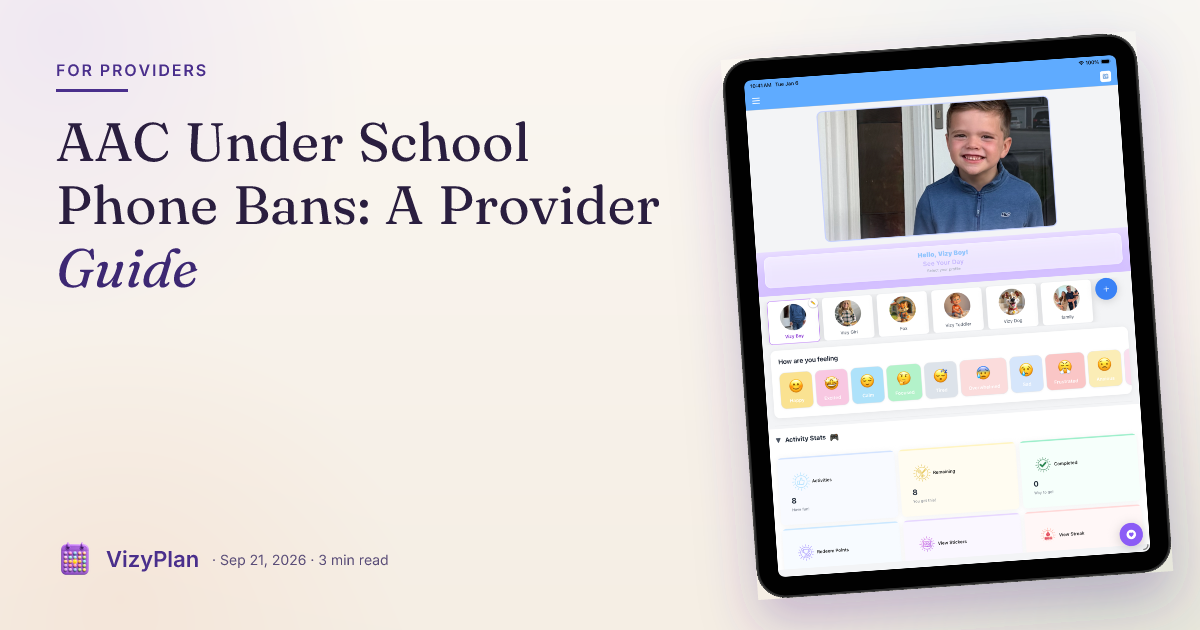
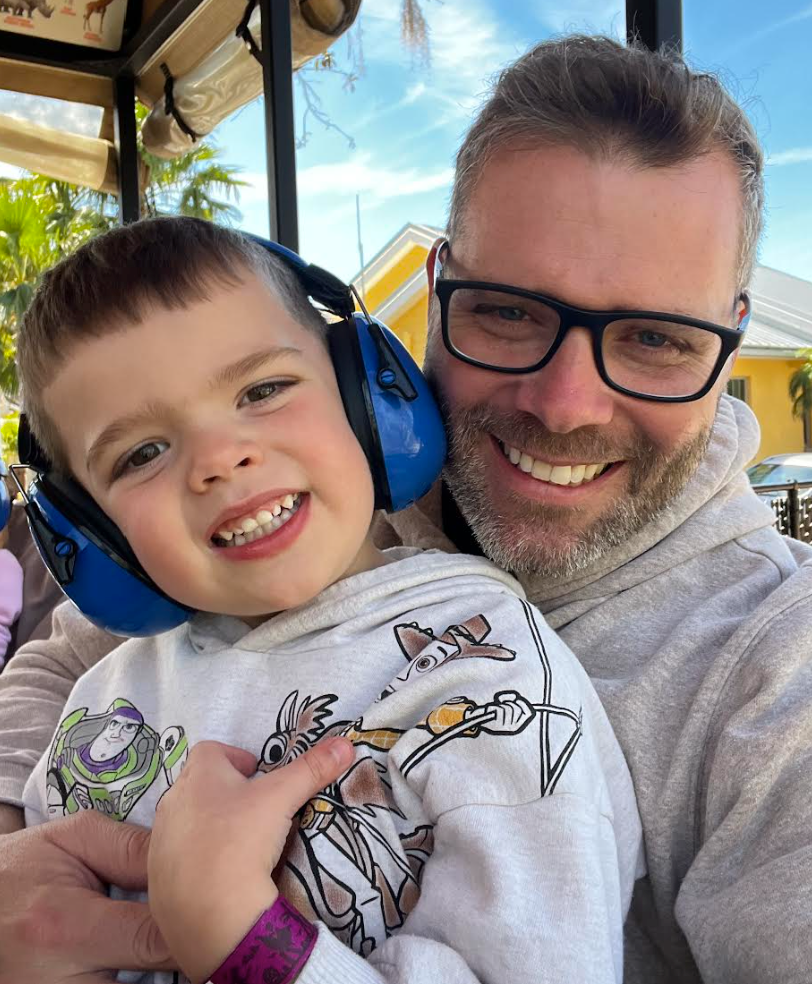
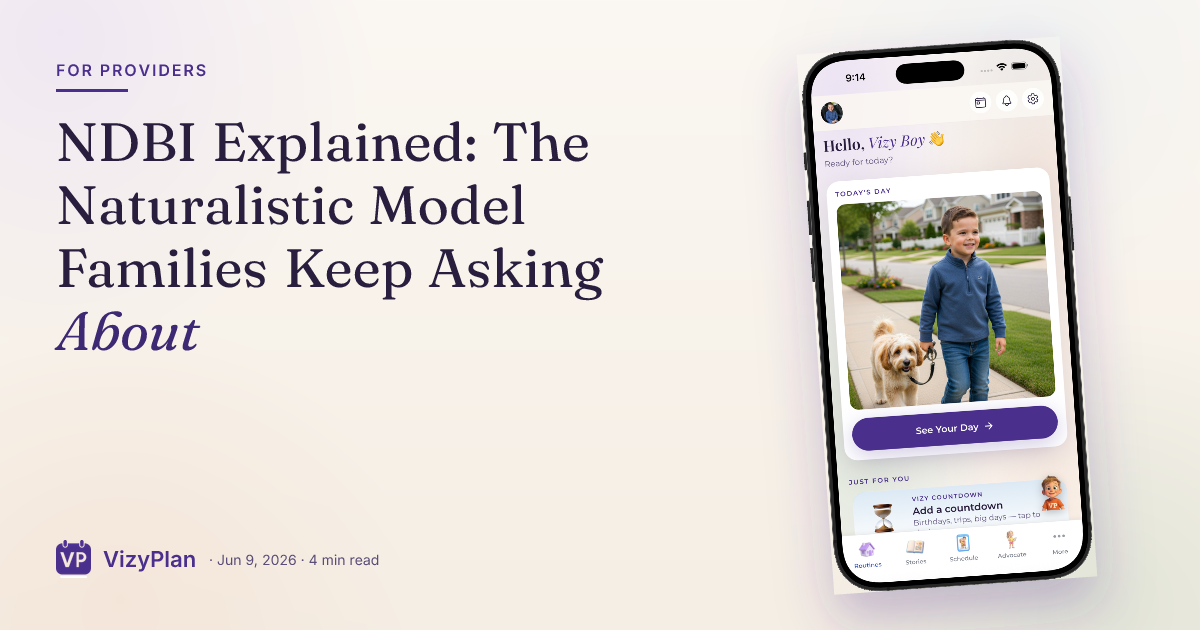
VizyPlan was built by an autism dad and an autism mom SLP for exactly this gap. The routine lives on the family's phone, the photos are the real child in the real home, and the teaching targets sit inside the step where they fit naturally. Your clinical work stays yours. The naturalistic practice gets the daily density the model depends on. For more on closing this gap, see our post on the speech therapy carryover gap.
Download VizyPlan and start your 7-day free trial today. See what your families would run between sessions. Just $6.99/month after your trial, no credit card required upfront.
VizyPlan was built by an autism dad and an autism mom who is a licensed speech-language pathologist who needed something that did not exist. Start your free trial.