

Moving to a new home is stressful for any family. For families with neurodivergent children, it can feel like dismantling the very foundation of your child's sense of safety. The bedroom they know by heart, the kitchen where breakfast always happens the same way, the route to school they have memorized, and the neighborhood sounds they have learned to tolerate. All of it changes at once.
Research on transition and change in autism consistently identifies environmental disruption as one of the most significant stressors for autistic individuals. The need for sameness that defines much of the autistic experience is directly challenged by a move. Every room is different. Every sound is new. Every routine must be rebuilt from scratch.
The good news is that with careful preparation, many neurodivergent children adjust to a new home more successfully than their parents expect. The key is starting early, providing concrete information in formats your child can process, and maintaining as much routine consistency as possible during the transition.
Why Moving Is Especially Hard
Understanding the specific challenges helps you prepare for the right things.
Environmental predictability is a regulatory tool. Many neurodivergent children have memorized their home environment in extraordinary detail. They know exactly which floorboard creaks, where the light falls at different times of day, and how many steps it takes from their bed to the bathroom. This detailed environmental knowledge is not trivial. It serves as a regulatory foundation that reduces the cognitive load of navigating daily life. Losing it means every moment in the new home requires active processing that was previously automatic.
Sensory environments vary dramatically between homes. A new home has different acoustics, different lighting, different smells, different textures on the floors and walls, and different ambient sounds from the neighborhood. Each of these sensory changes requires adaptation from a system that may already be working at capacity.
Routines break when spaces change. Your child's bedtime routine was built around the specific layout of your current home: the hallway to the bathroom, the location of the light switch, the distance from the bed to the door. When the physical space changes, the routine that felt automatic no longer works. Every step must be consciously reconstructed.
Uncertainty about the future creates anxiety. Even with preparation, a child cannot fully understand what the new home will be like until they are living in it. For children who find safety in knowing exactly what to expect, this extended period of uncertainty leading up to and following the move generates chronic low-level anxiety that can manifest as increased rigidity, sleep disruption, behavioral changes, or regression in previously mastered skills.
Preparing Weeks and Months in Advance
The preparation window for a neurodivergent child should be much longer than you might think.
Introduce the concept gradually. Use simple, concrete language: "Our family is going to live in a different house. We will bring all of our things with us." Do not overwhelm with details initially. Let your child absorb the basic concept before adding layers.
Create a visual social story about moving. Walk through the entire process: packing boxes, loading a truck, driving to the new house, unloading, and unpacking. Include specific details that will reassure your child: their bed is coming, their toys are coming, their favorite blanket is coming. VizyPlan's social story feature lets you create personalized narratives with AI-generated images, making the abstract concept of moving concrete and visible.
Visit the new home multiple times before moving day. If possible, take your child to the new house or apartment before the move. Let them explore each room. Take photos together. Show them where their bedroom will be, where the bathroom is, and where the kitchen is. These preview visits convert "the unknown new place" into "that house we visited."
Create a visual countdown. A calendar showing how many days until the move, with one day crossed off each evening, gives your child a concrete way to track the approaching change. Knowing "fourteen more sleeps in this house" is more manageable than the vague sense that change is coming eventually.
Let your child participate in packing. Involve them in packing their own room, especially their treasured items. This gives them a sense of control over the process and reassurance that their belongings are coming with them. Let them choose what goes in a special "first to unpack" box that will be opened immediately upon arrival.
Maintaining Routines During the Move
Routines are your lifeline during a major transition.
Preserve as many routines as possible. The move changes the physical environment, but you can keep everything else the same. Same breakfast, same bedtime routine, same order of activities, same morning sequence. These consistent elements provide stability when the surroundings are unfamiliar.
Recreate the room layout when possible. Placing furniture in a similar arrangement to the previous home reduces the disorientation of the new space. If your child's bed was against the left wall with the nightstand on the right, recreating that arrangement provides instant familiarity.
Unpack your child's room first. Before you worry about the kitchen or the living room, get your child's space set up. Having their room feel familiar while the rest of the house is still in chaos gives them a safe base to retreat to when the change feels overwhelming.
Update visual schedules immediately. Create new visual routines for the new space, including step-by-step sequences for navigating the new bathroom, finding the kitchen for breakfast, and the new path from bedroom to front door. VizyPlan makes it easy to update visual schedules quickly as your environment changes, so your child has a current reference from day one.
Bring comfort items to the new house first. Your child's weighted blanket, favorite stuffed animal, white noise machine, and any other regulatory tools should be among the first items placed in the new home. These familiar sensory anchors ease the transition.
Managing Moving Day
Moving day itself is the most chaotic part of the process. Plan for it specifically.
Consider having your child elsewhere during the move. If possible, have a trusted family member or friend spend the day with your child while the actual packing, loading, and unloading happens. The chaos of moving day can be sensory overload at its peak.
If your child is present, create a designated safe space. Set up a corner with their comfort items, snacks, and preferred activities away from the main action. A tablet with headphones, their favorite books, and a familiar blanket create a bubble of calm in the chaos.
Prepare for a difficult first night. The first night in a new home is often the hardest. New sounds, new shadows, new smells, and a profound sense of "not home" can make sleep nearly impossible. Have extra patience, extra comfort measures, and flexible expectations for the first several nights.
Settling Into the New Home
Adjustment is not instant. Budget weeks, not days, for your child to settle in.
Explore the new home together. Walk through each room with your child. Name what happens in each space: "This is where we eat breakfast. This is where we watch movies." Connecting familiar activities to new spaces builds associations that replace the lost environmental knowledge.
Create new visual maps. A simple floor plan showing which room is which, where the bathroom is in relation to the bedroom, and where to find snacks helps your child build the mental map that was automatic in the previous home.
Introduce the neighborhood gradually. Walk the block together. Visit the nearest park. Drive the route to school or the store. Each outing builds familiarity with the surroundings, reducing the feeling of being in completely foreign territory.
Track emotions through the transition. VizyPlan's emotion tracking lets you monitor how your child is adjusting over time. You might see intense distress in the first week that gradually decreases, or you might identify specific triggers in the new environment that need addressing, like a bedroom that is too bright or a neighbor's dog that barks unpredictably.
Expect regression and respond with patience. Sleep disruption, increased meltdowns, clinginess, loss of previously mastered skills, and heightened rigidity are all normal adjustment responses. These are not permanent setbacks. They are temporary stress responses that will resolve as familiarity builds.
Moving is one of life's biggest transitions, and your neurodivergent child will need more support, more preparation, and more patience than typical. But with the right approach, the new home can become just as safe and familiar as the one you left.
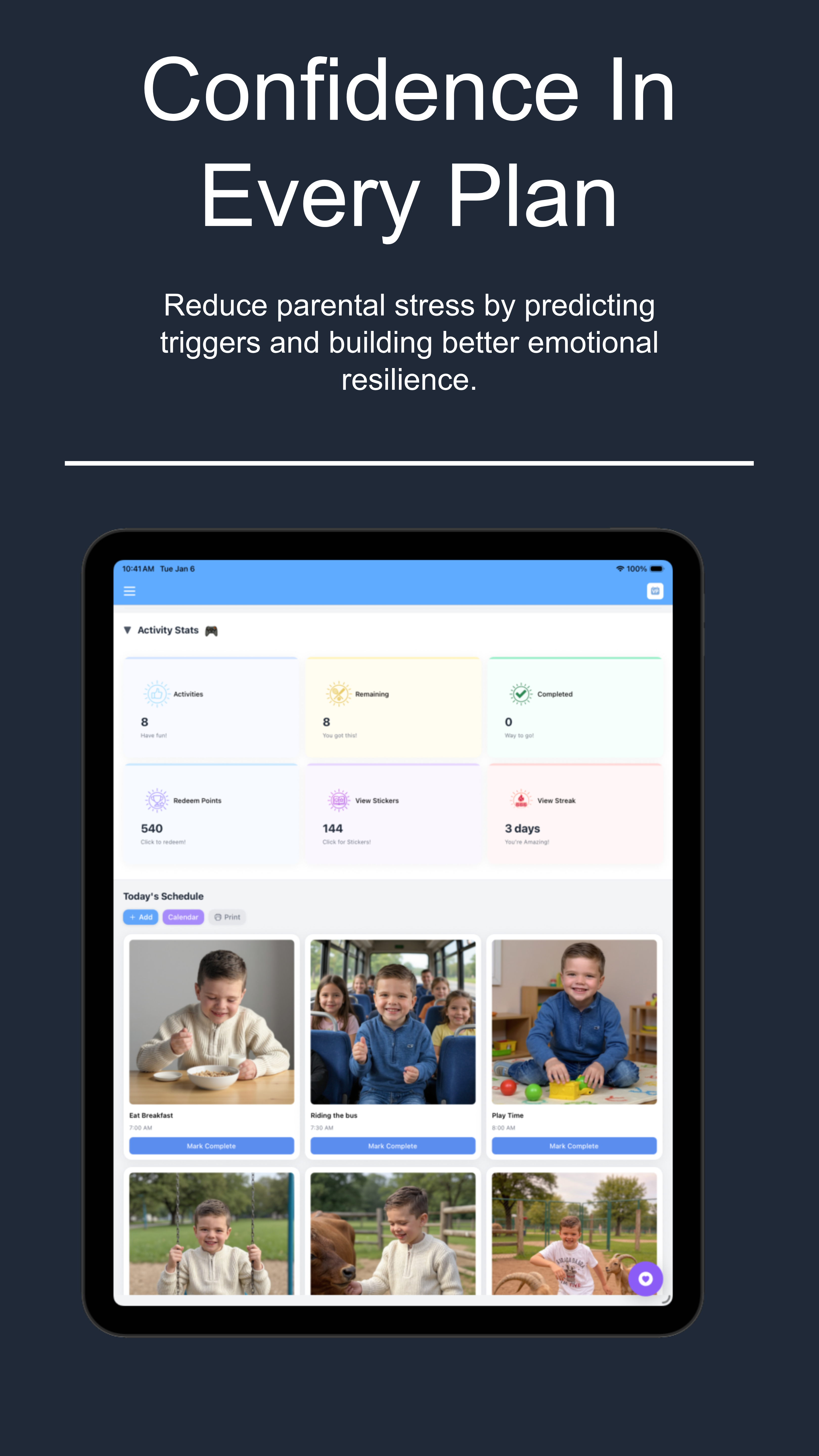
Download VizyPlan and start your 7-day free trial today. Create social stories about moving, build visual schedules for the new home, and track your child's emotional adjustment through this big transition. If it helps, keep going for $6.99/month or $59.99/year.