For early intervention providers, the third birthday is a hard stop. Services under IDEA Part C end, and a toddler who qualifies moves to preschool special education under Part B, with a new team, a new plan and often a new building. The early intervention to preschool transition is one of the biggest handoffs a family will go through, and the EI provider is usually the professional who knows the toddler best when it happens.
Families remember how that handoff felt for years. A rushed or confusing transition can leave a parent walking into the first IEP meeting without the words for what their toddler can already do.
The federal timeline for the early intervention to preschool transition
The rules live in 34 CFR 303.209. For a toddler who may be eligible for Part B preschool services, the Part C lead agency must:
- Notify the school district. Notice goes to the state education agency and the local education agency (LEA) at least 90 days before the third birthday, subject to any state policy that lets parents object to that disclosure.
- Hold a transition conference. With family approval, the lead agency convenes the family and the LEA at least 90 days before the third birthday. If everyone agrees, the conference can happen up to 9 months before.
- Write transition steps into the IFSP. The IFSP must include a transition plan, with the family involved, at least 90 days and up to 9 months before the third birthday. The plan lists the steps for the toddler and family to exit Part C and any transition services the team identifies.
Late referrals follow different rules. A toddler found eligible 45 to 90 days before turning three gets notification as soon as possible. A toddler referred fewer than 45 days before turning three is referred to the school district with parental consent, and Part C does not have to complete its own evaluation.
On the school side, 34 CFR 300.124 requires the LEA to take part in transition planning conferences and to have an IEP (or, where the state allows, an IFSP) in effect by the third birthday. The ECTA Center FAQ on early childhood transition adds a detail worth knowing: the Part B evaluation runs on its own 60-day or state timeline, but the IEP for an eligible toddler referred from Part C still has to be in place by age three. The ECTA page also summarizes the 2023 OSEP questions and answers on early childhood transition, which treat the Part C notification as the initial Part B referral that starts the school timelines.
Every state builds its own process on top of the federal floor, so check your state lead agency guidance for forms, opt-out rules and who sends what.
What the practice guidance says
The Division for Early Childhood (DEC) Recommended Practices include two transition practices. TR1 says practitioners in sending and receiving programs exchange information before, during and after the transition. TR2 says practitioners use planned, timely strategies with the child and family across all three stages. The ECTA Center turns both into a practitioner checklist for the move from early intervention to preschool, including giving families the information they need to make informed decisions.
The guidance points in one direction: the early intervention to preschool transition is not a single meeting. A strong early intervention to preschool transition is a series of conversations that starts months before the birthday and continues after the first day of preschool.
Enjoying this article?
Get practical tips and insights delivered to your inbox — no spam, ever.
A provider plan for the early intervention to preschool transition
- Put the dates on the calendar now. When a toddler on your caseload turns two and a half, count back from the third birthday. Mark the 9 month and 90 day marks, and ask the service coordinator when the conference is planned.
- Write a data summary the family can hand to the school. One or two pages in plain language: current skills by domain, what has changed since intake, the strategies that work, and the strategies that did not. School teams read a short, specific summary. A thick stack of session notes rarely gets read.
- Build visual supports that travel. If a toddler uses a picture schedule, a first-then board or a few core words on an AAC device, make sure those supports go with the family and the photos are easy to share. Our guide to visual supports in the IEP covers how to get them written into the new plan.
- Coach parents on the evaluation. Many parents have never sat through a school evaluation. Explain what consent means, what the evaluators may ask, and that the parent can share what the toddler does at home that a stranger in a testing room may never see.
- Help families prepare for the first IEP meeting. A short list of strengths, priorities and questions goes a long way. The parent guide to IEP meeting preparation is a good resource to send home.
- Offer a warm handoff. With parental consent, offer a phone call with the preschool teacher or related service provider, or attend the transition conference. Our post on provider collaboration in IEP preparation covers how to share what you know without stepping on the school team.
Keep the family at the center
The regulations say the family must be included in developing the transition plan, and the conference happens with family approval. In practice, families often feel like the transition happens to them. Ask what worries them most. Some parents fear losing a trusted therapist. Others worry about a bus ride, a longer day or a classroom of 15 children.
Name the losses honestly, then point to what stays the same. The routines a toddler learned at home, the pictures that made mornings easier and the words practiced in session all go with the family. The early intervention to preschool transition goes best when those pieces arrive at preschool already working.
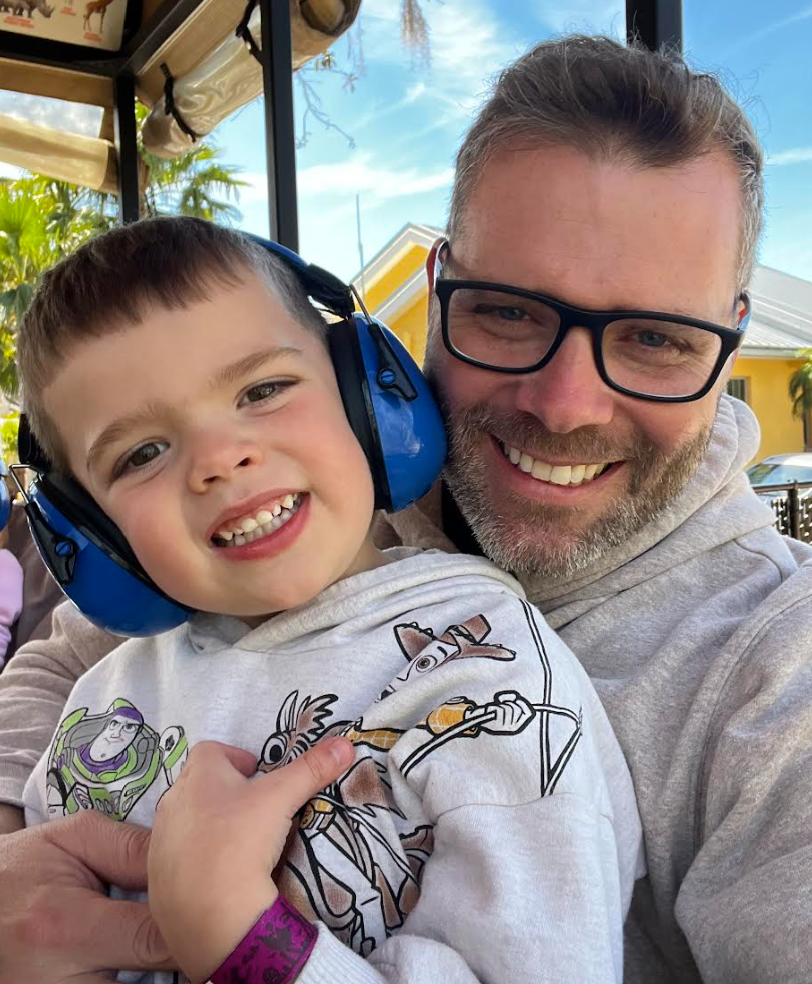
VizyPlan was built by an autism dad and an autism mom who is a licensed speech-language pathologist so the visual routines a family builds in early intervention can follow a toddler into preschool.
Share VizyPlan with your families so the routines you build in early intervention keep going through the move to preschool. The 7-day free trial lets a family try it first. If it helps, keep going for $6.99/month or $59.99/year.
VizyPlan was built by an autism dad and an autism mom who is a licensed speech-language pathologist who needed something that did not exist. Explore VizyPlan.