
Autism and Sleep: Why Your Child Cannot Sleep and What Actually Helps
12 min read
Bedtime was supposed to start at seven. It is now twenty past eight, you have said last one four times, and the wind down has become the most activating part of the evening.
Free 7-day trial · No email or credit card to start · Built by an autism dad and an autism mom SLP
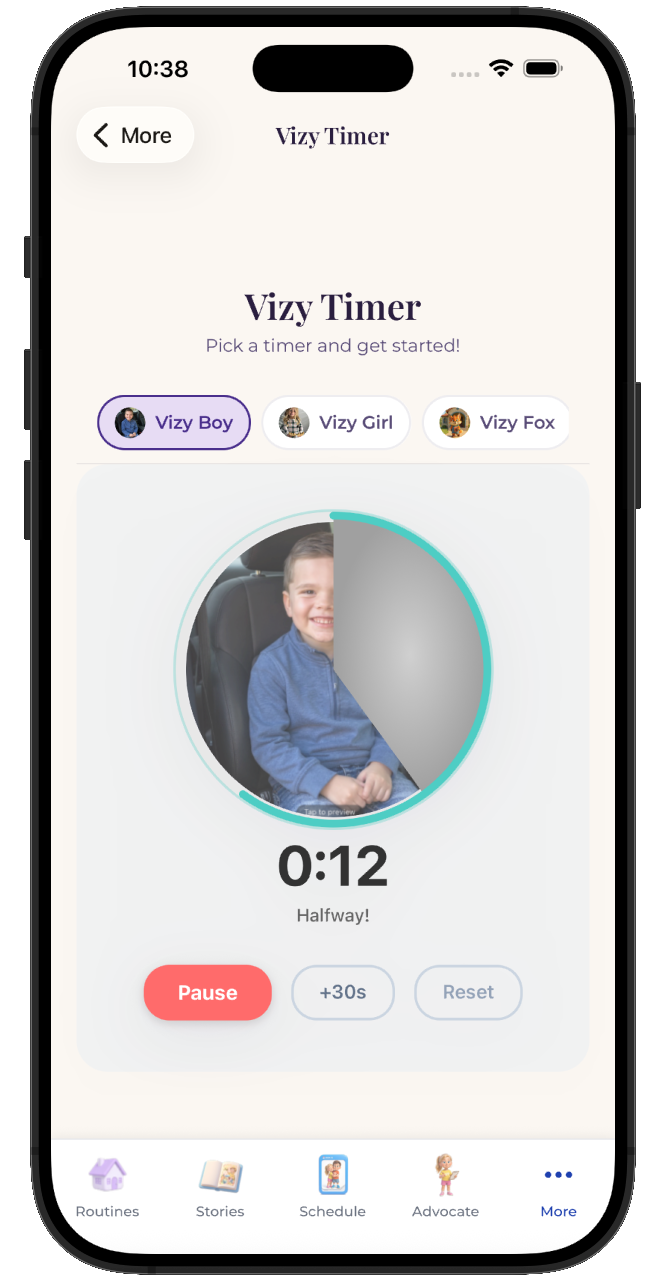
A wind down only works if it visibly shrinks. A timer running across the bedtime block shows your child that the evening is closing rather than continuing, and that shape does more for settling than any individual step in the routine.
What the research saysBehavioral sleep programs for autistic children that combine a consistent bedtime routine with visual cues have produced meaningful improvements in bedtime resistance and time taken to fall asleep.
Papadopoulos et al., Journal of Child Psychology and Psychiatry, 2022
Takes about five minutes. Use it as written, or keep only the steps your family needs. A short setup that gets used beats a complete one that gets abandoned in week two.
Shortening the routine when the evening has run late removes the very structure your child needs most on a hard night. Keep the shape and shorten each step instead.
The Vizy Timer lives inside the same routine your child already follows, so bedtime wind down is a step with a visible length rather than a separate tool somebody has to remember to open.
Five minutes to build, and your child sees it every time bedtime wind down comes around.
$6.99/month after the free trial · Cancel anytime · Also at app.vizyplan.com
VizyPlan supports routines and communication at home and school. It is not a medical device and does not diagnose or treat any condition. Talk to your child's care team about clinical questions.