Vizy Countdown

Counting Down to a Therapy Block Ending so the last session is not a surprise.

Your child has seen the same therapist weekly for two years and the block ends in six weeks. Nobody has told them, because nobody wanted to be the one to do it.

Free 7-day trial · No email or credit card to start · Built by an autism dad and a licensed SLP

Why it works here

Why a visual countdown helps with counting down to a therapy block ending

Ending a therapeutic relationship is a real loss, and children handle it far better when it is visible in advance than when the last session turns out retrospectively to have been the last. A countdown makes room for a proper goodbye.

You will recognize this if

  • Your child has a genuine attachment to the therapist.
  • Previous provider changes happened without warning.
  • Discharge is being discussed among adults and not with your child.
What the research says

Planned discharge with a clear ending, rather than an unannounced last session, is a core part of responsible transition planning in pediatric therapy.

VizyPlan, Discharge planning in autism therapy
The setup

How to set it up for counting down to a therapy block ending

Takes about five minutes. Use it as written, or keep only the steps your family needs. A short setup that gets used beats a complete one that gets abandoned in week two.

  1. 1 Tell your child as soon as the ending is certain
  2. 2 Count down the remaining sessions rather than the weeks
  3. 3 Ask the therapist to mark the ending within the sessions themselves
  4. 4 Plan a proper last session rather than an ordinary one
  5. 5 Name what continues, at home and at school, after the block ends
  6. 6 Put whatever comes next on the countdown, even if it is nothing for a while
The mistake most families make

Letting a final session pass unmarked because it is easier for the adults denies your child an ending, and unmarked endings tend to be harder rather than easier.

In the app

Built into the routine, not bolted onto it.

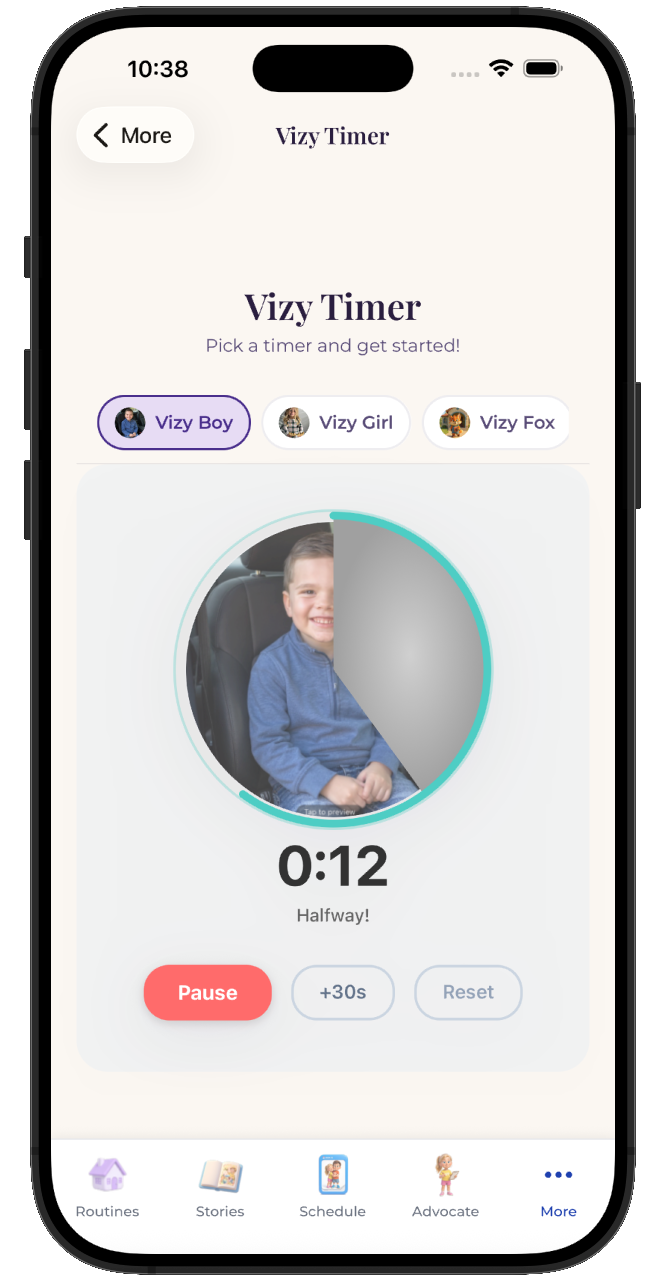
The Vizy Countdown lives inside the same routine your child already follows, so counting down to a therapy block ending is a step with a visible length rather than a separate tool somebody has to remember to open.
  • Attach it to any step in any routine
  • Works for pre-readers, gestalt language processors, and AAC users
  • Same setup at home, at school, and in therapy
See the step-by-step guide →
The VizyPlan Vizy Countdown set up for counting down to a therapy block ending

Set this up for your child.

Five minutes to build, and your child sees it every time counting down to a therapy block ending comes around.

$6.99/month after the free trial · Cancel anytime · Also at app.vizyplan.com

Common questions

About counting down to a therapy block ending

Should my child know therapy is ending?
Yes, and as early as it is certain. An unexplained disappearance is much harder to process than a known ending.
How do we mark the last session?
Ask the therapist, who will usually have a way of doing it. Something concrete your child keeps tends to work better than a conversation.
What if the ending is due to funding rather than progress?
Say so honestly at a level your child can hold. Children frequently assume an ending is about them unless told otherwise.

VizyPlan supports routines and communication at home and school. It is not a medical device and does not diagnose or treat any condition. Talk to your child's care team about clinical questions.