
School Drop Off Separation Anxiety: A Calmer Goodbye
5 min read
Your child moves between two homes and two sets of rules, and the transition day is reliably the hardest of the week. The routine that works in one house does not exist in the other.
Free 7-day trial · No email or credit card to start · Built by an autism dad and an autism mom SLP
Children moving between homes are managing two environments, two sets of expectations, and a handover, which is a considerable executive load. A shared map means the sequence at least stays constant even when the houses do not, and constancy in the sequence is what your child is actually leaning on.
Takes about five minutes. Use it as written, or keep only the steps your family needs. A short setup that gets used beats a complete one that gets abandoned in week two.
Trying to make both homes identical usually fails and creates conflict. Aligning a small number of routines is achievable, and it delivers most of the benefit.
The Map Your Day lives inside the same routine your child already follows, so running a map across two homes is a step with a visible length rather than a separate tool somebody has to remember to open.
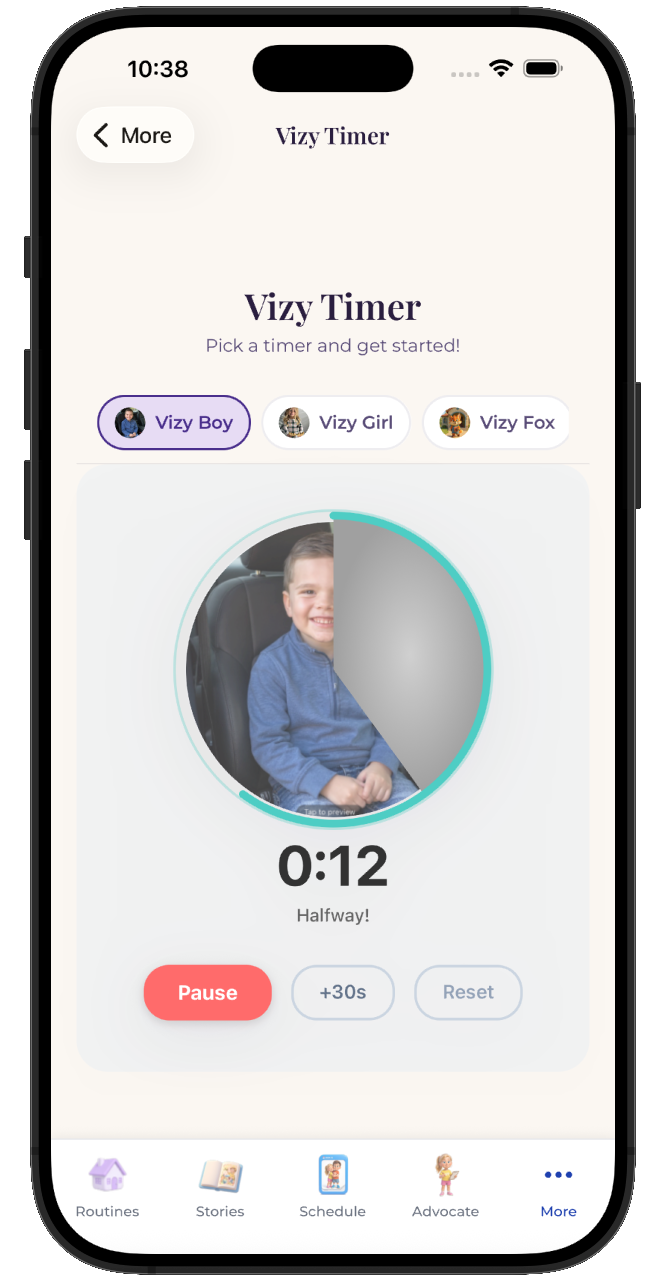
Five minutes to build, and your child sees it every time running a map across two homes comes around.
$6.99/month after the free trial · Cancel anytime · Also at app.vizyplan.com
VizyPlan supports routines and communication at home and school. It is not a medical device and does not diagnose or treat any condition. Talk to your child's care team about clinical questions.