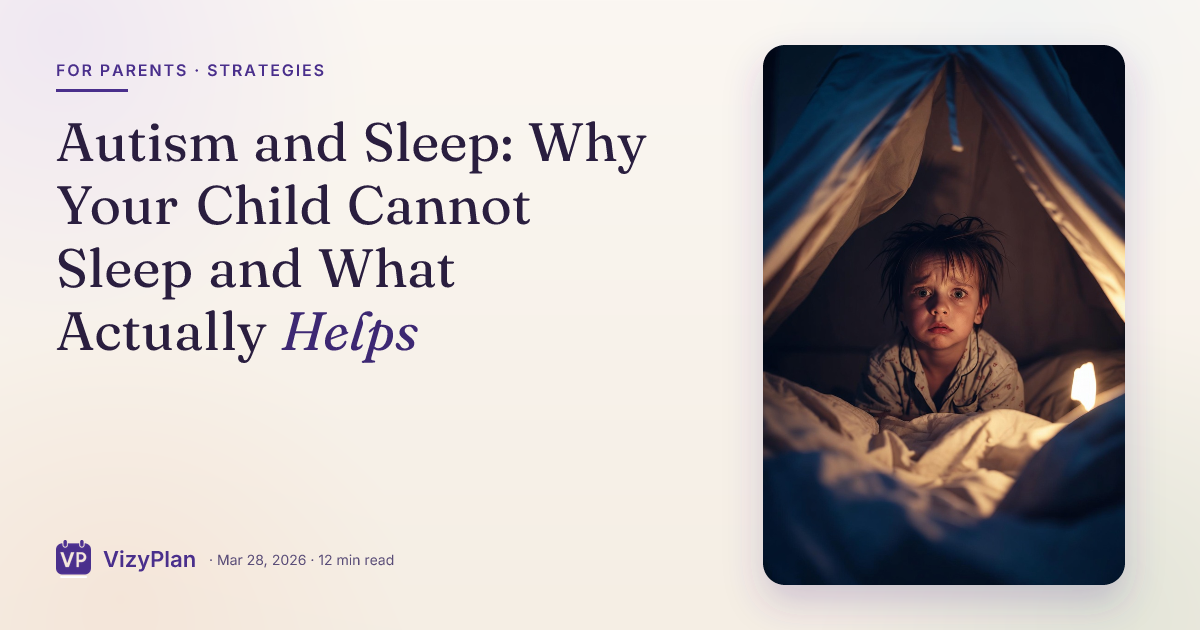
Autism and Sleep: Why Your Child Cannot Sleep and What Actually Helps
12 min read
The routine is finished, the lights are off, and your child is still going. Their body has not caught up with the fact that the day is over.
Free 7-day trial · No email or credit card to start · Built by an autism dad and a licensed SLP
A wind-down works when something external sets the pace, because a child who is still activated cannot slow their own breathing on request. Guided tones give the body a rhythm to follow with eyes closed, which asks nothing of a child who has nothing left to give.
What the research saysA meta-analysis pooling 223 studies found voluntary slow breathing reliably increases vagally-mediated heart rate variability, the physiological shift associated with settling.
Neuroscience and Biobehavioral Reviews, 2022
Takes about five minutes. Use it as written, or keep only the steps your family needs. A short setup that gets used beats a complete one that gets abandoned in week two.
Introducing it for the first time on a difficult night means your child is learning something new at their least receptive moment. Start on an easy night.
The Resyna and Calm Tools lives inside the same routine your child already follows, so winding down at bedtime is a step with a visible length rather than a separate tool somebody has to remember to open.
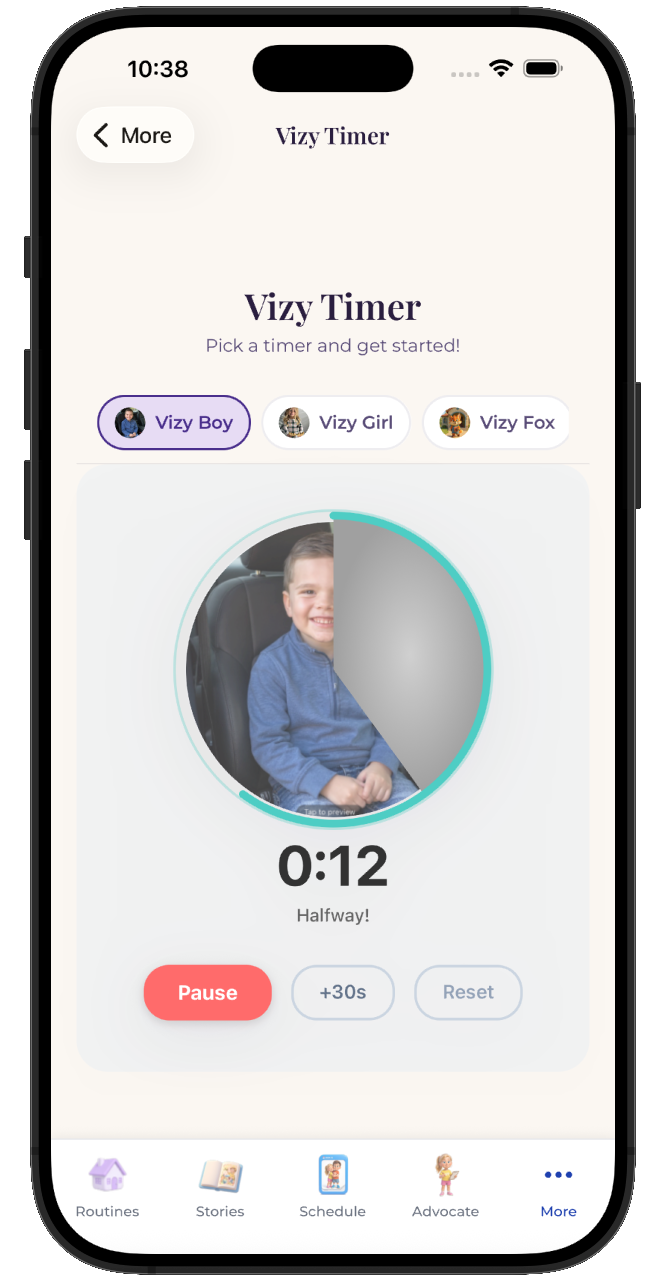
Five minutes to build, and your child sees it every time winding down at bedtime comes around.
$6.99/month after the free trial · Cancel anytime · Also at app.vizyplan.com
Resyna and VizyPlan's Calming Frequency are wellness tools designed to support relaxation. They are not a medical device and are not medical advice. They do not diagnose, treat, cure, or prevent any condition, and they are not a substitute for care from a qualified professional. Start with just 2 to 5 minutes at a comfortable volume and build up gradually. If you feel any discomfort, dizziness, or unease, stop right away. If you are pregnant, or you or your child has epilepsy, a seizure disorder, or a heart condition, please check with your doctor before use. Do not operate heavy machinery after listening. Use of the heart-guided calm score requires a paired Apple Watch with heart-rate and health sharing enabled. The calm score is a relaxation-feedback indicator only. It is not a diagnosis, a fitness metric, or a measure of your health. Resyna does not monitor for, detect, or alert you to arrhythmias, heart conditions, or any other medical issue, and it should never be relied on for that purpose. If you have any health concern, contact a qualified medical professional.